
Tag Archives for " learn to paint portraits "
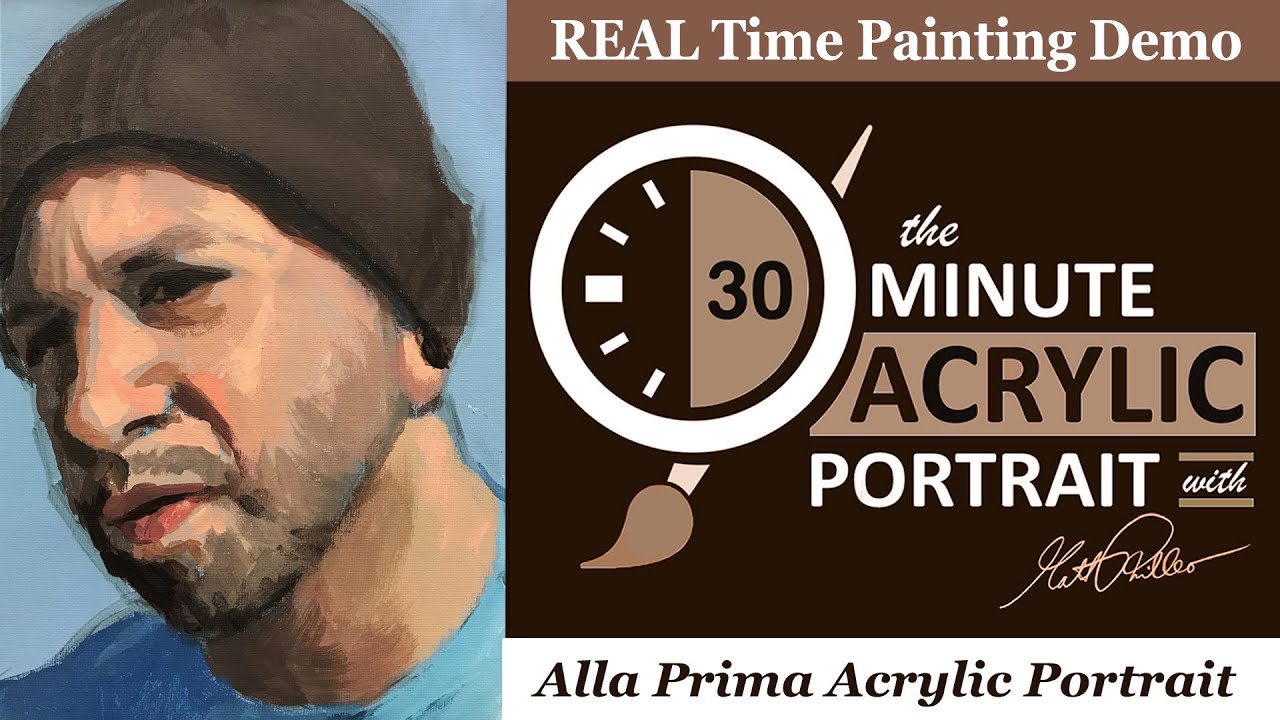
30-Minute Acrylic Portrait: Man in the Dark Brown Cap
Master the art of portrait painting in just 30 minutes with this step-by-step guide on how to paint a man wearing a dark brown cap, using quick alla prima techniques.
Creating a portrait in 30 minute acrylic portrait may sound challenging, but with the right technique and mindset, it’s achievable. In this guide, you’ll learn how to paint a man wearing a dark brown cap using the alla prima method. This method focuses on speed and efficiency, helping artists prioritize the most essential details to bring a portrait to life quickly. Here, we break down the steps and share tips on how to improve your acrylic portrait skills.
Introduction to Alla Prima Portrait Painting
Alla prima, or wet-on-wet painting, is a technique that involves completing a painting in one sitting. Unlike traditional methods that allow layers to dry between applications, alla prima encourages you to work quickly and efficiently. This guide demonstrates how to use this method for a 30-minute acrylic portrait of a man in a dark brown cap. The goal isn’t perfection but improvement in speed and technique while capturing the subject’s essence.
Palette and Materials
Before diving into the portrait, it’s crucial to have the right tools. For this tutorial, the following colors are used:
- Ivory Black
- Raw Umber Dark
- Burnt Sienna
- Raw Sienna
- Ultramarine Blue
- Alizarine Crimson
- Pyrrole Red Orange
- Indian Yellow
- Titanium White
You will also need matte medium for thinning the paint, a few brushes (flats and rounds), and a canvas or canvas board. Using matte medium helps create smoother transitions, which is vital when working quickly.
Step-by-Step Guide to Painting
1. Start with a Quick Composition Sketch
The first step is to block in the basic shapes of the portrait. Using a mix of raw umber dark and ultramarine blue, sketch out the composition. The key is to focus on the overall structure and the visual weight of the painting.
Pay attention to the man’s hat, which should slightly extend beyond the picture plane, and block in the large areas like the hat, jawline, and clothing. These early strokes are foundational, so don’t worry too much about small details. Instead, concentrate on the positioning and proportions of the major features.
2. Block in Shadows
Next, switch to a smaller flat brush and begin blocking in the shadows. Shadows are essential for giving the portrait depth. For this step, mix raw umber dark with titanium white for opacity, and add a bit of alizarine crimson and ultramarine blue to neutralize the warmth.
Focus on the shadows under the hat, around the nose, and beneath the chin. The key here is to simplify the shadow shapes—don’t get bogged down with unnecessary details at this stage. Instead, aim for bold, confident strokes that define the light and dark areas.
3. Apply Skin Tones
Now it’s time to paint the skin tones. Use titanium white mixed with raw sienna and burnt sienna to create a base skin tone. You can warm it up with a bit of alizarine crimson for areas that need more pinkish tones, such as the cheeks or lips.
Block in the skin areas quickly but precisely, making sure to cover the face, neck, and ears. Don’t worry if some skin tones blend into the shadow shapes—these can be refined later.
4. Blend and Define Features
Once the basic tones are blocked in, it’s time to refine the features. Using a small brush, blend the darker shadow areas into the lighter skin tones. Pay attention to crucial areas like the nose, cheeks, and eyes.
For the man’s cap, switch to a darker mix of raw umber dark and ivory black to add more dimension. Use the same blend to define the man’s beard and eyebrows, making sure to capture the triangular shadow shapes around the eyes and the strong furrows in his brow.
5. Add Highlights
Highlights are what make the portrait pop. Use titanium white with a bit of burnt sienna to paint the brighter areas of the face. This mix will create a natural, soft glow, mimicking the effect of sunlight hitting the skin. Focus on the forehead, nose bridge, cheekbones, and the top of the lips.
This step is also where you can refine small details like the earring or the slight texture on the man’s lips. Be careful not to overwork these details, though, as you’re working within a tight time frame.
6. Final Touches
In the last few minutes, focus on refining the transitions between light and dark areas. Use a small round brush to add subtle touches to the beard and mustache. Add a bit of ultramarine blue mixed with titanium white to give the shadows a cooler tone, creating more depth.
Don’t forget to check the overall composition. Make sure the man’s cap is correctly placed, and the shadows and highlights are balanced. At this stage, you can also add finishing touches like small wrinkles or texture to the man’s clothing.
Tips and Techniques for Faster Painting
- Use Matte Medium: This helps in blending and smoothing out transitions between colors while keeping the paint fluid.
- Work in Layers: Block in large shapes first, then refine the details. This method ensures you capture the overall structure before getting too detailed.
- Prioritize Important Features: Focus on the essential elements of the face, such as the eyes, nose, and mouth. Minor details can be added later if time permits.
- Use Big Strokes: Especially at the beginning, use larger brushes and bold strokes to cover more surface area quickly.
- Limit Your Palette: Using a limited palette helps streamline the process and reduces decision fatigue. Stick to the basic colors mentioned earlier for this exercise.
Conclusion
Completing a 30-minute acrylic portrait might seem intimidating, but with practice, it becomes a valuable exercise in efficiency and decision-making. This alla prima approach encourages you to focus on the most important aspects of the portrait, allowing you to improve your painting speed while still capturing the subject’s essence.
Remember, this 30-minute acrylic portrait exercise is a way to enhance your skills, and you can always take your quick study further into a more detailed painting later. With consistent practice, you’ll find yourself becoming faster and more confident in your portrait work.
For further resources and guides, visit realisticacrylic.com and check out my free courses to enhance your acrylic painting journey.
- Adding highlights to your acrylic painting
- 5 Excellent Reasons to Use Aluminum Foil
- Paint Realistic Wrinkles in Acrylic
- Painting Clothing in an Acrylic Portrait
- Paint a Cloudy Sky Acrylic
- How to add Semi-Opaque Highlights
- How to Enhance the Contrast in Your Acrylic
- How to Add Glaze to Your Acrylic Painting
- Paint Realistic Reflections on Eyeglasses in an Acrylic Portrait
- Build Up Depth on Your Acrylic Portrait Backgrounds
- How Do You Do Layers With the Glazing Technique?
- Learn How to Paint Wrinkles in Acrylic
Read more about how to paint a portrait that you can surely be proud of!
I’d love to hear your thoughts on this video. Please share it with your friends and family. Let me know if you have any further questions. I’ll greatly help you.
If you’d like to learn more, sign up for my free email tips and video class today.
Learn How to Paint Acrylic Portraits With My Free Mini-Video Course!
Thank you so much for taking the time to read this tutorial and watch the video. That means a lot to me. I hope you find it very helpful in your portrait painting.
Yours for Better Portraits,

P.S. Did you find this post helpful or encouraging? If so, send it on ahead! Let others know with the share buttons below. I’d love to hear your comments. Thank you so much! Also, do you have a question on acrylic portrait painting you’d like answered? Let me know, and I’d be happy to help!
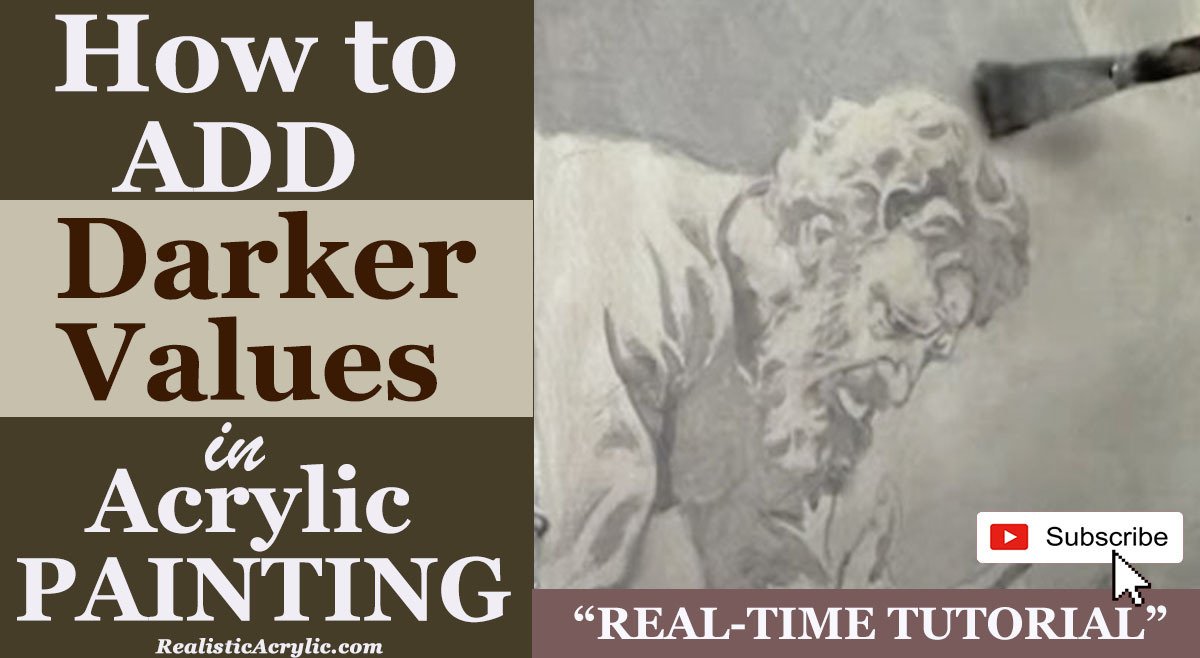
How to Add Darker Values in Acrylic Painting
Learn the art of glazing to achieve richer, darker tones and depth in your acrylic
When creating a realistic acrylic portrait, understanding how to introduce darker values is essential. But these values help to add depth, drama, and contrast, bringing your painting to life. In this tutorial, we’ll explore how to effectively add darker values using glazing techniques in an acrylic painting. And then you’ll learn how to layer semi-transparent colors, apply shadows, and blend your tones smoothly.
Introduction to Glazing in Acrylics
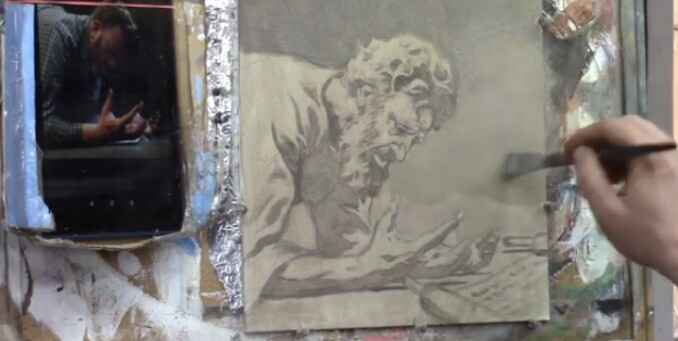
Glazing is a technique used in acrylic painting where you apply thin, transparent layers of color to achieve depth and complexity. Unlike traditional opaque painting, glazing allows you to build up dark values gradually while maintaining a luminous, rich quality. In this tutorial, we’ll demonstrate this process step-by-step as we work on a portrait of King Hezekiah.
Choosing the Right Colors for Darker Values
The foundation for adding darker values begins with selecting appropriate colors. Because in this painting, we use raw umber dark, ultramarine blue, and titanium white. These colors are perfect for mixing subtle, darker tones that give the painting a more natural and realistic feel.
- Raw Umber Dark: This earthy brown is excellent for creating deep shadows without overwhelming the painting.
- Ultramarine Blue: Adding a bit of ultramarine blue gives shadows a cooler tone, adding complexity to the darker areas.
- Titanium White: Although titanium white is typically used for highlights, mixing it with darker colors helps to control the transparency of the glaze and soften transitions between light and dark.
Step-by-Step Guide to Adding Darker Values
Step 1: Mix the Darker Tones
Start by mixing raw umber dark with a touch of ultramarine blue. Because this will create a bluish-gray tone that can be adjusted depending on how dark or light you want the shadows to appear. Then add a small amount of titanium white to increase opacity and allow for smoother application. The white will also help cover the canvas faster.
Step 2: Apply the Dark Tones to the Background
Using a three-quarter-inch flat brush, gently apply the mixed color to the background of the painting. The goal is to establish a gradation of tones, which means the transition from dark to light should be smooth and subtle. Then, as you work, focus on using directional brushstrokes it will vary in your brush strokes can add energy and interest to the painting, ensuring that it doesn’t feel flat.
Make sure to blend the darker values near the edges of the portrait, especially around the hair and clothing. This contrast will help bring the subject into focus while adding depth to the background.
Step 3: Add More Medium for Transparency
As you continue to layer the glaze, mix in matte medium to increase transparency. This is especially important for areas where you want to build darker tones gradually. Too much paint at once can make the area appear muddy, so patience is key. Because adding medium ensures that the previous layers are visible beneath the new ones, giving your shadows a more natural look.
At this point, the color may seem too cool or toned down. If this happens, simply mix more raw umber dark to warm it up and bring back the richness in the shadow.
Step 4: Develop Darker Tones in Clothing and Hair
Move on to the subject’s clothing and hair. Then for this, mix raw umber dark with a bit of burnt sienna to warm up the shadows. In keeping the tones slightly warmer in these areas, then it will create a natural transition between the shadows and mid-tones.
Begin to add shadows under the subject’s beard and in the folds of the clothing, where deeper shadows would naturally form. Use a half-inch flat brush for precision in these areas. The clothing’s wrinkles and folds will stand out more once the darker values are applied, helping the overall form feel more three-dimensional.
Step 5: Refine Dark Values in the Face
Next, use a round brush (size 8 or 12) to work on the finer details of the face. For a portrait like this, it’s crucial to maintain a consistent value range. Begin by darkening the shadows beneath the subject’s hand and the interior of the face, such as under the nose, along the jawline, and in the eye sockets.
When glazing the face, keep the strokes smooth and the application light. Since the face is a focal point, any harsh transitions or muddy colors will draw unwanted attention. As you add darker values, remember that you will be able to come back and paint highlights on top, restoring any lost details.
Balancing Warm and Cool Shadows
It’s important to maintain a balance between warm and cool shadows when adding darker values. Cooler shadows work well in areas where less light reaches, such as the underside of the face or the back of the hair. In contrast, warmer shadows should be applied where there is more ambient light, such as the edges of the clothing or near the face.
A helpful tip is to introduce a bit of raw sienna into your darker mixes for warmer shadows and ultramarine blue for cooler shadows. This slight variation in temperature will give your painting more dimension and make the shadows appear more realistic.
Techniques to Avoid Muddy Shadows
One of the common challenges when adding darker values is the risk of creating muddy shadows. To avoid this:
- Thin out your paint: Always mix your darker tones with a medium to maintain transparency and allow previous layers to shine through.
- Use multiple layers: Don’t try to achieve the darkest value in one go. Build up gradually, layer by layer, allowing each glaze to dry before adding another.
- Blend edges: Smooth transitions between light and dark areas by lightly blending the edges of your shadows. This creates a soft, natural fade, preventing harsh lines.
Final Thoughts on Adding Dark Values
Adding darker values in acrylic painting is a skill that requires patience, but the results are worth it. Then with glazing, you can build depth and create dynamic contrasts that bring your painting to life. Always remember to balance warm and cool tones, use semi-opaque layers, and be mindful of smooth transitions.
In this tutorial, we’ve worked on developing the mid-tones and darker shadows in the portrait of King Hezekiah. As you continue to work on your paintings, keep experimenting with these techniques and gradually introduce highlights to balance the dark values.
Conclusion
Adding darker values to an acrylic painting helps create depth, drama, and dimension. By using glazing techniques and mixing rich dark tones, you can build up layers that bring realism to your artwork. Remember to balance warm and cool shadows, avoid muddy colors, and let each layer dry before proceeding.
If you’re looking for more instructional videos on how to improve your acrylic painting, visit www.realisticacrylic.com for more tutorials and check out my free courses here. Happy painting!
- Adding highlights to your acrylic painting
- 5 Excellent Reasons to Use Aluminum Foil
- Paint Realistic Wrinkles in Acrylic
- Painting Clothing in an Acrylic Portrait
- Paint a Cloudy Sky Acrylic
- How to add Semi-Opaque Highlights
- How to Enhance the Contrast in Your Acrylic
- How to Add Glaze to Your Acrylic Painting
- Paint Realistic Reflections on Eyeglasses in an Acrylic Portrait
- Build Up Depth on Your Acrylic Portrait Backgrounds
- How Do You Do Layers With the Glazing Technique?
- Learn How to Paint Wrinkles in Acrylic
Read more about how to paint a portrait that you can surely be proud of!
I’d love to hear your thoughts on this video. Please share it with your friends and family. Let me know if you have any further questions. I’ll greatly help you.
If you’d like to learn more, sign up for my free email tips and video class today.
Learn How to Paint Acrylic Portraits With My Free Mini-Video Course!
Thank you so much for taking the time to read this tutorial and watch the video. That means a lot to me. I hope you find it very helpful in your portrait painting.
Yours for Better Portraits,
P.S. Did you find this post helpful or encouraging? If so, send it on ahead! Let others know with the share buttons below. I’d love to hear your comments. Thank you so much! Also, do you have a question on acrylic portrait painting you’d like answered? Let me know, and I’d be happy to help!
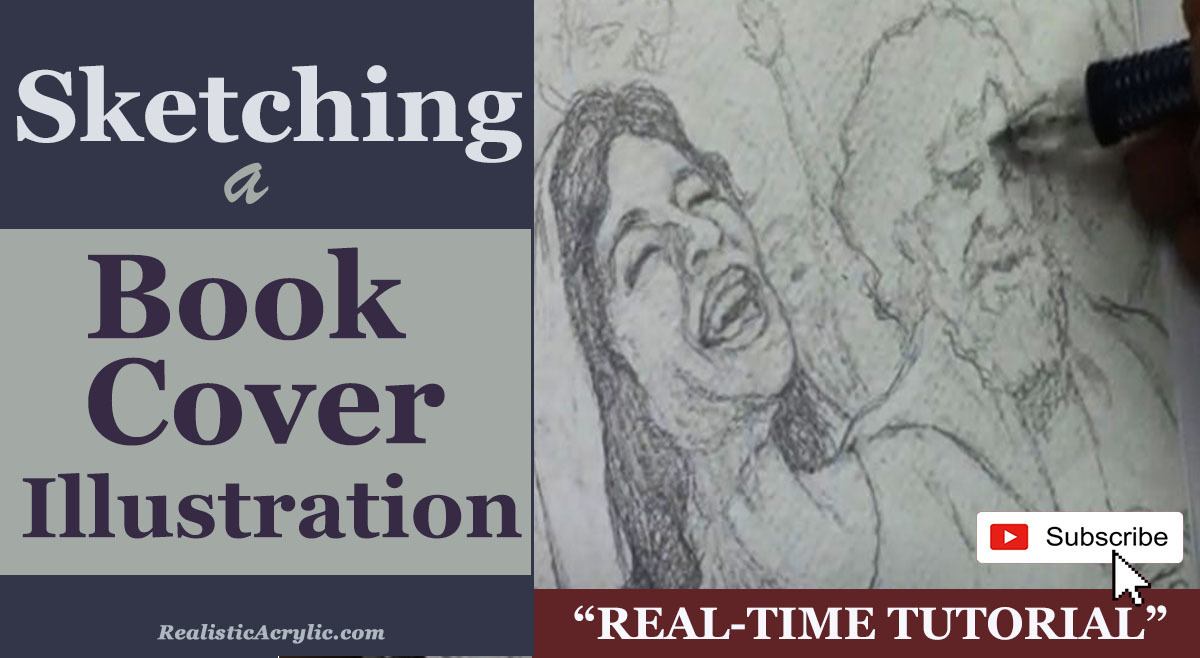
How to Sketch Book Cover Illustration
I’ll show you a sketching book cover illustration.
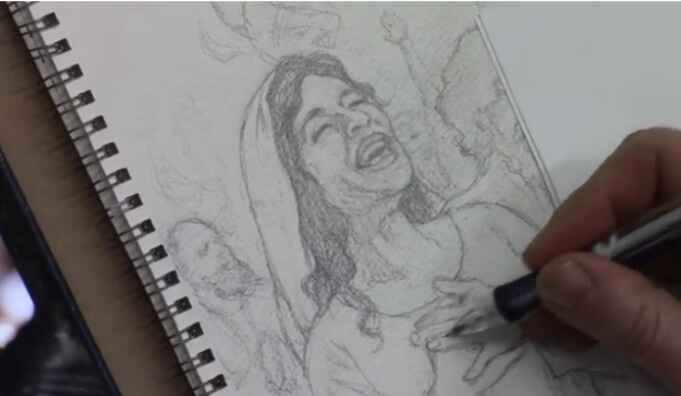
When creating a sketch for a book cover illustration it is a rewarding and meticulous process that blends creativity with technical skill. In this tutorial, I’ll walk through the steps of sketching a book cover illustration for a Bible commentary, focusing on capturing emotion and detail in every stroke. By the end of this guide, you’ll have actionable techniques to apply to your own projects, whether you’re a beginner or an experienced artist.
In this example, we explore the sketching process for a cover that illustrates the Pentecostal movement from the Book of Acts. This moment depicts the disciples receiving the Holy Spirit, with dramatic expressions of joy and intensity. Let’s dive into the step-by-step process of creating this compelling piece of art.
Step 1: Conceptualizing the Scene
Before starting any sketch, it’s important to have a clear understanding of the subject matter. In this case, the illustration revolves around a significant biblical event, the arrival of the Holy Spirit during Pentecost, described in the Book of Acts. To capture this effectively:
- Research the event: Familiarize yourself with the story by reading the relevant biblical passages. Because this will help you grasp the mood and energy needed for your sketch.
- Determine the key emotions: The illustration should evoke excitement, awe, and spiritual reverence. These emotions will be conveyed through the expressions of the characters and their body language.
- Find reference images: Utilize online reference photos to help with anatomy, facial expressions, and positioning.
In this sketch, the focal point is a woman’s expression of joy, symbolizing the elation felt by the disciples as they received the Holy Spirit.
Step 2: Start with a Rough Sketch
The first stage of creating any illustration is a rough sketch to establish the composition. For this book cover, the sketch began by blocking in the figures and their general positions.
- Freehand drawing: Start by sketching freehand, focusing on the placement and proportion of the characters. This allows for flexibility as you adjust the positioning of different elements.
- Keep it loose: At this stage, don’t worry too much about details. Use light lines to outline the figures and the background. This will give you a basic framework to build on.
Tips for Freehand Sketching:
- Use loose, flowing strokes to keep the composition dynamic.
- Focus on proportions but don’t stress about perfect accuracy early on.
- Keep erasing and refining the composition as needed.
Step 3: Refining the Details
Once the rough sketch is laid out, it’s time to refine the characters and bring out the key details that will make your illustration pop. Because in this project, we will focuses on capturing facial expressions and hand positioning, which are critical for conveying emotion.
Facial Expressions and Hands:
- Faces: Pay special attention to the expressions on your characters’ faces. For this sketch, one figure’s face is drawn with joy, while another figure shows intensity through a furrowed brow and a praying posture.
- Hands: Hands are often one of the hardest parts to draw accurately, but they are essential in conveying emotion. Here, the woman has her hands on her chest, adding to the sense of awe, while another figure has clasped fingers, indicating deep prayer.
Refining these elements involves carefully erasing and reworking lines to get the right anatomy and expression. For example, the wrinkles around the eyes or the positioning of the fingers can greatly impact the emotional depth of the characters.
Technique for Adding Expression:
- Use reference images: Don’t hesitate to consult images to ensure your anatomy and expressions are realistic.
- Focus on the eyes: Eyes are windows to the soul, so ensure they capture the right emotion.
- Subtle shading: Add light shading to emphasize features such as wrinkles, folds, or muscle tension in the hands.
Step 4: Working with Watercolor Paper
In this illustration, watercolor paper was used as the base for the sketch. This surface provides a bit more texture and grip than traditional drawing paper, making it ideal for illustrations that will later be painted.
Benefits of Watercolor Paper for Sketching:
- The texture holds pencil marks well, allowing for smoother shading and erasing.
- It’s sturdy enough to withstand multiple layers of detail, which is beneficial when transitioning from sketching to painting.
Step 5: Final Adjustments and Preparing for Paint
At this point in the sketch, the major elements of the illustration are in place. The characters are well-formed, and their emotions are clearly conveyed through their body language and expressions. However, there are always small adjustments that can be made to improve the sketch before painting.
Making Final Adjustments:
- Shadows and depth: Add subtle shading to the clothing and faces to create depth. For instance, a shadow under the man’s beard gives his face more structure.
- Refine small details: Pay attention to small details like the lines of the fingers or the folds in clothing. Then these small adjustments can make a big difference in the realism of the sketch.
Tips for Transitioning to Paint:
- Ensure that the sketch is as clean and detailed as possible. This will serve as the foundation for the painting stage.
- Consider how your paint medium (whether watercolor, acrylic, or oil) will interact with the pencil lines. Light sketching can easily be painted over, while heavier pencil marks might need to be minimized.
Conclusion
Sketching a book cover illustration requires both creativity and attention to detail. Because by focusing on freehand drawing, refining expressions, and making adjustments based on reference photos, you can create a compelling and emotionally charged sketch. In this project, the sketch captures the pivotal moment of Pentecost, filled with joy and intensity, and lays a solid foundation for a beautiful painted illustration.
If you found this guide helpful and would like to learn more about sketching or painting techniques, visit realisticacrylic.com for more tutorials and check out my free gift for you here
- Adding highlights to your acrylic painting
- 5 Excellent Reasons to Use Aluminum Foil
- Paint Realistic Wrinkles in Acrylic
- Painting Clothing in an Acrylic Portrait
- Paint a Cloudy Sky Acrylic
- How to add Semi-Opaque Highlights
- How to Enhance the Contrast in Your Acrylic
- How to Add Glaze to Your Acrylic Painting
- Paint Realistic Reflections on Eyeglasses in an Acrylic Portrait
- Build Up Depth on Your Acrylic Portrait Backgrounds
- How Do You Do Layers With the Glazing Technique?
- Learn How to Paint Wrinkles in Acrylic
Read more about how to paint a portrait that you can surely be proud of!
I’d love to hear your thoughts on this video. Please share it with your friends and family. Let me know if you have any further questions. I’ll greatly help you.
If you’d like to learn more, sign up for my free email tips and video class today.
Learn How to Paint Acrylic Portraits With My Free Mini-Video Course!
Thank you so much for taking the time to read this tutorial and watch the video. That means a lot to me. I hope you find it very helpful in your portrait painting.
Yours for Better Portraits,
P.S. Did you find this post helpful or encouraging? If so, send it on ahead! Let others know with the share buttons below. I’d love to hear your comments. Thank you so much! Also, do you have a question on acrylic portrait painting you’d like answered? Let me know, and I’d be happy to help!
How to Paint a Book Cover Illustration: Glazing Technique
Learn the acrylic glazing technique to create stunning book cover Illustrations with depth and vibrancy
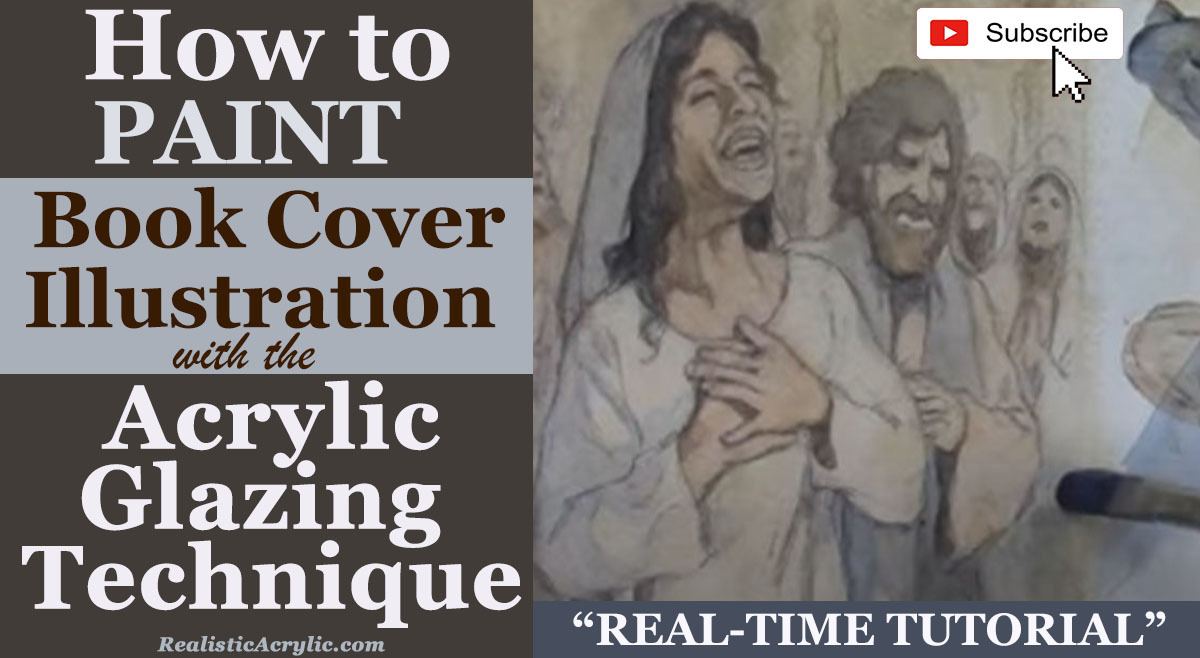
Creating a book cover illustration that tells a story visually and emotionally requires a combination of artistic skill, technique, and a deep understanding of the subject. In this tutorial, I’ll walk you through how to paint a book cover illustration using the acrylic glazing technique to achieve stunning results with rich depth, vibrant colors, and luminosity.
What is the Acrylic Glazing Technique?
The acrylic glazing technique involves applying multiple thin layers of translucent paint mixed with matte medium to create depth and a glowing, luminous effect. The glazing process allows light to pass through the layers, which builds color intensity and gives the painting a rich, oil-like appearance. It is perfect for capturing the complexity and atmosphere needed in book cover illustrations, where light, shadows, and vibrancy are essential.
Step-by-Step Guide to Creating a Book Cover Illustration with Glazing
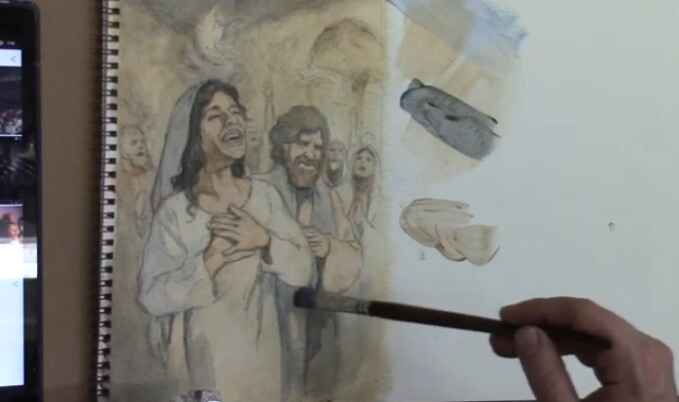
Let’s dive into how I applied this method to paint a book cover illustration for a novel about the Holy Spirit falling on early disciples, based on the book of Acts. This is a spiritual and dramatic scene that requires both light and darkness to emphasize the event’s importance.
1. Start with a Detailed Sketch
To begin, create a detailed sketch of your composition. This is crucial because the glazing technique builds on these initial lines. You’ll want to ensure your sketch is solid, as each layer of glazing will enhance, rather than obscure, the underlying structure.
2. First Layer: Laying the Foundation
Mix a small amount of paint with a large amount of matte medium. This thins out the paint, making it semi-transparent. Apply the first layer of paint to your illustration, ensuring that your strokes are smooth and even. For my painting, I used a base of ultramarine blue and raw sienna to establish the shadows and overall color scheme. Keep the first few layers lighter since you will be building up darker values later.
3. Building Depth Through Dark Values
Once your foundation layer dries, it’s time to build depth. One of the keys to creating luminous, realistic paintings is the interplay between light and dark. In this painting, I focused on ultramarine blue to darken the upper portion, which depicts the dimly lit upper room, creating a stark contrast with the bright flames of the Holy Spirit that will appear later.
Dark values are critical because they allow the lighter, vibrant tones to pop. In the same way, darkness in our lives often brings out blessings. To achieve the desired darkness, slowly add layer upon layer of paint, waiting for each one to dry before applying the next.
4. Transitioning from Cool to Warm Tones
One essential tip when glazing is understanding how to transition between cool and warm tones. In darker areas, the colors tend to be cooler (think blues and purples), while lighter areas feature warmer colors (yellows, reds, and oranges). In this book cover illustration, the darker parts of the room had cool ultramarine blue tones, while the warmer Indian yellow tones were reserved for areas where the fire of the Holy Spirit would shine.
As you apply your glazes, notice how the colors transition and blend naturally, much like light transitioning into shadows. This technique is particularly useful in storytelling illustrations, where light represents hope or divine presence and shadows signify mystery or darkness.
5. Adding Glazes to Create Vibrancy
One of the significant benefits of the acrylic glazing technique is the vibrancy it adds to the painting. As you layer each glaze, you’ll notice that the colors start to shine more brightly, and the image becomes more saturated. This effect is especially noticeable when adding warmer colors, such as the burnt sienna and alizarine crimson for the clothing of the disciples.
The layering effect is like compounded interest in a bank account. Each layer builds upon the last, making the painting look increasingly vibrant. For example, I added green by mixing Indian yellow and ultramarine blue over a woman’s shawl, producing a rich, natural hue.
6. Balancing Colors for Harmony
When glazing, it’s essential to balance your colors across the canvas. If you add a specific color in one area, consider incorporating it elsewhere in the painting to create visual harmony. In this illustration, after applying green to the woman’s shawl, I used a similar hue in another figure’s clothing to achieve balance.
You can also experiment by mixing colors to create subtle, natural transitions. For instance, I mixed burnt sienna and alizarine crimson to add reddish tones to a male figure’s garment, giving it warmth without overpowering the surrounding colors.
7. Final Touches: Highlighting with Warm Glazes
After several layers of glazing, it’s time to add the final touches. For a book cover illustration like this, where the theme involves divine light, the final layers should include warm highlights that make the painting stand out. I used yellow ochre and white to capture the light reflecting off the disciples’ faces and the flames above their heads.
By keeping the upper layers thin, I ensured that the underlying colors remained visible, adding depth and creating a glowing effect. This is the essence of the acrylic glazing technique—allowing light to pass through layers of color, creating an ethereal and vibrant painting.
Tips and Techniques for Mastering the Acrylic Glazing Technique
- Use Matte Medium: Matte medium thins out the paint, making it translucent. The more matte medium you use, the more transparent the glaze will be.
- Work in Layers: Allow each layer to dry before applying the next. This helps you build up color gradually and maintain control over the final effect.
- Balance Warm and Cool Colors: Warmer tones pop against darker, cooler backgrounds. Be mindful of how these two temperature families interact on your canvas.
- Keep the Initial Layers Light: Your first few layers should be light to avoid losing detail. The glazing technique builds on transparency, allowing your sketch to remain visible.
- Experiment with Color Mixing: Combine different pigments with matte medium to create unique shades and effects. For instance, mixing Indian yellow with ultramarine blue produced a rich, green glaze in my painting.
Conclusion
The acrylic glazing technique is a powerful tool for artists who want to create paintings with depth, luminosity, and vibrancy. Whether you’re painting a book cover illustration or any other artwork, the layering process allows you to build color gradually while maintaining control over detail and tonal transitions. By practicing this method and applying the tips outlined above, you can take your painting skills to the next level.
For more in-depth tutorials on acrylic painting, visit Realistic Acrylic Portrait School and check out my free gift for you here
- Adding highlights to your acrylic painting
- 5 Excellent Reasons to Use Aluminum Foil
- Paint Realistic Wrinkles in Acrylic
- Painting Clothing in an Acrylic Portrait
- Paint a Cloudy Sky Acrylic
- How to add Semi-Opaque Highlights
- How to Enhance the Contrast in Your Acrylic
- How to Add Glaze to Your Acrylic Painting
- Paint Realistic Reflections on Eyeglasses in an Acrylic Portrait
- Build Up Depth on Your Acrylic Portrait Backgrounds
- How Do You Do Layers With the Glazing Technique?
- Learn How to Paint Wrinkles in Acrylic
Read more about how to paint a portrait that you can surely be proud of!
I’d love to hear your thoughts on this video. Please share it with your friends and family. Let me know if you have any further questions. I’ll greatly help you.
If you’d like to learn more, sign up for my free email tips and video class today.
Learn How to Paint Acrylic Portraits With My Free Mini-Video Course!
Thank you so much for taking the time to read this tutorial and watch the video. That means a lot to me. I hope you find it very helpful in your portrait painting.
Yours for Better Portraits,
P.S. Did you find this post helpful or encouraging? If so, send it on ahead! Let others know with the share buttons below. I’d love to hear your comments. Thank you so much! Also, do you have a question on acrylic portrait painting you’d like answered? Let me know, and I’d be happy to help!
How To Darken Background & Clothing: Acrylic Glazing Technique
Discover the acrylic glazing technique to add depth, richness, and contrast to your portraits by darkening the background and clothing with ease.
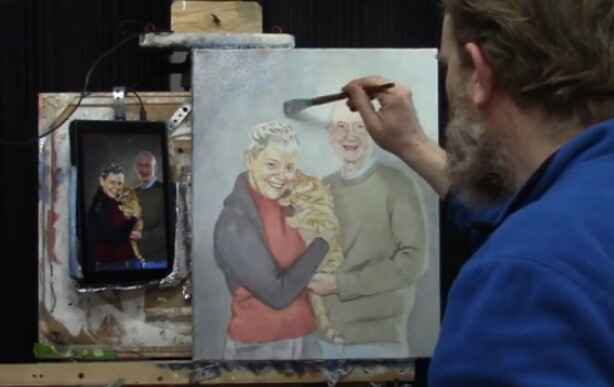
One of the challenges portrait artists face is creating a balanced contrast between the subject and the background. Acrylic glazing is an excellent technique for solving this problem, offering the ability to subtly darken elements like the background and clothing while maintaining depth and luminosity. In this tutorial, we’ll explore how to use acrylic glazing to darken the background and clothing in your portraits. Then the key to success in this technique lies in building up light layers of color, allowing the paint to create a rich, oil-like effect that transforms your artwork.
Because at the end of this guide, you’ll be able to create striking contrasts, enhance the mood of your painting, and master acrylic glazing for darker tones.
Materials Needed
To achieve the best results with the acrylic glazing technique, you’ll need the following materials:
- Acrylic paints (ultramarine blue, burnt sienna, raw umber, titanium white, etc.)
- Matte medium (or glazing medium)
- Reference photo
- Various brushes (detail brushes, medium flat brush, and large round brush)
- Palette for mixing
- Water and a clean rag
Understanding Acrylic Glazing
Acrylic glazing is a technique where you mix a small amount of pigment with a large amount of matte medium to create thin, transparent layers of color. Each layer allows light to pass through, giving the painting added depth and richness. This technique mimics the effects of oil painting but with the faster drying time of acrylics, making it a versatile choice for many artists.
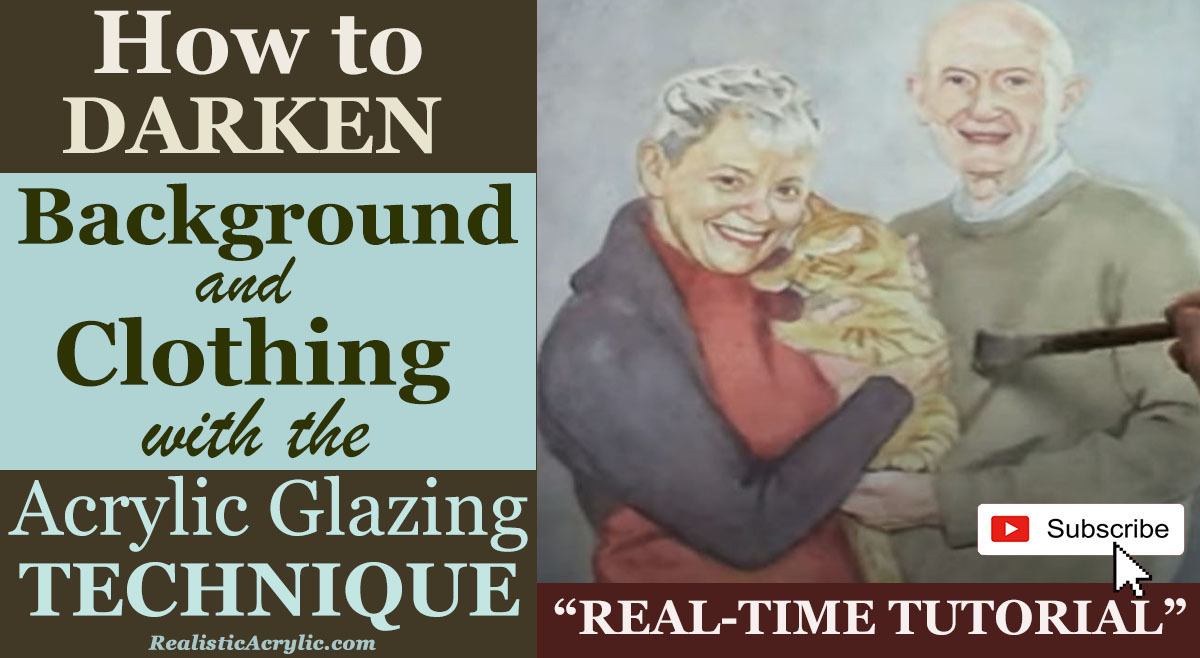
In this video, we follow the steps to darken the background and clothing of a 16×20 acrylic portrait of a couple and their cat. The key to achieving a smooth glaze is to ensure your base sketch is solid, allowing the layers to enhance rather than correct the painting.
Step 1: Starting with a Solid Sketch
Before applying glazes, it’s essential to have a strong and accurate sketch. As I have mention, that if you want to make sure that the proportions and likeness are perfect before you begin glazing. Because the foundation is key to a successful final product.
When creating your sketch:
- Focus on achieving correct proportions of your subject.
- Make sure the key areas such as the eyes, nose, and mouth are aligned.
- Use light pencil marks that won’t interfere with the transparency of your glaze.
Step 2: Mixing the First Glaze for the Background
In this painting, the client requested a bluish tone for the background. To create a blue glaze, follow these steps:
- Mix Ultramarine Blue: Add a small amount of ultramarine blue to your palette.
- Add Matte Medium: Mix the blue with matte medium until the paint is very translucent. Matte medium is milky white but dries completely clear, allowing the underlying layers to shine through.
- Apply the Glaze: Using short, choppy brush strokes, begin layering the blue glaze onto the background. This creates a smooth transition between the subject and background, enhancing depth.
One of the advantages of glazing is its flexibility. If the glaze looks too intense, you can always add more matte medium or water to lighten it.
Step 3: Building Up Contrast Between the Subject and Background
After applying the initial glaze, focus on enhancing the contrast between the subject (in this case, the couple and their cat) and the background. This step is crucial to making the subject stand out. You want to:
- Gradually increase the opacity of the glazes on the background to push it further into the distance.
- Use darker tones in the background compared to the foreground to create depth.
To darken the background even more, add layers of raw umber or burnt sienna mixed with matte medium on top of the blue glaze. This will give the background a more muted, shadowy effect while still allowing the initial blue tone to shine through.
Step 4: Glazing the Clothing
Next, shift focus to darkening the clothing using a similar glazing technique. The subject in this portrait is wearing darker-toned clothes, and I use the combination of raw umber and ultramarine blue to darken the clothing in a natural, gradual way.
- Mix Raw Umber and Blue: Combine raw umber with ultramarine blue and matte medium. This creates a nice neutral dark glaze that adds depth to the clothing without making it look flat.
- Apply the Glaze: Begin layering this darker glaze on the clothing, focusing on areas of shadow or where more depth is needed.
- Build Layer by Layer: Since glazing is a cumulative process, each layer adds more intensity to the clothing. Don’t worry about getting the perfect color right away. With each layer, the colors will mix and blend, creating a more realistic tone.
Remember, glazing allows you to make adjustments easily. If the color feels too cool or too warm, add a thin glaze of raw sienna or alizarin crimson to adjust the warmth or coolness.
Step 5: Enhancing Details and Finishing Touches
Once the base glazes are in place, use smaller detail brushes to enhance the finer areas, such as the edges of the clothing or folds in the fabric. For example, I use raw sienna to highlight certain areas of the shirt’s wrinkles. Then this subtle addition of color adds a lifelike quality to the painting.
At this stage, pay attention to:
- Wrinkles and folds in the clothing: Use a small brush to carefully apply thin glazes to highlight these details.
- Edge details: Glaze carefully around the edges where the subject meets the background, ensuring a smooth transition.
Tips for Acrylic Glazing Technique
- Use Light Layers: Always apply thin glazes and build up gradually. Heavy applications will obscure the previous layers.
- Dry Between Layers: Allow each glaze to dry before adding the next. This prevents muddying the colors.
- Experiment with Color: Don’t be afraid to adjust the color temperature with warm or cool glazes.
- Less Is More: A little pigment goes a long way when glazing. Be mindful of how much color you mix in with the medium.
- Work from Light to Dark: Build up your painting by working from lighter glazes to darker ones to maintain luminosity and depth.
Conclusion
The acrylic glazing technique offers artists a powerful tool for adding depth and richness to their paintings. When layering transparent color, you can gradually darken backgrounds and clothing without losing the vibrancy of the initial layers. This method also allows for flexibility, as adjustments can be made throughout the process without the pressure of getting it right on the first try.
In this painting of a couple and their cat, the careful use of glazing brings out the contrast between the subjects and their background, creating a compelling portrait. With practice, you’ll be able to master this technique and apply it to your own projects, transforming your portraits into luminous works of art.
If you’re looking for more instructional videos on how to improve your acrylic painting, visit www.realisticacrylic.com for more tutorials and check out my free courses here. .
- Adding highlights to your acrylic painting
- 5 Excellent Reasons to Use Aluminum Foil
- Paint Realistic Wrinkles in Acrylic
- Painting Clothing in an Acrylic Portrait
- Paint a Cloudy Sky Acrylic
- How to add Semi-Opaque Highlights
- How to Enhance the Contrast in Your Acrylic
- How to Add Glaze to Your Acrylic Painting
- Paint Realistic Reflections on Eyeglasses in an Acrylic Portrait
- Build Up Depth on Your Acrylic Portrait Backgrounds
- How Do You Do Layers With the Glazing Technique?
- Learn How to Paint Wrinkles in Acrylic
Read more about how to paint a portrait that you can surely be proud of!
I’d love to hear your thoughts on this video. Please share it with your friends and family. Let me know if you have any further questions. I’ll greatly help you.
If you’d like to learn more, sign up for my free email tips and video class today.
Learn How to Paint Acrylic Portraits With My Free Mini-Video Course!
Thank you so much for taking the time to read this tutorial and watch the video. That means a lot to me. I hope you find it very helpful in your portrait painting.
Yours for Better Portraits,
P.S. Did you find this post helpful or encouraging? If so, send it on ahead! Let others know with the share buttons below. I’d love to hear your comments. Thank you so much! Also, do you have a question on acrylic portrait painting you’d like answered? Let me know, and I’d be happy to help!
2 Steps on How to Make Teeth More Realistic
Learn how to add realistic depth and dimension to teeth in your acrylic portraits using these simple but effective techniques.
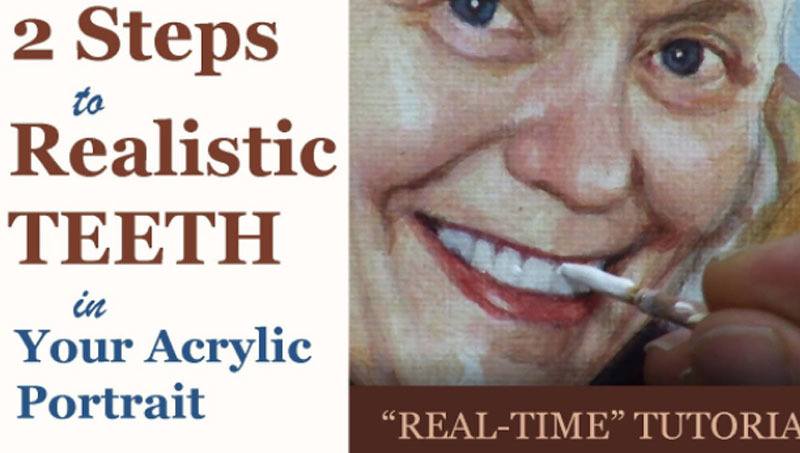
When painting an acrylic portrait, one of the areas that often challenges artists is getting the teeth to look realistic. Many artists fall into the common trap of painting teeth flat white, which detracts from the lifelike quality of a portrait. Teeth, however, are far from being a pure white color. In this guide, you’ll learn two simple yet effective steps that will elevate your skills in painting teeth, making them appear more realistic and natural.
Step 1: Proper Shading – Teeth Are Not White
One of the most frequent mistakes made when painting teeth is assuming they are stark white. In reality, teeth are often a light shade of gray or slightly off-white. In fact, if you compare teeth to a pure white object, you’ll notice they are significantly darker. Painting teeth flat white can give your portrait an artificial look and flatten the depth of the face.
To ensure you are capturing the right tone, use a white card to measure the value of your teeth compared to the background of your reference photo. When you observe closely, you’ll find that teeth have more of a grayish hue. By painting the teeth just a little darker than pure white, you create a realistic foundation that allows you to build up detail.
Here’s how you can achieve this:
- Mix titanium white with a small amount of raw umber dark and ultramarine blue to create a subtle grayish hue. This will be your base color for shading the teeth.
- Apply thin layers, blending the paint carefully, to ensure a smooth transition. The blend should not be too dark, but noticeably darker than pure white.
- To add more depth, mix a bit of matte medium into the paint. Matte medium helps thin the acrylic paint without compromising its color, allowing you to create soft, seamless shading that brings out the three-dimensional quality of the teeth.
By following these steps, you are creating the necessary contrast between the teeth and the bright highlights that will come in the next step.
Tip: Focus on the Surrounding Shadows
Shadows play an important role in shaping the teeth. Gums and lips often cast subtle shadows over teeth, making the edges slightly darker. Pay attention to these areas, especially around the perimeter of the teeth, to enhance the sense of depth. Remember, teeth are curved objects; shading on one side, while leaving the other lighter, will make them appear more dimensional.
Step 2: Adding Realistic Highlights – Bring the Teeth to Life
Once you’ve laid down the correct base color for the teeth, the next step is to add realistic highlights. These highlights are small but essential details that bring the teeth to life and make them look natural.
Teeth often have tiny reflections of light in certain areas, depending on the lighting in your reference photo. These highlights can be found along the tops of the teeth or on the edges where they catch the light the most. Here’s how you can effectively apply them:
- Use titanium white for these highlights. Unlike the shading, the highlights should be pure white, but use them sparingly to avoid an unnatural appearance.
- With a size 2 liner brush, carefully paint small pinpoint highlights in the appropriate spots, as seen in your reference image. The upper teeth often have highlights near the top, close to where the lips meet the teeth.
- After applying the highlights, blend them gently into the surrounding areas to avoid hard, distracting lines. The goal is to create a soft transition between the shaded and highlighted areas.
If the highlights appear too stark, you can modify the tone by adding a touch of indian yellow to warm them up. By warming the highlights, you mimic the natural hue of teeth, which tend to reflect a warmer tone due to their interaction with light and surrounding skin tones.
Tip: Be Subtle with Separation Lines
While teeth have visible separation lines, especially in close-up portraits, these lines should not be harsh. Use very faint lines to delineate individual teeth. A common mistake is making the lines too bold, which can give the teeth an outlined, cartoonish appearance. The size 2 liner brush is ideal for lightly sketching in these lines, but ensure they are soft enough to blend in with the rest of the portrait.
Additional Techniques to Improve Realism
1. Use Glazing for Depth
To create even more depth and nuance in the teeth, consider using a glazing technique. A glaze is a thin, translucent layer of paint that allows underlying layers to show through, creating a sense of depth.
- Mix a small amount of matte medium with your base gray color and apply it lightly over the teeth, focusing on areas that need more depth, such as the sides or lower parts of each tooth.
- This glazing technique allows you to build up subtle layers, increasing the realistic appearance of your portrait.
2. Pay Attention to Tooth Shape and Size
Not all teeth are the same size or shape, and these variations should be reflected in your painting. The front teeth are typically larger, while the ones on the sides taper off. Make sure to study your reference photo closely and adjust the size and shape of each tooth accordingly. This attention to detail will make your portrait look more realistic and proportional.
Conclusion
Getting the teeth right in an acrylic portrait is an essential step toward achieving realism. By shading the teeth a few tones darker than pure white and adding subtle highlights in the right spots, you can dramatically improve the lifelike quality of your portraits. Using techniques like glazing and paying attention to tooth shape will further enhance the overall effect. Follow these two steps carefully, and you’ll be well on your way to mastering the art of painting realistic teeth in acrylics.
With patience and practice, you’ll see improvements in your portrait painting skills, and your work will stand out for its lifelike qualities.
For further resources and guides, visit realisticacrylic.com and check out my free courses to enhance your acrylic painting journey.
- Adding highlights to your acrylic painting
- 5 Excellent Reasons to Use Aluminum Foil
- Paint Realistic Wrinkles in Acrylic
- Painting Clothing in an Acrylic Portrait
- Paint a Cloudy Sky Acrylic
- How to add Semi-Opaque Highlights
- How to Enhance the Contrast in Your Acrylic
- How to Add Glaze to Your Acrylic Painting
- Paint Realistic Reflections on Eyeglasses in an Acrylic Portrait
- Build Up Depth on Your Acrylic Portrait Backgrounds
- How Do You Do Layers With the Glazing Technique?
- Learn How to Paint Wrinkles in Acrylic
Read more about how to paint a portrait that you can surely be proud of!
I’d love to hear your thoughts on this video. Please share it with your friends and family. Let me know if you have any further questions. I’ll greatly help you.
If you’d like to learn more, sign up for my free email tips and video class today.
Learn How to Paint Acrylic Portraits With My Free Mini-Video Course!
Thank you so much for taking the time to read this tutorial and watch the video. That means a lot to me. I hope you find it very helpful in your portrait painting.
Yours for Better Portraits,
P.S. Did you find this post helpful or encouraging? If so, send it on ahead! Let others know with the share buttons below. I’d love to hear your comments. Thank you so much! Also, do you have a question on acrylic portrait painting you’d like answered? Let me know, and I’d be happy to help!
How to Varnish an Acrylic Painting in One Step
Discover the easy technique for how to varnish an acrylic painting in one step to enhance and preserve your artwork’s vibrancy
There’s a lot of controversy surrounding this topic, or at least, many different opinions on how to do it right.
Some say you need an isolation coat. But others say you should spray apply the varnish. And then there are some who pour it on or use a sponge!
I’m not here to dismiss any of those methods. If they work for that particular artist, more power to them.
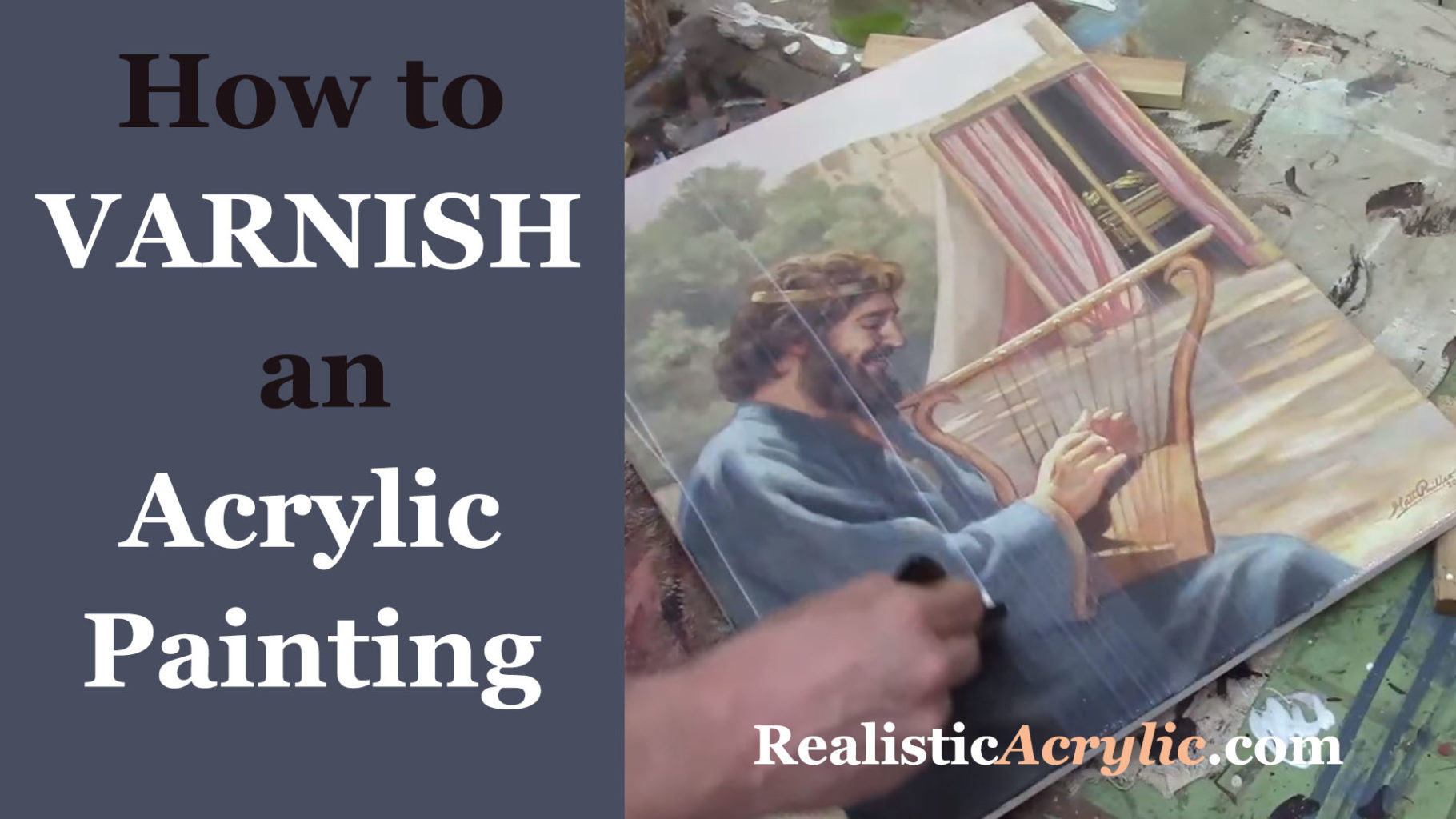
Rather, I’d like to share with you the method I’ve been using for over 20 years as a portrait painter. And then it’s easy, and you can do it one step.
Let me break down this one-step acrylic varnishing method into how to actually do it…
- Lay your canvas flat on a table, oriented horizontally, but at an angle.
- Raise your canvas up, on four scraps of wood placed under each corner (make sure it’s level. 1″ x 2″s work well )
- Get your 4″ varnishing brush (Liquitex Freestyle works well)
- Pour matte varnish (Novacolor or Liquitex) into a clean yogurt container or any plastic container large enough to accommodate the width of the brush. Be sure to stir the varnish if it’s been sitting for a while! Over time the polymer resin can separate from the water in the mixture. If you don’t mix it, you may have streaks.
- “Sweep” any dust or debris off of the canvas surface with a large brush before you begin.
- Dip your brush into the varnish container, so the bristles are coated with varnish 1/3-1/2 of the way up from the tip.
- Begin brushing the varnish on the surface, starting with the end farthest from you. Brush in the longest direction of the canvas.
- Let your brush hit 1/3″ of the way from the left edge of the canvas. Apply even pressure and bring the brush all the way to the left edge.
- Bring the brush all the way to the right edge.
- Wipe any excess varnish that remains on your brush inside the top lip of your container.
- Flip the brush over and smooth out the entire first application, overlapping the edge slightly with 1-2 strokes. Do not overbrush!
- Dip your brush into the varnish container and repeat the process. Let your stroke slightly overlap the first (about 1/4″)
- You will be working your way toward your body. This will keep you from accidentally dripping onto the finished varnished surface.
- If you have any extra varnish that drips onto the side of the canvas, use a 3/4 flat brush to wipe it off. If the canvas will be framed, the side-drips are usually not a problem and can be left alone.
- Let your canvas dry flat on a table. It might look milky white in areas. Resist the temptation to brush it! If you followed my method, the varnish should dry crystal clear. It should dry completely within 3-5 hours, depending on humidity.
Disclaimer: I have used this method with great results in over 20 years of portrait painting. Because your results are up to you, how you apply this method, and the humidity levels of your studio space. I cannot be held responsible for any painting that gets damaged during the varnishing process. Then it would be a good idea to varnish a test piece first. You can add another layer (after 3-5 hours of dry time) if you feel the first one didn’t cover as well as you’d like, but most of the time, you won’t need to.
Watch this video below to see the process in action…
If you’re looking for more instructional videos on how to improve your acrylic painting, visit www.realisticacrylic.com for more tutorials and check out my free courses here. .
Let me know if you have any questions and I look forward to teaching you more!
LEARN MORE
- How to Paint Foliage Using the Acrylic Glazing Technique
- How to Trace for an Accurate Portrait Sketch
- How to Paint Realistic Eyes in Your Acrylic Portrait
- How to Add Raw Umber Dark & Ultramarine Blue to Your Portrait
- How to Make Your Own Raw Umber Dark
- How to Paint Realistic Trees & Grass in Your Acrylic
- How to Block In Skin Tone Values Using Glazing Technique
- How to Paint Vibrant Reds in Your Acrylic Portrait
- How to Glaze Background Colors & More Acrylic Portrait
- How to Paint White Clothing in Your Acrylic Portrait
- How to Easily Transition from a Sketch to a Painting
- How to Block In Shading & Skin Tones in Your Acrylic
- How to Build Up Color on Acrylic Pet Portrait
- How to Build Up Form on Clothing with Acrylic
- How to Paint Dark Clothing Using Acrylic Glazing Technique
- How to Paint a 24 x 30 Acrylic With 30 People
- How to Do Smooth Shading with Acrylic
- How to Sketch an Acrylic Portrait with a Grid
Read more about how to paint a portrait that you can surely be proud of!
I’d love to hear your thoughts about this video. Please share it with your friends and family. Let me know if you have any further questions. I’ll greatly help you.
If you’d like to learn more, sign up for my free email tips and video class today.
Learn How to Paint Acrylic Portraits With My Free Mini-Video Course!
Thank you so much for taking the time to read this tutorial and watch the video. That means a lot to me. I hope you find it very helpful in your portrait painting.
Yours for Better Portraits,
P.S. Did you find this post helpful or encouraging? If so, send it on ahead! Let others know with the share buttons below. I’d love to hear your comments. Thank you so much! Also, do you have a question on acrylic portrait painting you’d like answered? Let me know, and I’d be happy to help!
3 Tips on How to Draw Better Pencil Portraits
Unlock the secrets to realistic portraits with these essential pencil drawing techniques
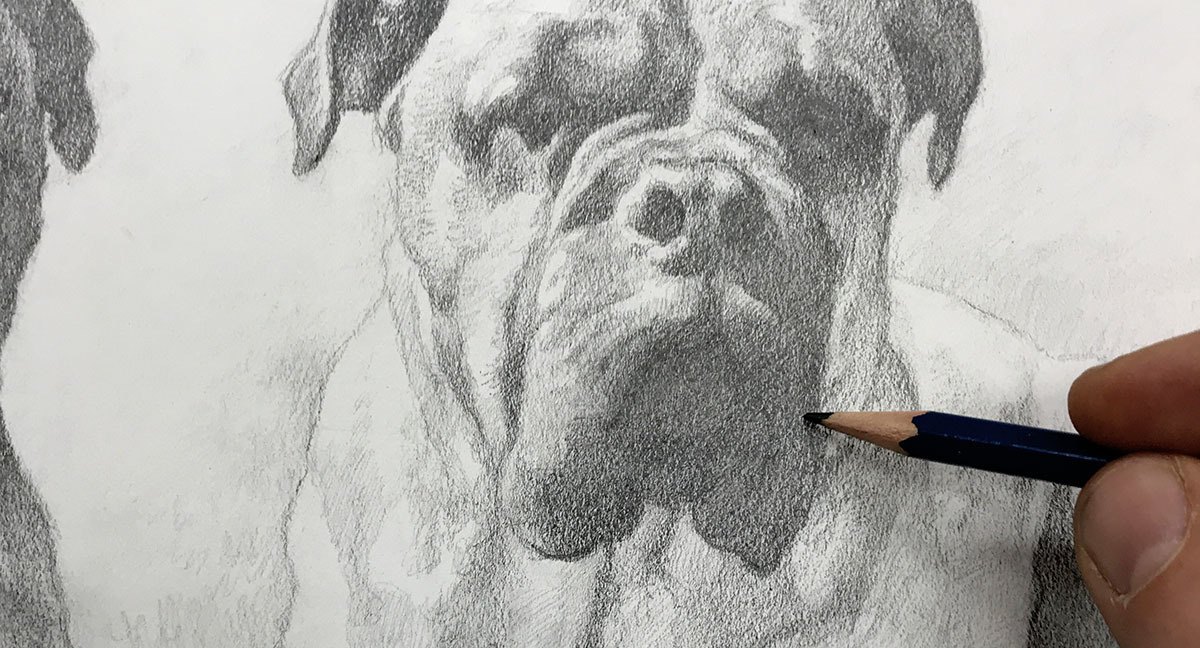
Drawing realistic pencil portraits can be a rewarding yet challenging experience. If you’re looking to improve your pencil drawing skills, it’s essential to focus on technique, control, and mastering shading. Whether you’re a beginner or a seasoned artist, improving your pencil drawings can drastically boost your portrait painting skills, especially if you primarily work in acrylic. In this blog post, you’ll learn 3 valuable tips that will help you create lifelike pencil portraits.
1. Master Cross-Hatching for Realistic Shading
Cross-hatching is a time-tested technique that involves layering pencil strokes in a criss-cross pattern to build depth and texture in your drawings. In this method, parallel lines are drawn in one direction, and then a second set of lines is added at an angle across the first set. This overlapping of lines creates a rich texture and smooth tonal gradation.
To start, use a soft pencil like a 4B, which produces dark, rich tones. You’ll want to keep your pencil strokes close together, allowing minimal gaps between them. This technique is perfect for areas that require detailed shadowing, such as the contours of a face or fur on an animal. Then the secret lies in maintaining consistent pressure and evenly spacing your strokes.
To take it a step further, try cross-hatching at a 45-degree angle. Because this adds an extra layer of dimension and allows you to control the light and dark values more effectively. When shading, remember to follow the natural form of the subject to make the drawing appear more realistic.
By mastering cross-hatching, then you’ll find that your pencil drawings will have smoother textures and enhanced depth, making your portraits stand out with their intricate details.
2. Protect Your Drawing from Smudges
One of the biggest challenges when drawing with pencils is avoiding smudges. Then as you work, your hand can easily smudge the graphite, causing unwanted marks and ruining the clean lines of your portrait.
A simple yet effective way to prevent smudging is to place a piece of scrap paper under your drawing hand. Because this will act as a barrier between your hand and the drawing, keeping the graphite from smearing as you work. Not only does this keep the drawing neat, but it also prevents the natural oils from your skin from warping the paper.
It’s also important to work from left to right if you’re right-handed, or right to left if you’re left-handed, to reduce the risk of accidentally smudging what you’ve already drawn. Working in layers, starting with the lighter areas first, and finishing with the darkest parts will also minimize smudging.
By taking care to protect your drawing, you ensure that your portrait remains sharp and polished, free from unnecessary smears.
3. Blend with Tissue for a Smooth Finish
Blending is a powerful technique for smoothing out pencil strokes and achieving a soft, even tone. Many artists use blending stumps or their fingers, but using a piece of tissue paper offers a superior finish without over-smearing the details.
When you blend effectively, gently rub the tissue across the shaded areas of your drawing in small, circular motions. Then be careful not to press too hard, as this can overly blend the graphite and flatten the texture. And of course the goal is to lightly blend the surface to achieve smooth gradation between shadows and highlights.
One benefit of using tissue is that it preserves the texture of the paper underneath while softening the shading. This keeps the drawing realistic without losing detail. Additionally, after blending with tissue, you can go back and add more layers of pencil to intensify the values. This layering process creates richer depth in the drawing, allowing you to achieve darker areas without overworking the graphite.
By combining the precision of cross-hatching with the gentle blending of tissue, your portraits will exhibit a refined, professional quality, with smooth transitions between light and dark areas.
Technique Recap:
- Cross-Hatching: Start with closely-spaced, diagonal strokes at a 45-degree angle, layering them in opposite directions to create smooth, realistic shading.
- Prevent Smudging: Use a piece of scrap paper under your hand to keep the graphite from smearing, and work from top to bottom to avoid unintentional marks.
- Tissue Blending: Gently blend shaded areas with tissue for a polished look, allowing for added layers to deepen your values.
Conclusion:
Drawing better pencil portraits comes down to mastering basic techniques that bring out the realism in your work. With cross-hatching, careful blending, and preventing smudges, you can elevate your portrait skills and create lifelike, professional-quality art. Whether you’re sketching as a hobby or enhancing your painting skills, these pencil drawing tips will give you a solid foundation.
To keep improving, don’t forget to practice these techniques regularly. With time, you’ll see remarkable improvements in the depth, detail, and overall quality of your portraits.
Did you find these tips helpful? Be sure to subscribe to my YouTube channel for more art tutorials and visit my website, RealisticAcrylic.com, where you’ll find in-depth resources to help you create stunning portraits. Let’s bring your artwork to the next level!
Questions? Suggestions? Thoughts? Let me know, below in the comments. Please share this post with your friends!
- How to Paint Foliage Using the Acrylic Glazing Technique
- How to Trace for an Accurate Portrait Sketch
- How to Paint Realistic Eyes in Your Acrylic Portrait
- How to Add Raw Umber Dark & Ultramarine Blue to Your Portrait
- How to Make Your Own Raw Umber Dark
- How to Paint Realistic Trees & Grass in Your Acrylic
- How to Block In Skin Tone Values Using Glazing Technique
- How to Paint Vibrant Reds in Your Acrylic Portrait
- How to Glaze Background Colors & More Acrylic Portrait
- How to Paint White Clothing in Your Acrylic Portrait
- How to Easily Transition from a Sketch to a Painting
- How to Block In Shading & Skin Tones in Your Acrylic
- How to Build Up Color on Acrylic Pet Portrait
- How to Build Up Form on Clothing with Acrylic
- How to Paint Dark Clothing Using Acrylic Glazing Technique
- How to Paint a 24 x 30 Acrylic With 30 People
- How to Do Smooth Shading with Acrylic
- How to Sketch an Acrylic Portrait with a Grid
Read more about how to paint a portrait that you can surely be proud of!
I’d love to hear your thoughts about this video. Please share it with your friends and family. Let me know if you have any further questions. I’ll greatly help you.
If you’d like to learn more, sign up for my free email tips and video class today.
Learn How to Paint Acrylic Portraits With My Free Mini-Video Course!
Thank you so much for taking the time to read this tutorial and watch the video. That means a lot to me. I hope you find it very helpful in your portrait painting.
Yours for Better Portraits,
P.S. Did you find this post helpful or encouraging? If so, send it on ahead! Let others know with the share buttons below. I’d love to hear your comments. Thank you so much! Also, do you have a question on acrylic portrait painting you’d like answered? Let me know, and I’d be happy to help!
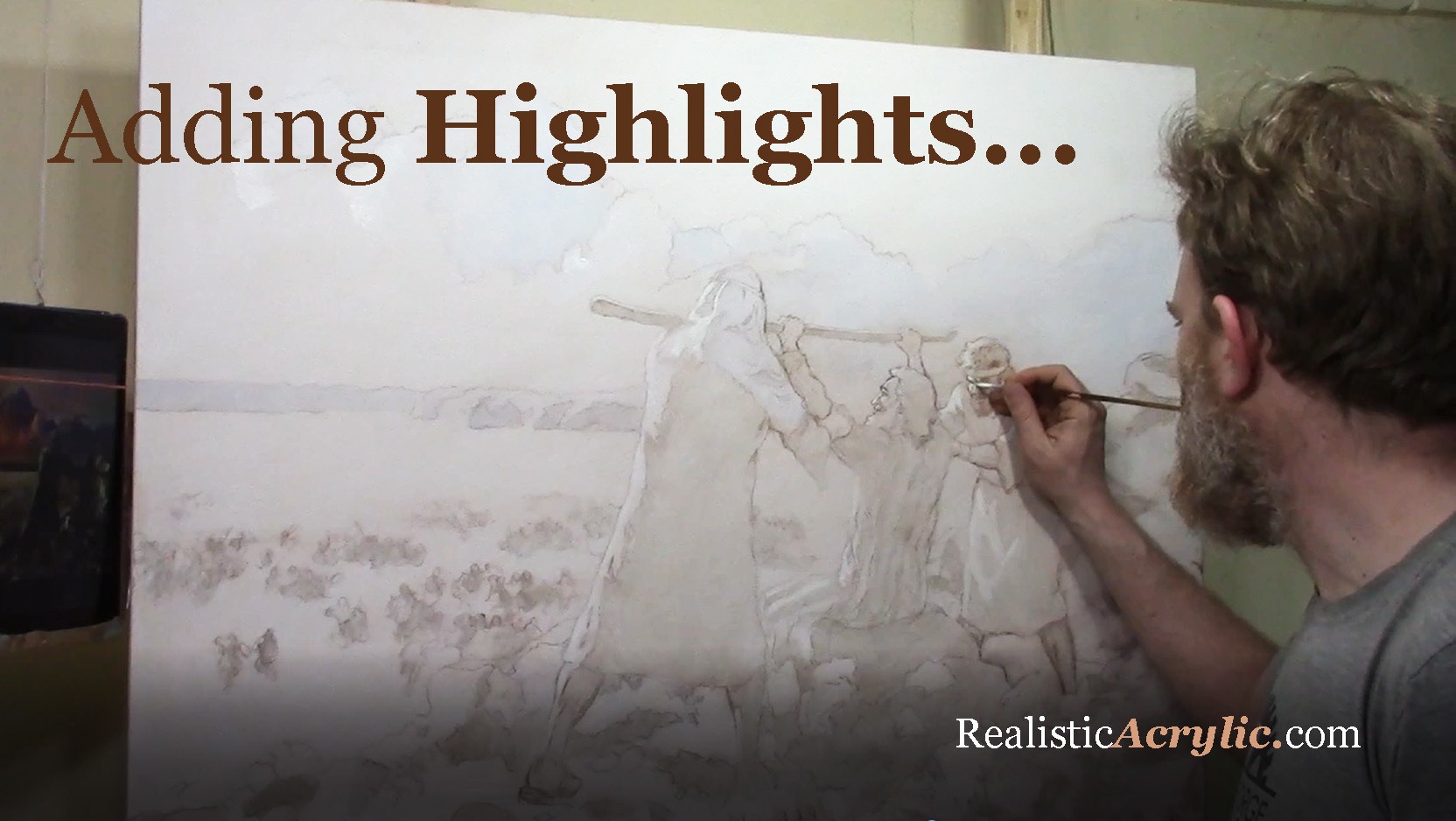
How to Add Initial Highlights to Your Acrylic Portrait
Unlock the secrets of applying initial highlights to your acrylic portraits for added depth and realism.
Adding highlights is a crucial step in bringing your acrylic portraits to life because it adds depth, dimension, and a sense of realism to the painting. In this tutorial, we’ll explore how to add initial highlights to your acrylic portrait after laying down a toning layer, using titanium white mixed with Indian yellow for a warm, vibrant touch. Then these highlights will help define the light source, making your portrait stand out.
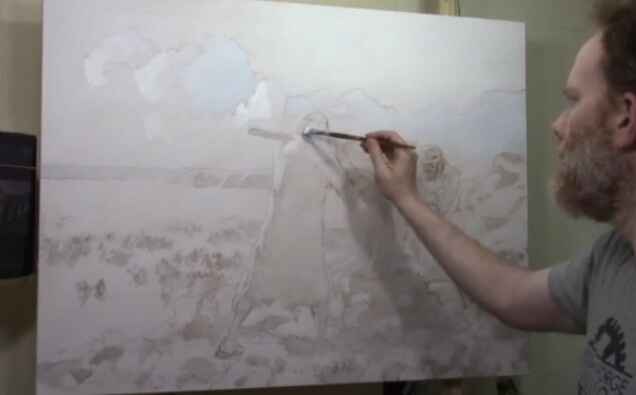
Materials You Will Need
Before we dive into the process, gather these materials:
- Titanium White Paint: For a bright, opaque base.
- Indian Yellow Paint: To warm up the white highlights.
- Matte Medium: Thins the paint for smoother application.
- Flat Size 14 Brush: Ideal for blocking in larger areas.
- Smaller Detail Brushes: Useful for adding precise highlights.
- Palette Knife (Optional): For mixing paint and mediums.
Step-by-Step Guide to Adding Initial Highlights
1. Mixing the Paint
The first step in adding highlights is preparing the right paint mixture. Because in this technique, we mix titanium white with a small amount of Indian yellow. Then the combination will create warm, natural highlights. So that the thin mixture with matte medium to around 50% opacity. This will also allow the highlights to blend seamlessly with the underlying layers without overpowering them.
Using matte medium ensures that the paint remains flexible and doesn’t dry too quickly, giving you ample time to work on the highlights.
2. Restoring Lost Highlights After Toning
After applying a toning layer, some highlights may have been muted or lost. Now it’s time to restore them. Start by focusing on the areas of your portrait where the light hits directly, such as the sky, the subject’s face, or their clothing. Then these areas need to stand out against the mid-tones and shadows.
Using the size 14 flat brush, gently block in the highlights. When you apply light, controlled strokes to ensure the paint doesn’t cover too much of the surrounding areas. Then keep your strokes smooth to avoid hard edges.
3. Adding Highlights to the Sky and Clouds
Begin with the sky and clouds, especially if you’re painting an outdoor portrait. Because when you apply the titanium white and Indian yellow mixture to the parts of the sky where the light source is strongest. This will create a glowing effect, giving the sky a more realistic appearance.
In this case, incorporating highlights into the clouds will help to define their shape and make them stand out from the background. Use soft brush strokes to add highlights along the edges, creating a gradual transition from light to shadow.
4. Highlighting Clothing
Next, move on to your subject’s clothing. Clothing often reflects light differently than skin, so it’s important to be mindful of texture. For smoother fabrics, such as silk or satin, use long, even brush strokes. Then for rougher fabrics like wool or cotton, stipple the highlights to mimic the texture of the material.
Start with broader highlights and then use a smaller brush to add more precise details, such as folds and creases. So remember that, these highlights should enhance the form of the clothing and help convey the fabric’s texture.
Techniques for Effective Highlighting
1. Build Gradually
When adding highlights, it’s essential to build up the light areas slowly. And then begin with lighter tones and gradually add more layers as needed. Because this ensures a more natural transition between highlights and shadows, enhancing the three-dimensional effect.
2. Focus on Light Source
Always keep the direction of the light source in mind. Highlights should reflect where the light is hitting the subject the most directly. In this tutorial, the highlights were added primarily to the face, clothing, and parts of the background, such as the sky and clouds.
3. Use Warm Colors for Depth
Instead of using pure white for highlights, adding a warm color like Indian yellow can create a more realistic effect. This warmth will help your highlights blend into the mid-tones and make the subject appear more vibrant.
Common Mistakes to Avoid
1. Overuse of Highlights
Too many highlights can make your portrait look flat and overexposed. Then focus on applying highlights sparingly in key areas where the light hits most directly. And less is often more when it comes to achieving a natural look.
2. Hard Edges
When applying highlights, avoid hard, defined edges unless you’re working on a very reflective surface like glass. Because most highlights, especially on skin and fabric, should have soft transitions to blend naturally with the rest of the painting.
Adding Final Details
As you finish applying the initial highlights, step back and observe your painting from a distance. This helps you see how the highlights interact with the rest of the painting and determine if they need any adjustments. If the highlights appear too bright or harsh, you can soften them by glazing over them with a thin layer of mid-tone color.
For areas like the face and hair, use a smaller brush to add subtle highlights that bring out the details. In the tutorial, highlights were applied to areas like the clothing, face, and even the sky to create depth and realism. For instance, on the subject’s face, highlights were applied to key areas such as the forehead and cheekbones, which receive the most light.
Conclusion
Adding initial highlights to your acrylic portrait is an essential step in creating depth and realism. By using a mixture of titanium white and Indian yellow, thinning it with matte medium, and applying it carefully to the key areas, you can restore lost highlights and breathe life into your portrait. As you continue to refine your highlights, remember to stay mindful of the light source, apply highlights gradually, and avoid overworking the painting.
Whether you’re painting a sky full of clouds or the fine details on a subject’s face, mastering the art of highlights will take your acrylic portraits to the next level.
For more tips and techniques on creating realistic portraits, visit www.realisticacrylic.com. Keep practicing, and you’ll soon be painting portraits you can be proud of!
Questions? Suggestions? Thoughts? Let me know, below in the comments. Please share this post with your friends!
- How to Paint Foliage Using the Acrylic Glazing Technique
- How to Trace for an Accurate Portrait Sketch
- How to Paint Realistic Eyes in Your Acrylic Portrait
- How to Add Raw Umber Dark & Ultramarine Blue to Your Portrait
- How to Make Your Own Raw Umber Dark
- How to Paint Realistic Trees & Grass in Your Acrylic
- How to Block In Skin Tone Values Using Glazing Technique
- How to Paint Vibrant Reds in Your Acrylic Portrait
- How to Glaze Background Colors & More Acrylic Portrait
- How to Paint White Clothing in Your Acrylic Portrait
- How to Easily Transition from a Sketch to a Painting
- How to Block In Shading & Skin Tones in Your Acrylic
- How to Build Up Color on Acrylic Pet Portrait
- How to Build Up Form on Clothing with Acrylic
- How to Paint Dark Clothing Using Acrylic Glazing Technique
- How to Paint a 24 x 30 Acrylic With 30 People
- How to Do Smooth Shading with Acrylic
- How to Sketch an Acrylic Portrait with a Grid
Read more about how to paint a portrait that you can surely be proud of!
I’d love to hear your thoughts about this video. Please share it with your friends and family. Let me know if you have any further questions. I’ll greatly help you.
If you’d like to learn more, sign up for my free email tips and video class today.
Learn How to Paint Acrylic Portraits With My Free Mini-Video Course!
Thank you so much for taking the time to read this tutorial and watch the video. That means a lot to me. I hope you find it very helpful in your portrait painting.
Yours for Better Portraits,
P.S. Did you find this post helpful or encouraging? If so, send it on ahead! Let others know with the share buttons below. I’d love to hear your comments. Thank you so much! Also, do you have a question on acrylic portrait painting you’d like answered? Let me know, and I’d be happy to help!
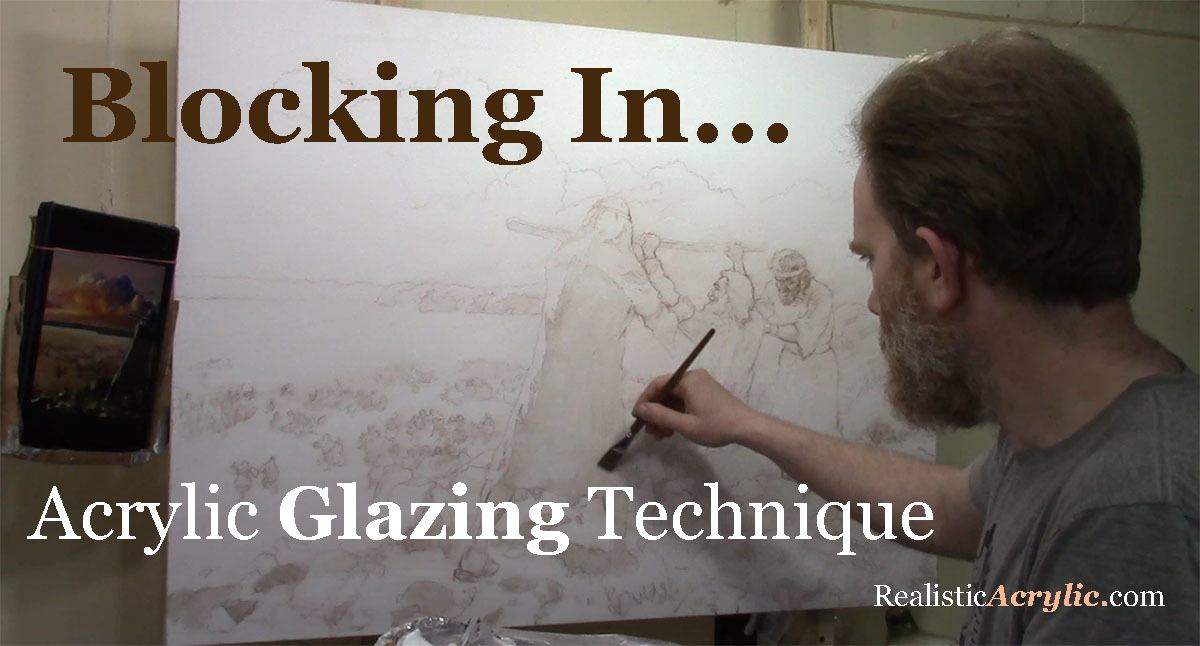
How to Blocking-in a 30″ x 40″ Acrylic Battle Scene Painting
Learn the technique of blocking-in a large 30″ x 40″ acrylic battle scene to establish strong foundations for your painting with depth and detail.
When tackling a large-scale project like blocking-in a 30″ x 40″ acrylic battle scene painting, the initial steps are crucial to setting the stage for a dynamic and cohesive composition. Because by using these combination of broad strokes and carefully placed color, this foundational layer helps you define the major forms, balance your composition, and create a sense of depth right from the start. Whether you’re an experienced artist or just starting out with larger works, mastering the blocking-in process will ensure your painting flows smoothly.
So in this demonstration, I am using a 30″ x 40″ acrylic painting I was commissioned to create, a battle scene between ancient Israel and the Amalekites. Then I asked my friends to come over to my home early in the morning, at sunrise, and model for the painting.

Yes, that’s me in the middle!
In this battle, when the Israelite leader Moses held up his staff, the power of God would flow. Then it caused the Israelite army to defeat their battlefield enemies. But, as the battle lasted for hours, Moses grew tired and couldn’t hold up his staff. Then the Amalekites got the advantage over the Israelites!
His assistants, Aaron and Hur came up with an idea. They had Moses sit on a rock. Then they held up his arms on either side, so once again, the Israelites could prevail.
This painting is meant to depict the struggle in praying, and how when others come alongside of us, they can ease the burden. And then their faith strengthens ours, and we can get the victory!
Here is my layout for the painting that I edited on Photoshop…

Now for the blocking-in video…
We start with an accurate sketch. Then, my goal is to quickly identify the major areas of contrast within the reference photo.
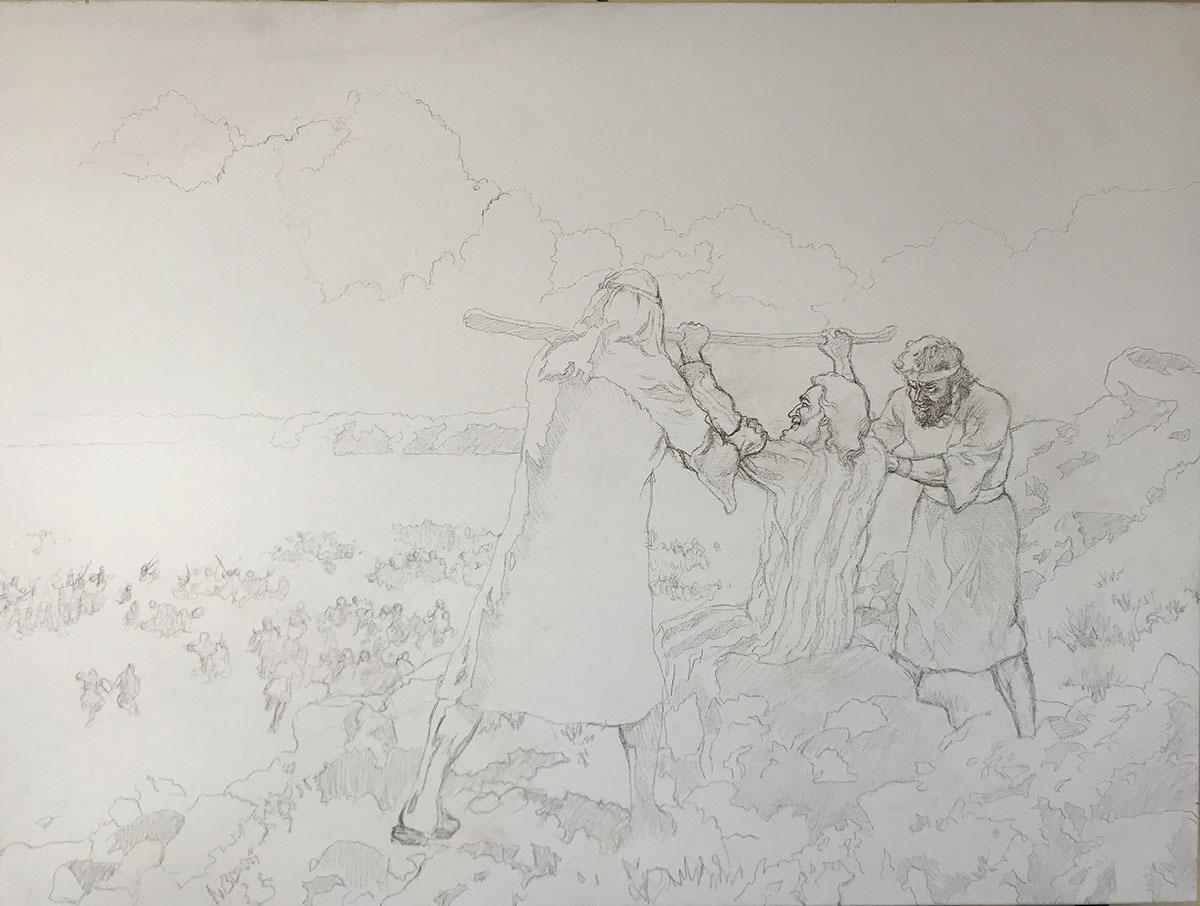
Then we apply a layer of raw umber dark, ultramarine blue and matte medium to the shadow areas designated on the sketch…
Tips and Techniques
- Start with Prayer & Purpose: Before beginning your painting, consider focusing on the purpose behind it. In this case, the painting represents a moment of intercessory prayer, symbolizing perseverance and spiritual victory. This mindfulness sets the tone for intentionality in your artwork.
- Use Matte Medium for Glazing: Apply matte medium to your palette before mixing in your colors. For blocking-in, ensure that your paint is heavily diluted with matte medium, aiming for a mixture that’s about 90-95% medium to 5-10% paint. This creates translucent layers, allowing for smooth blending and luminosity in the final work.
- Choose Your Colors: Use a traditional palette with earthy tones like raw umber, burnt sienna, and ultramarine blue, mixed with other colors such as titanium white for highlights. These colors create a natural, muted foundation for blocking-in shadows and light.
- Block-in Major Values: Start by blocking-in large value structures, such as the shadows on the figures and the surrounding landscape. Keep the application light to allow for adjustments later. Work across the whole canvas, focusing on dominant shapes and transitions between light and dark areas.
- Work with Large Brushes: Use larger, flat brushes, such as a three-quarter inch, to block-in broad areas quickly and efficiently. This prevents getting stuck in details too early, allowing you to build up the entire scene cohesively.
- Blend with Confidence: As you block-in, keep your brushstrokes fluid and in multiple directions to ensure smooth blending. Make sure to maintain a wet edge to avoid streaks and allow for easy adjustments.
- Don’t Fear Corrections: Because the paint is thin, any mistakes in the blocking-in phase can be easily corrected. You can always layer additional glazes or shift values as the painting progresses.
By focusing on blocking-in the large value structures early in the process, you create a solid foundation for your 30″ x 40″ acrylic battle scene, allowing the details to emerge naturally as you build layers.
If you’re interested in learning more about acrylic glazing or portrait painting techniques, be sure to explore the resources available at realisticacrylic.com. and download my free gift for you here.
Questions? Suggestions? Thoughts? Let me know, below in the comments. Please share this post with your friends!
- How to Paint Foliage Using the Acrylic Glazing Technique
- How to Trace for an Accurate Portrait Sketch
- How to Paint Realistic Eyes in Your Acrylic Portrait
- How to Add Raw Umber Dark & Ultramarine Blue to Your Portrait
- How to Make Your Own Raw Umber Dark
- How to Paint Realistic Trees & Grass in Your Acrylic
- How to Block In Skin Tone Values Using Glazing Technique
- How to Paint Vibrant Reds in Your Acrylic Portrait
- How to Glaze Background Colors & More Acrylic Portrait
- How to Paint White Clothing in Your Acrylic Portrait
- How to Easily Transition from a Sketch to a Painting
- How to Block In Shading & Skin Tones in Your Acrylic
- How to Build Up Color on Acrylic Pet Portrait
- How to Build Up Form on Clothing with Acrylic
- How to Paint Dark Clothing Using Acrylic Glazing Technique
- How to Paint a 24 x 30 Acrylic With 30 People
- How to Do Smooth Shading with Acrylic
- How to Sketch an Acrylic Portrait with a Grid
Read more about how to paint a portrait that you can surely be proud of!
I’d love to hear your thoughts about this video. Please share it with your friends and family. Let me know if you have any further questions. I’ll greatly help you.
If you’d like to learn more, sign up for my free email tips and video class today.
Learn How to Paint Acrylic Portraits With My Free Mini-Video Course!
Thank you so much for taking the time to read this tutorial and watch the video. That means a lot to me. I hope you find it very helpful in your portrait painting.
Yours for Better Portraits,
P.S. Did you find this post helpful or encouraging? If so, send it on ahead! Let others know with the share buttons below. I’d love to hear your comments. Thank you so much! Also, do you have a question on acrylic portrait painting you’d like answered? Let me know, and I’d be happy to help!