
Tag Archives for " learn to paint portraits "
New Painting Course on Shading: Shade like a Master
Learn shading with acrylics: techniques for realistic portraits
Are you struggling with shading in your portrait paintings? Does your artwork lack that three-dimensional look you desire? Look no further in my new “Shade Like a Master” course, which is designed specifically to help artists like you improve their shading techniques and make portraits look convincingly real.
Shading is one of the most critical aspects of achieving realism in portrait painting. It is the process of creating depth, dimension, and form by manipulating light and dark areas. However, without proper guidance, it can be challenging to master. Often, the colors become muddy, or the light and dark values are off, leading to flat or unconvincing results. Because this course aims to take your shading skills to the next level, offering you clear, step-by-step instructions to make shading easier and more effective. Learn my new painting course on shading and shade like a master.
What You Will Learn in This Course
This three-week-long live course will cover the fundamental principles of shading using acrylics and then guide you in implementing these techniques to create more realistic and three-dimensional portraits.
Here’s a breakdown of what you can expect:
- Week 1 (September 5th): Introduction to Value and Light. Learn how to see light and dark values correctly and how to apply these values to create a realistic sense of form.
- Week 2 (September 12th): Building Depth with Layers. Understand how to build up your layers in acrylic painting to gradually increase depth and dimension.
- Week 3 (September 19th): Final Touches. Master the nuances of shading and highlights to bring your portrait to life with subtlety and realism.
The Benefits of Shading Like a Master
However, shading effectively involves placing the correct values (light and dark areas) and colors in the right places, and it can be the difference between a flat painting and one that feels lifelike. But this course is designed to address common shading struggles that artists face, including:
- Muddy Colors: Learn how to avoid mixing muddy colors and maintain clean transitions between shadows and highlights.
- Incorrect Values: Understand the importance of values (lightness and darkness) in your painting and how they create the illusion of form.
- Lack of Depth: Master layering techniques that will bring more depth and dimension to your portraits.
This course offers more than just theoretical knowledge. So as I paint live, you’ll be able to see his thought process and brush techniques in real-time. Then you can apply what you’ve learned in your own projects immediately, making it a hands-on learning experience.
Why Enroll in a Live Course?
While pre-recorded tutorials are useful, there is nothing quite like participating in a live session where you can ask questions, get feedback, and interact with the instructor. During the course, you will have the chance to participate in discussions and ask me a questions about your specific challenges with shading. However, if you can’t make the live sessions, don’t worry—each session will be recorded and available to replay at your convenience.
Course Highlights:
- Interactive Sessions: Participate in live lessons and ask questions to get direct feedback on your work.
- On-Demand Access: Rewatch the lessons at your own pace. Even if you miss a session, you can catch up later.
- Bite-Sized Segments: The course is broken down into manageable lessons, allowing you to focus on the areas where you need the most help.
Tips and Techniques for Shading Like a Master
To give you a sneak peek into what you’ll learn in the course, here are some essential tips and techniques that will help you improve your shading skills with acrylics:
- Understand the Light Source: Always identify the main light source in your painting. This will guide where you place highlights and shadows, ensuring consistency and realism.
- Build Layers Gradually: Acrylics dry quickly, making them ideal for layering. Begin with broad areas of light and dark, and gradually build up layers of more refined shadows and highlights.
- Use Glazing for Smooth Transitions: Glazing involves applying thin layers of translucent paint to create smooth transitions between shadows and highlights. It’s a powerful technique for achieving subtle, lifelike shading.
- Value is Key: Pay close attention to the values in your portrait. Start with a grayscale value study to ensure your light and dark areas are correct before adding color.
- Keep Colors Clean: Avoid over-mixing your paint, as this can lead to muddy colors. Instead, focus on applying clean, distinct layers of color.
- Control Your Edges: Soft edges suggest a gradual change in light, while hard edges emphasize abrupt changes. Use these techniques to control how light falls on your subject and how form is perceived.
Why You Should Join the “Shade Like a Master” Course
This course is ideal for both beginners and intermediate artists who want to enhance their shading techniques. Whether you are new to acrylic portrait painting or have been practicing for years, this course will give you the tools and guidance to take your art to the next level.
You’ll not only learn the technical skills needed for shading, but you’ll also gain the confidence to apply these techniques in your own work. Shading is not just about adding darkness to your painting—it’s about understanding how light works, how to manipulate it, and how to use it to bring your portraits to life.
Learn how to shade effectively in acrylic so that your paintings look realistic here.
LEARN MORE
- How to Paint Foliage Using the Acrylic Glazing Technique
- How to Trace for an Accurate Portrait Sketch
- How to Paint Realistic Eyes in Your Acrylic Portrait
- How to Add Raw Umber Dark & Ultramarine Blue to Your Portrait
- How to Make Your Own Raw Umber Dark
- How to Paint Realistic Trees & Grass in Your Acrylic
- How to Block In Skin Tone Values Using Glazing Technique
- How to Paint Vibrant Reds in Your Acrylic Portrait
- How to Glaze Background Colors & More Acrylic Portrait
- How to Paint White Clothing in Your Acrylic Portrait
- How to Easily Transition from a Sketch to a Painting
- How to Block In Shading & Skin Tones in Your Acrylic
- How to Build Up Color on Acrylic Pet Portrait
- How to Build Up Form on Clothing with Acrylic
- How to Paint Dark Clothing Using Acrylic Glazing Technique
- How to Paint a 24 x 30 Acrylic With 30 People
- How to Do Smooth Shading with Acrylic
- How to Sketch an Acrylic Portrait with a Grid
Read more about how to paint a portrait that you can surely be proud of!
I’d love to hear your thoughts on this video. Please share it with your friends and family. Let me know if you have any further questions. I’ll greatly help you.
If you’d like to learn more, sign up for my free email tips and video class today.
Learn How to Paint Acrylic Portraits With My Free Mini-Video Course!
Thank you so much for taking the time to read this tutorial and watch the video. That means a lot to me. I hope you find it very helpful in your portrait painting.
Yours for Better Portraits,

P.S. Did you find this post helpful or encouraging? If so, send it on ahead! Let others know with the share buttons below. I’d love to hear your comments. Thank you so much! Also, do you have a question on acrylic portrait painting you’d like answered? Let me know, and I’d be happy to help!
How to Create Realistic Effects: The Mystery of Realism in Painting
Unveiling realism on how to use less detail that creates a greater impact
The Mystery of Realism
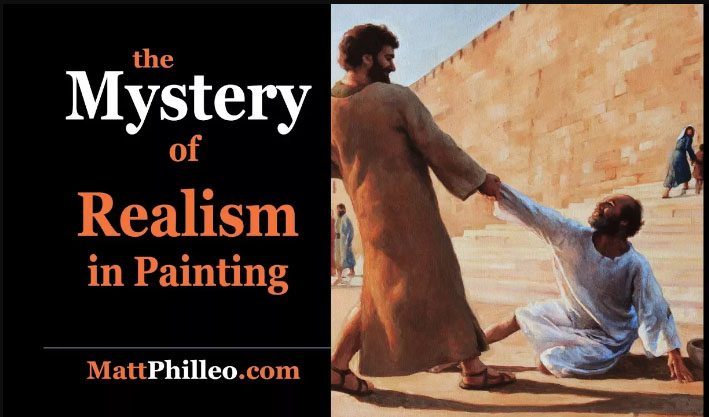
Realism is a skill that artists continually strive to master. It’s not simply about replicating every detail of a subject but rather creating a convincing sense of reality through the balance of color, value, and selective detail. In this blog post, I will share how to create realistic effects with the mystery of realism in painting. And then the insights from my latest project—illustrating a book cover for Acts Chapter Five—and reveal the key to unlocking the mystery of realism. Understanding how to create depth and three-dimensionality without overwhelming your painting with unnecessary details is what distinguishes a great portrait artist.
The Importance of Realism in Painting
Realism in painting hinges on two main aspects: color and value. Colors must be placed accurately to reflect light and shadow, creating the illusion of three-dimensionality. However, the trick is not to obsess over minute details but to allow the viewer’s eye to fill in the gaps. This concept becomes especially useful when rendering complex textures like hair or beards.
For example, in my painting of the beggar from Acts Chapter Five, I added hints of white to his beard, not with pure white paint but by using light blue. This subtle touch of color suggests white hair while simultaneously reflecting the environment around the subject, adding a layer of realism. The beard reflects the blue of the sky above, creating an immersive environment in the portrait.
Tip 1: Create Realism Through Implied Detail
One of the most important aspects of achieving realism is knowing when to stop. You don’t need to paint every individual hair or wrinkle. In fact, implying detail can often be more effective than adding it.
In my portrait, I used small dabs of blue rather than painting each individual hair. This approach implies texture and depth without bogging the painting down in unnecessary detail. This principle is what I call the “mystery of realism.” It’s about leaving certain areas unfinished or loosely rendered to let the viewer’s imagination complete the picture.
Tip 2: Mastering Color and Light Reflection
When aiming for realism, color and light reflection play a critical role. Natural light doesn’t just illuminate an object; it reflects onto surfaces around it, affecting the colors and tones. For example, the sky can influence the shades you use, even in parts of the painting where the sky is not visible. In the case of my beggar’s beard, the blue sky above was reflected onto his beard, influencing its color and creating a more cohesive, realistic scene.
By being mindful of how light interacts with surfaces, you can make your paintings appear far more lifelike. This concept is particularly important when working on large, multi-figure compositions or outdoor scenes.
Tip 3: Focus on Abstract Shapes for Realism
When painting realistically, especially in portraiture, it’s easy to get caught up in details like eyes, noses, and mouths. However, it’s often more helpful to break down these complex features into abstract shapes. For example, think of the cheek as a triangle, or a shadow under the nose as an oval. By doing this, you focus on the broader composition of values rather than obsessing over specific details.
In the beggar’s face, I simplified the cheek into a triangular shape, focusing on where the light hits and the shadow falls. This method ensures that your painting maintains its structural integrity while also creating a realistic appearance.
Tip 4: Don’t Overload with Detail—Less Is More
Too much detail can actually detract from realism. When every part of a painting is equally detailed, the composition becomes flat and overwhelming. Instead, it’s crucial to highlight certain focal points and let other areas remain more loosely defined. This selective focus allows the eye to rest on key areas of the painting, adding to the sense of realism.
In my portrait, I focused more on the beggar’s eyes and the highlights of his beard while leaving the surrounding areas, like his clothing, more abstract. This approach draws attention to the most expressive parts of the portrait without cluttering the overall composition.
Technique Breakdown: Shading with Purpose
In realism, shading plays a major role in achieving depth and dimension. However, it’s not about randomly applying shadows. You need to think about where the light source is and how it interacts with your subject. When shading the beggar’s beard, for instance, I kept in mind that parts of the beard are in shadow, meaning they reflect less direct light and pick up more ambient colors, like the blue of the sky.
By deliberately placing darker values in certain areas and lighter values in others, I was able to create the illusion of volume and thickness in the beard without painting every hair individually.
Embrace the Mystery of Realism
The key to realism in painting isn’t in capturing every detail but rather in knowing what to leave out. This selective use of detail allows for a more immersive and convincing piece. By focusing on color, light reflection, and abstract shapes, you can create realistic effects that captivate the viewer’s eye without overwhelming them.
As I continue working on my Acts Chapter Five book cover, I find that the “mystery of realism” comes down to one thing: implying more than you state outright. This balance between precision and suggestion allows your work to come to life in a truly three-dimensional way.
Tips:
- Imply, Don’t State – Leave out unnecessary details and allow the viewer’s imagination to fill in the gaps.
- Focus on Light Reflection – Be mindful of how light interacts with your subject and reflects colors in unexpected places.
- Simplify Shapes – Break down complex features into simple geometric shapes to maintain composition and structure.
- Less Is More – Avoid over-detailing to prevent your painting from looking flat and cluttered.
With these tips in mind, you can unlock the mystery of realism in your painting and achieve a more profound sense of depth and believability.
Read more about my additional resources, tutorials, to learn more and check out my free courses here. . Whether you’re a beginner or an experienced artist, there’s always something new to learn and apply to your paintings. Happy painting!
LEARN MORE
- How to Paint Foliage Using the Acrylic Glazing Technique
- How to Trace for an Accurate Portrait Sketch
- How to Paint Realistic Eyes in Your Acrylic Portrait
- How to Add Raw Umber Dark & Ultramarine Blue to Your Portrait
- How to Make Your Own Raw Umber Dark
- How to Paint Realistic Trees & Grass in Your Acrylic
- How to Block In Skin Tone Values Using Glazing Technique
- How to Paint Vibrant Reds in Your Acrylic Portrait
- How to Glaze Background Colors & More Acrylic Portrait
- How to Paint White Clothing in Your Acrylic Portrait
- How to Easily Transition from a Sketch to a Painting
- How to Block In Shading & Skin Tones in Your Acrylic
- How to Build Up Color on Acrylic Pet Portrait
- How to Build Up Form on Clothing with Acrylic
- How to Paint Dark Clothing Using Acrylic Glazing Technique
- How to Paint a 24 x 30 Acrylic With 30 People
- How to Do Smooth Shading with Acrylic
- How to Sketch an Acrylic Portrait with a Grid
Read more about how to paint a portrait that you can surely be proud of!
I’d love to hear your thoughts on this video. Please share it with your friends and family. Let me know if you have any further questions. I’ll greatly help you.
If you’d like to learn more, sign up for my free email tips and video class today.
Learn How to Paint Acrylic Portraits With My Free Mini-Video Course!
Thank you so much for taking the time to read this tutorial and watch the video. That means a lot to me. I hope you find it very helpful in your portrait painting.
Yours for Better Portraits,
P.S. Did you find this post helpful or encouraging? If so, send it on ahead! Let others know with the share buttons below. I’d love to hear your comments. Thank you so much! Also, do you have a question on acrylic portrait painting you’d like answered? Let me know, and I’d be happy to help!
How to Shade Better With 2 Basic Component of Shading
Elevate your shading skills by understanding light sources and shadows
Shading is an essential technique that transforms a simple drawing into a more dimensional and realistic piece of art. So to truly master shading, it’s important to understand its basic components: the light source and the object or surface. These two key elements form the foundation of all shading techniques, and when applied correctly, they can significantly improve the realism of your drawings.
In this guide, we’ll explore these core components and provide you with actionable tips on how to shade better with my 2 basic components of shading.
The Two Fundamental Components of Shading
At its core, shading revolves around two basic elements that work together to create the illusion of depth and form in your drawings:
- Light Source
- Object or Surface Receiving or Obscuring the Light
1. Understanding the Light Source
To achieve effective shading, then you first need to recognize the light source in your composition. Because this could be anything from natural sunlight to artificial lighting like lamps. So the light sources can vary in intensity, color, and direction, each affecting how shadows and highlights appear on your objects.
In a simple setup, you may have only one light source, but more complex environments might have multiple lights, each influencing the object differently. However, when starting out, it’s best to focus on a single light source to understand how light interacts with surfaces.
Tip: Always decide the position and intensity of your light source before you begin shading. Because a consistent light direction ensures that your shadows and highlights align properly, creating a more convincing effect.
2. The Role of Objects and Surfaces
The second key element in shading is the object or surface that either receives or obscures the light. When light hits an object, it creates two primary effects: highlights where the light strikes directly and shadows where the light is obstructed.
The surface texture and shape of an object also play a vital role in how light behaves. For example, a smooth surface will have more even, subtle shading, while a textured surface will create more varied and intricate shadow patterns.
Technique: To create convincing shadows, then break down complex forms into simple shapes (like spheres or cubes) and imagine how light interacts with each part of the shape.
Types of Shadows: Cast Shadows and Form Shadows
Shadows are a crucial aspect of shading and are divided into two main types:
- Cast Shadow
- Form Shadow
1. Cast Shadows
A cast shadow occurs when one object blocks the light from reaching another surface. Because this shadow is usually sharper and darker near the base of the object that’s casting it and fades out as it extends farther from the object.
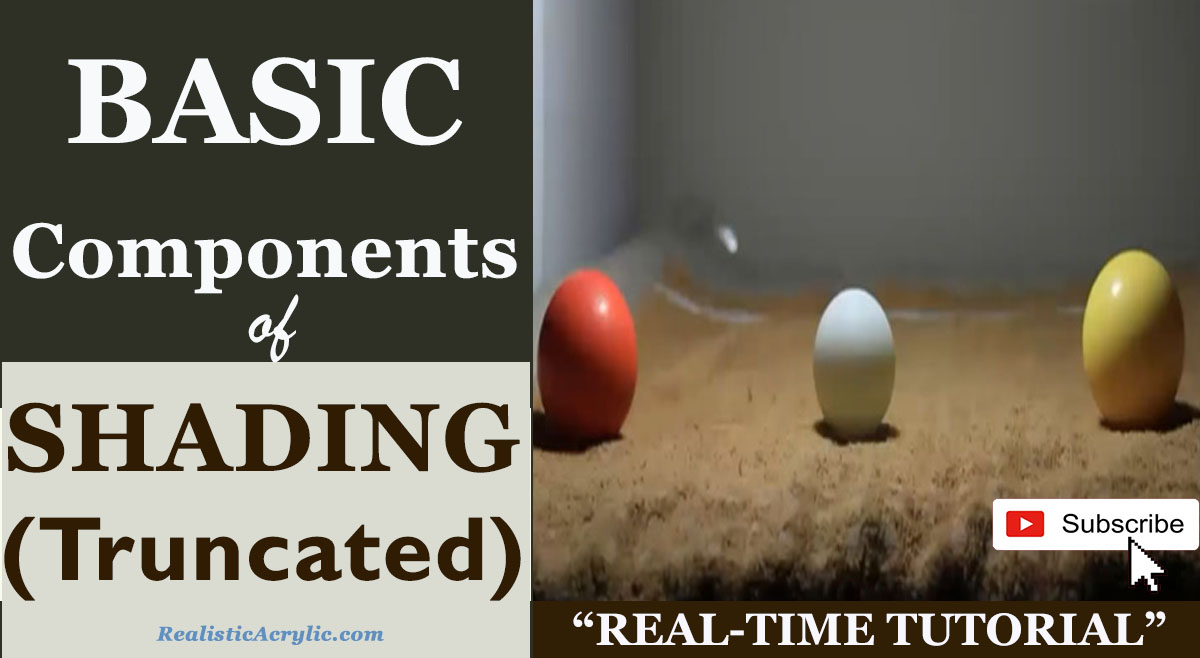
For example, in a simple setup where a ball is illuminated by a single light source, the cast shadow will appear on the surface where the light is blocked by the ball.
Tip: When drawing cast shadows, pay attention to the angle and distance of the light source. A close light will cast a short, sharp shadow, while a distant light will produce a softer, longer shadow.
2. Form Shadows
Hence, the form shadows appear on the object itself, as parts of the surface curve away from the light source. Unlike cast shadows, form shadows are softer and more gradual. And then they give the object a sense of volume and depth.
Using the same example of a ball, the form shadow would appear on the side of the ball that is turned away from the light. So this shadow helps define the roundness of the object.
Technique: To create smooth form shadows, use a gradual transition from light to dark by blending your shading with light strokes. Because this helps avoid harsh lines and gives your drawing a more realistic look.
Creating Realistic Effects Through Contrast
One of the keys to achieving realistic shading is understanding the contrast between light and dark areas. Then, contrast refers to the difference in value (brightness or darkness) between the highlights and shadows in your drawing.
To make your artwork stand out, focus on enhancing this contrast. The sharper the contrast, the more dramatic and realistic the effect will be. However, you don’t want to overdo it. Balancing contrast with subtle transitions between light and dark is essential for a natural look.
Tip: When shading, squint your eyes to simplify the scene and better distinguish between light and dark values. This helps you identify where the darkest shadows and brightest highlights should be placed.
Shading Techniques to Improve Your Skills
Shading is not just about adding shadows; it’s about building layers and adjusting pressure to create depth and texture. Here are a few basic techniques to help you improve your shading:
1. Hatching and Cross-Hatching
Hatching involves drawing closely spaced parallel lines to create value. The more lines you add, the darker the area will become. Cross-hatching takes it a step further by adding a second layer of lines at an angle to the first.
Technique: Use hatching and cross-hatching to gradually build up your shadows, especially in areas where light transitions into shadow.
2. Blending
Blending involves smoothing out the transitions between light and dark by using a blending stump or even your finger. This technique is useful for creating soft form shadows and smooth surfaces.
Tip: Don’t over-blend. Maintaining some texture helps give your drawing character and realism.
3. Layering
Layering is the process of gradually building up shading by applying multiple layers of graphite or charcoal. Start light and slowly darken areas as needed. This technique gives you more control over the final result.
Tip: Avoid heavy, dark strokes right away. Build up the shading slowly to prevent harsh lines and inconsistencies.
Mastering Shading
By understanding the basic components of shading—light source and object—you can begin to create more realistic effects in your artwork. Whether you’re working with pencils, charcoal, or another medium, mastering the use of shadows and highlights will bring your drawings to life.
Start with these fundamentals, practice regularly, and remember: shading is as much about what you leave out as what you put in. By controlling your light sources, refining your shadows, and balancing your contrast, you’ll elevate your shading skills and add depth to your work.
Read more about my additional resources, tutorials, to learn more and check out my free courses here. . Whether you’re a beginner or an experienced artist, there’s always something new to learn and apply to your paintings. Happy painting!
- How to Paint Foliage Using the Acrylic Glazing Technique
- How to Trace for an Accurate Portrait Sketch
- How to Paint Realistic Eyes in Your Acrylic Portrait
- How to Add Raw Umber Dark & Ultramarine Blue to Your Portrait
- How to Make Your Own Raw Umber Dark
- How to Paint Realistic Trees & Grass in Your Acrylic
- How to Block In Skin Tone Values Using Glazing Technique
- How to Paint Vibrant Reds in Your Acrylic Portrait
- How to Glaze Background Colors & More Acrylic Portrait
- How to Paint White Clothing in Your Acrylic Portrait
- How to Easily Transition from a Sketch to a Painting
- How to Block In Shading & Skin Tones in Your Acrylic
- How to Build Up Color on Acrylic Pet Portrait
- How to Build Up Form on Clothing with Acrylic
- How to Paint Dark Clothing Using Acrylic Glazing Technique
- How to Paint a 24 x 30 Acrylic With 30 People
- How to Do Smooth Shading with Acrylic
- How to Sketch an Acrylic Portrait with a Grid
Read more about how to paint a portrait that you can surely be proud of!
I’d love to hear your thoughts on this video. Please share it with your friends and family. Let me know if you have any further questions. I’ll greatly help you.
If you’d like to learn more, sign up for my free email tips and video class today.
Learn How to Paint Acrylic Portraits With My Free Mini-Video Course!
Thank you so much for taking the time to read this tutorial and watch the video. That means a lot to me. I hope you find it very helpful in your portrait painting.
Yours for Better Portraits,
Signature_200dpi_sm.jpg
P.S. Did you find this post helpful or encouraging? If so, send it on ahead! Let others know with the share buttons below. I’d love to hear your comments. Thank you so much! Also, do you have a question on acrylic portrait painting you’d like answered? Let me know, and I’d be happy to help!
How to Improve your Portrait: 4 Different Light Source Positions
Enhancing realism with rear light source techniques
Lighting plays a crucial role in creating a captivating and realistic portrait. Understanding how light affects your subject can dramatically improve your work, making your portraits more dynamic and visually appealing. In this post, we’ll explore four different light source positions and how you can use them to enhance your portraits.
The Impact of Light on Portraits
Lighting is one of the most critical elements in creating a realistic portrait. When you master how different light sources affect your subject, it helps you bring depth, dimension, and mood into your artwork. Whether you’re painting from life or a photo reference, understanding the various light positions and their effects on shading and shadows will transform your work. In this post, we’ll explore four essential light source positions: frontal, angled, side, and rear.
1. Frontal Light Source: Soft and Even Illumination
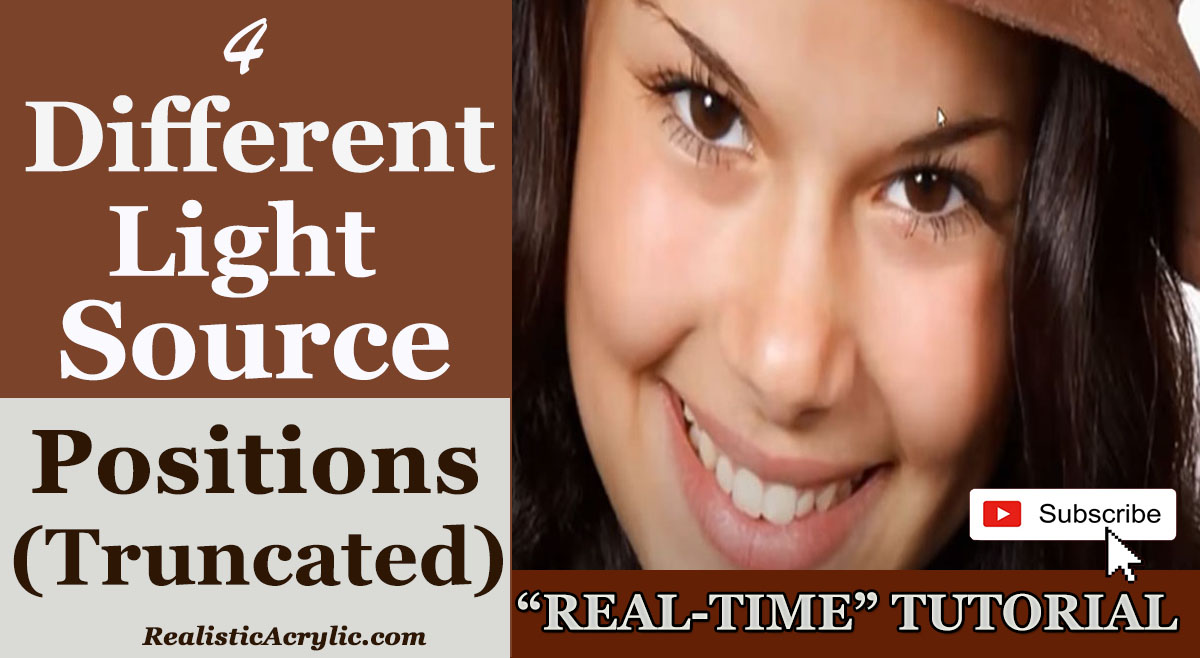
The frontal light source, as the name suggests, comes directly in front of the subject, illuminating the face evenly. This is one of the most common light positions in photography, particularly in flash photography.
Example: Imagine a lamp placed directly in front of a person’s face. This light creates very minimal shadows, illuminating the entire face, with a subtle shadow cast beneath the chin. The effect can flatten out features slightly but still offers a clear, soft look to the portrait.
Advantages:
- Creates an evenly lit subject, reducing harsh shadows.
- Suitable for portraits where you want a soft, balanced lighting effect.
Disadvantages:
- Can flatten out features, losing depth.
- Reduces contrast, which can make the portrait less dynamic.
Technique Tip: If you want to enhance your portraits with frontal light, use multiple light sources. This will even out the lighting and prevent flatness, allowing for a softer transition between light and shadow.
2. Angled Light Source: Creating Depth and Drama
An angled light source adds a dramatic flair to your portraits by introducing more contrast. The light hits the subject from the side, creating distinct highlights and shadows, which bring depth and dimension to the artwork.
Example: A light coming from the left of the subject will illuminate the left side of the face, while the right side is cast into shadow. The result is a portrait with defined contrasts and a three-dimensional feel.
Advantages:
- Creates more depth and dimension in your portrait.
- Highlights specific facial features, making them stand out.
Disadvantages:
- May create too much contrast if not managed properly.
- Shadows can obscure important details of the face.
Technique Tip: When using angled lighting, soften the shadows with a secondary light source or a reflector. This will maintain depth without sacrificing detail, especially around key features like the eyes, nose, and mouth.
3. Side Light Source: Emphasizing Textures and Contours
The side light source is similar to angled light but comes directly from the side of the subject, emphasizing contours and textures. This position can be perfect for highlighting the natural textures of skin, hair, and fabric in a portrait.
Example: Light coming from the right side of the subject will illuminate half of the face, while the other half remains in shadow. This can produce a more moody and intense effect.
Advantages:
- Brings out the texture of the skin and clothing.
- Perfect for creating strong visual contrast between light and shadow.
Disadvantages:
- May cast too much of the face in shadow, making the subject look harsh.
- Can obscure facial features if not used carefully.
Technique Tip: To balance out the heavy shadows created by side lighting, use a soft light or a reflective surface to bounce some light back into the shadowed areas. This helps retain details without compromising the dramatic effect.
4. Rear Light Source: Adding Mystery and Atmosphere
A rear light source is less commonly used, but it can create a mysterious and atmospheric effect by illuminating the subject from behind. This positioning results in a halo-like glow around the subject, with the face mostly in shadow.
Example: A rear light source positioned behind the subject will create a silhouette effect, with strong backlighting outlining the edges of the subject’s head, shoulders, and body.
Advantages:
- Creates a striking silhouette or halo effect.
- Adds a sense of mystery or drama to the portrait.
Disadvantages:
- The face may lose detail, making it hard to capture expressions.
- Can be challenging to balance with other light sources.
Technique Tip: Use rear lighting in combination with subtle front or side lighting to illuminate the face just enough to capture essential details while keeping the atmospheric backlighting intact.
Tips for Using Different Light Source Positions in Portraits
- Experiment with Multiple Sources: Often, combining two or more light sources—such as a frontal light with a rear light—can create a more balanced and interesting portrait. It helps soften shadows while still creating depth and contrast.
- Observe the Eyes: The reflection of light in the eyes can give you valuable clues about the direction and strength of the light source. Pay attention to the catchlights (reflections) in the subject’s eyes, as these will indicate the position of the primary light.
- Use Reflectors: When working with strong side or angled light, use reflectors to soften the shadows. Reflectors bounce light back into shadowed areas, helping you maintain details and avoid overly harsh contrasts.
- Practice with Photos: If you’re unsure which lighting works best, try taking several photos of your subject with different light sources. Analyze how the light falls on the face and experiment with various setups to find the most flattering arrangement.
Mastering Lighting for Portraits
Understanding and controlling light is key to creating captivating portraits. Whether you choose the soft illumination of a frontal light or the dramatic shadows of an angled source, learning how to manipulate light will give your portraits depth, dimension, and emotional impact. By experimenting with different light source positions and refining your technique, you can elevate the realism and artistry in your portrait paintings.
Watch the video below to learn more about the 4 different light source positions (Truncated).
- Adding highlights to your acrylic painting
- 5 Excellent Reasons to Use Aluminum Foil
- How Photoshop alter your Photo
- Painting Clothing in an Acrylic Portrait
- Paint a Cloudy Sky Acrylic
- How to add Semi-Opaque Highlights
- How to Enhance the Contrast in Your Acrylic
- How to Add Glaze to Your Acrylic Painting
Read more about how to paint a portrait that you can surely be proud of!
I’d love to hear your thoughts on this video. Please share it with your friends and family. Let me know if you have any further questions. I’ll greatly help you.
If you’d like to learn more, sign up for my free email tips and video class today.
Learn How to Paint Acrylic Portraits With My Free Mini-Video Course!
Thank you so much for taking the time to read this tutorial and watch the video. That means a lot to me. I hope you find it very helpful in your portrait painting.
Yours for Better Portraits,
P.S. Did you find this post helpful or encouraging? If so, send it on ahead! Let others know with the share buttons below. I’d love to hear your comments. Thank you so much! Also, do you have a question on acrylic portrait painting you’d like answered? Let me know, and I’d be happy to help!
How to Paint “Smoldering Wick” in Acrylic: Glazing Techniques
Learn the acrylic glazing technique to bring light and depth to your portrait
I’ll show you how to paint “Smoldering Wick” in your acrylic portrait using glazing technique in a 30 x 40 painting. Because this piece was inspired by my personal journey through discouragement and finding encouragement in scripture, specifically from the Book of Isaiah. The glazing technique, a method popular among old masters like Leonardo da Vinci and Vermeer, where they add depth, luminosity, and rich layers to acrylic paintings. Then you’ll learn step-by-step how to apply glazes to your artwork, creating realistic and captivating results.
What Is the Glazing Technique in Acrylic Painting?
Acrylic glazing involves layering translucent paint over dry layers to build depth and modify colors, of course, without losing underlying details. Because this technique is commonly used to create luminosity, enhance vibrancy, and achieve a realistic look. To do this, I mix clear matte medium with acrylic paint to thin it, allowing light to pass through the layers. Basically, this method is perfect for painters seeking to build up subtle shifts in value, color, and detail.
How Smoldering Wick Was Created:
Smoldering Wick is a deeply symbolic painting depicting a discouraged man, uplifted by a servant refilling a lamp—representing hope and light. The servant, symbolizing Jesus, adds oil to the lamp, brightening the flame. The light not only enhances the visual appeal of the piece but also conveys the message of encouragement during dark times.
By using the glazing technique, I add layers of transparent color to gradually create depth and contrast. This approach preserves the underlying brushwork while providing a rich, luminous finish.
Step-by-Step Guide to Glazing in Acrylic
- Start with a Matte Medium Base: So, I begin by preparing my palette. Use a clear matte medium to mix with your acrylic paint. For Smoldering Wick, use a combination of dark brown (raw umber), yellow ochre, and a small amount of white to adjust the value. Afterwards, matte medium helps to thin the paint, making it semi-translucent.
- Apply Thin Layers: Lightly brush the paint onto your canvas in thin, smooth layers. So, begin by adding texture to the map depicted in his painting, using his fingers to gently blend the paint. But this finger-blending technique ensures that no harsh edges remain, creating a seamless and natural look.
- Gradual Color Building: Work gradually with glazes. I also added layers of raw sienna and a small amount of white, following the lines of the old-world map in the painting. Then, building up layers slowly ensures that each color shift is subtle, allowing the light to shine through the glazes, which enhances the painting’s luminosity.
- Refining Details with More Glazes: For fine details, such as the boat in the background of Smoldering Wick, I apply several layers of glaze, allowing each layer to dry before adding another. I revisit the area that was previously painted to enhance contrast and depth by working over existing layers with new, thin washes of color.
- Creating Smooth Gradations: Eventually, to achieve smooth transitions between light and dark, I use a combination of ochre, ultramarine blue, and phthalo blue mixed with clear medium. Then, apply the glaze using crisscross strokes, ensuring that the paint is evenly distributed and blended. This method is especially effective for creating smooth, luminous shadows, as seen in the painting’s lamp and surrounding environment.
- Adjusting Warmth and Tone: After applying cooler glazes to darken certain areas, I shift to warmer glazes, afterwards, I use the mixture of red and ochre to bring more warmth into the scene. Generally, this back-and-forth layering creates a rich, complex color palette. Thinning out the medium in the later stages ensures a soft, translucent finish that still preserves the previous layers’ details.
Tips for Successful Acrylic Glazing:
- Use Thin Layers: Always apply glaze in thin layers. The beauty of glazing comes from the gradual buildup of color, allowing light to pass through each layer.
- Blend with Fingers: Don’t be afraid to use your fingers to blend out harsh edges. Because this technique helps to soften transitions and create a smooth finish.
- Layer Warm and Cool Colors: To add dimension and vibrancy to your painting, alternate between warm and cool glazes. This creates an interesting contrast that enhances the overall depth.
- Let Each Layer Dry: Patience is key. Let each layer fully dry before applying the next one to avoid muddying the colors.
- Experiment with Mediums: The ratio of medium to paint can drastically affect the transparency of your glazes. Play around with different mixtures to achieve varying levels of translucency.
Techniques for Painting Light with Glazes:
In Smoldering Wick, the focal point is the lamp, which serves as a source of light and a symbol of hope. Here’s how I achieve the glowing effect:
- Use Multiple Colors in the Light Source: Start with cooler, darker tones in the background, then slowly add warmer glazes near the light source, such as the lamp in the painting.
- Create a Gradation: Begin with dark colors at the edges, blending towards the light source with progressively lighter and warmer glazes. This technique mimics the way light naturally spreads.
- Maintain Underlying Detail: Always apply glazes thinly to preserve the detail underneath. In the painting, even the intricate lines of the map are visible through the layers of glaze.
The glazing technique is a powerful tool for adding depth, realism, and light to your acrylic paintings. As I demonstrated in Smoldering Wick, because this method allows you to layer transparent colors, creating a luminous, detailed finish. Then by applying glazes patiently and carefully, you can achieve stunning results in your work.
Whether you are painting a deeply symbolic piece like Smoldering Wick or working on other subjects, mastering glazing will give your paintings a professional and refined look.
Read more about my additional resources, tutorials, to learn more and check out my free courses here. . Whether you’re a beginner or an experienced artist, there’s always something new to learn and apply to your paintings. Happy painting!
- How to Paint Foliage Using the Acrylic Glazing Technique
- How to Trace for an Accurate Portrait Sketch
- How to Paint Realistic Eyes in Your Acrylic Portrait
- How to Add Raw Umber Dark & Ultramarine Blue to Your Portrait
- How to Make Your Own Raw Umber Dark
- How to Paint Realistic Trees & Grass in Your Acrylic
- How to Block In Skin Tone Values Using Glazing Technique
- How to Paint Vibrant Reds in Your Acrylic Portrait
- How to Glaze Background Colors & More Acrylic Portrait
- How to Paint White Clothing in Your Acrylic Portrait
- How to Easily Transition from a Sketch to a Painting
- How to Block In Shading & Skin Tones in Your Acrylic
- How to Build Up Color on Acrylic Pet Portrait
- How to Build Up Form on Clothing with Acrylic
- How to Paint Dark Clothing Using Acrylic Glazing Technique
- How to Paint a 24 x 30 Acrylic With 30 People
- How to Do Smooth Shading with Acrylic
- How to Sketch an Acrylic Portrait with a Grid
Read more about how to paint a portrait that you can surely be proud of!
I’d love to hear your thoughts on this video. Please share it with your friends and family. Let me know if you have any further questions. I’ll greatly help you.
If you’d like to learn more, sign up for my free email tips and video class today.
Learn How to Paint Acrylic Portraits With My Free Mini-Video Course!
Thank you so much for taking the time to read this tutorial and watch the video. That means a lot to me. I hope you find it very helpful in your portrait painting.
Yours for Better Portraits,
P.S. Did you find this post helpful or encouraging? If so, send it on ahead! Let others know with the share buttons below. I’d love to hear your comments. Thank you so much! Also, do you have a question on acrylic portrait painting you’d like answered? Let me know, and I’d be happy to help!
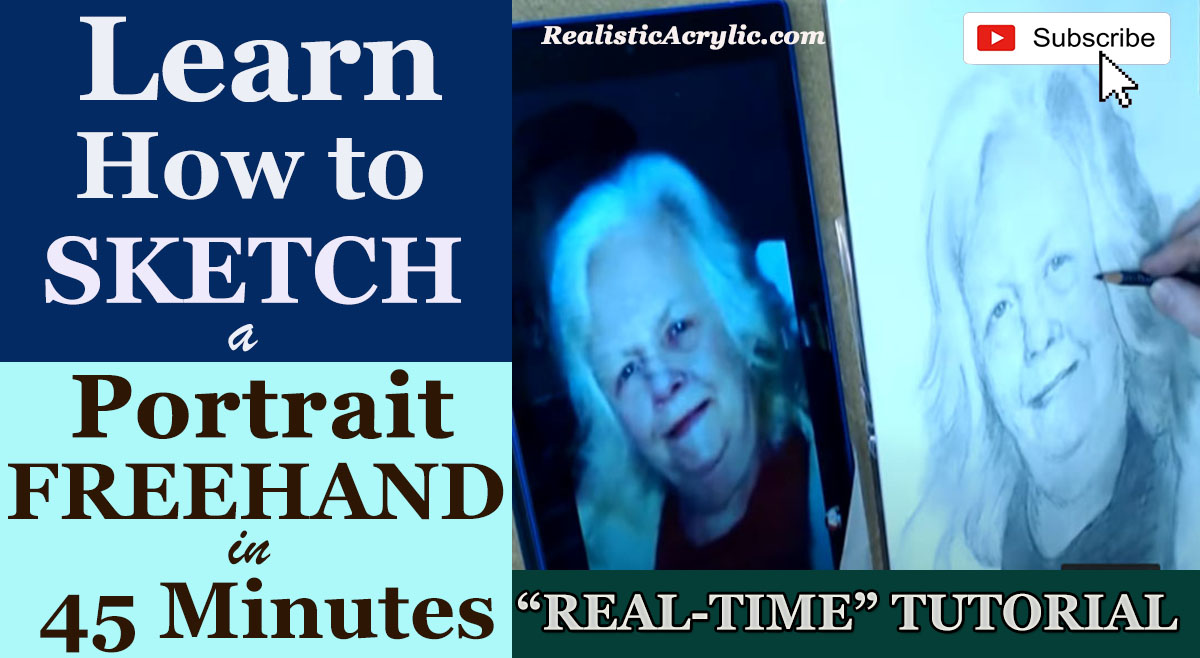
Learn How to Sketch a Portrait Freehand: 45 Minutes
Unlock the secrets to freehand portrait drawing with precision and confidence
Sketching a portrait freehand can seem daunting, especially when capturing someone’s likeness. However, with patience and the right approach, anyone can create a compelling portrait in just 45 minutes. In this tutorial, we’ll break down a step-by-step method for sketching a portrait freehand using three simple pencils. Whether you’re a beginner or looking to refine your skills, this guide will help you confidently sketch portraits with more precision.
1. Prepare Your Materials: Start Simple for Success
Before diving into your sketch, it’s important to have the right tools.
- Pencils: HB (light), 3B (medium), and 8B (dark).
- Kneaded Eraser: Gentle on the paper and flexible for different erasing needs.
- Painter’s Tape: To secure the paper and prevent it from shifting.
Tip: Simplicity is key. Stick with just three pencils to avoid overwhelming yourself with too many options. This will help you focus on the drawing process without distraction.
2. Start with Basic Shapes: Defining the Composition
To begin, lightly sketch the outline of the head using simple, fluid lines. I suggest starting with the overall shape of the face, which is often oval. By using an HB pencil, the lightest in your set, you can make adjustments easily without committing too much at this stage.
Technique: Use long, gentle strokes to block in the general form. Avoid adding too much detail at first. Your goal is to get a feel for the proportions and placement of key features like the eyes, nose, and mouth.
Tip: Leave room on the top and bottom of the paper to avoid cramping the portrait. This ensures you can later fill in features like the hair and chin without running out of space.
3. Measure Proportions: The Key to Realism
Proportions are crucial for a successful portrait. One common rule is that the eyes should be roughly in the middle of the head. I emphasize using the eyes as a reference point for measuring the other facial features.
Here’s a quick breakdown:
- Eyes are typically located halfway between the top of the head and the chin.
- The nose usually falls about one-third of the way down from the eyes to the chin.
- The mouth is located between the nose and chin, often aligning with the middle of the eyes.
Technique: I advises using your pencil as a measuring tool. You can hold the pencil up against your reference photo, measure the angles of the face, and compare them directly with your sketch.
4. Focus on the Eyes: The Window to the Soul
I stress the importance of the eyes in any portrait. If the eyes are accurate, the rest of the portrait is more likely to fall into place. Start by lightly sketching the overall shape of the eyes and ensuring they are properly aligned with one another.
Technique: Notice the subtle curves in the eyelids and pay attention to the shadows. Use cross-hatching to create depth around the eyes. For reflections within the eyes, darken the pupils with a 3B pencil, leaving highlights for a realistic, lively appearance.
Tip: Take breaks to step back and assess the accuracy of your work. This will help you spot any inconsistencies in the alignment of the eyes or other features.
5. Gradually Add Features: Build Up with Confidence
Once the eyes are in place, you can move on to sketching the nose and mouth. I recommend focusing on the spacing between the features and the angles of the face. Be mindful of the direction of the mouth—it may curve slightly upward or downward depending on the expression.
Tip: The space between the nose and the upper lip is crucial in portraying a lifelike expression. Check that these distances match the reference photo to maintain accuracy.
6. Capture Expression: Use Wrinkles and Shadows
Facial expressions are often conveyed through the eyes and the subtle wrinkles around them. I emphasize how the cheeks and wrinkles near the eyes can reveal whether someone is smiling.
Technique: For wrinkles, use your 3B pencil to create soft, sketchy lines. Be careful not to press too hard. You can always build up the darker areas later with an 8B pencil. Incorporate shadows along the cheekbones and around the nose to give the face a sense of dimension.
7. Refine the Details: Darken and Shade for Depth
As you become more confident in the proportions, start darkening certain areas to define the form more clearly. The 8B pencil is perfect for emphasizing deep shadows, especially in areas like the hair and under the chin.
Technique: Use cross-hatching in areas where more shading is needed. Hold the pencil on its side to create broader strokes for shading larger areas, like the forehead or jawline. Be sure to leave highlights in places where light would naturally fall, such as the tip of the nose or the forehead.
8. Final Adjustments: Add Hair and Clothing
Finally, sketch in the hair and any clothing details. Hair can be tricky, but I also suggest starting with the general shape and then breaking it down into smaller sections. Don’t try to draw every strand—focus on capturing the overall flow and texture.
Tip: When sketching hair, leave some areas lighter to create the illusion of shine. For clothing, use lighter pencils for the fabric’s folds and darker ones for the shadows and creases.
Sketching a portrait freehand may seem like a challenge, but by following these steps, you’ll find the process manageable and rewarding. With careful attention to proportions, the right shading techniques, and consistent practice, you’ll be able to complete a lifelike portrait in just 45 minutes. Keep refining your skills, and soon you’ll be sketching portraits with confidence and accuracy.
Final Tips:
Practice cross-hatching to create depth and dimension in your shading.
Use a light touch with your pencils, especially in the beginning stages.
Regularly step back to assess your work from a distance.
Remember that accuracy in the eyes often determines the success of the entire portrait.
Read more about my additional resources, tutorials, to learn more and check out my free courses here. . Whether you’re a beginner or an experienced artist, there’s always something new to learn and apply to your paintings. Happy painting!
Learn How to Sketch a Portrait Freehand in 45 Minutes!
- How to Paint Foliage Using the Acrylic Glazing Technique
- How to Trace for an Accurate Portrait Sketch
- How to Paint Realistic Eyes in Your Acrylic Portrait
- How to Add Raw Umber Dark & Ultramarine Blue to Your Portrait
- How to Make Your Own Raw Umber Dark
- How to Paint Realistic Trees & Grass in Your Acrylic
- How to Block In Skin Tone Values Using Glazing Technique
- How to Paint Vibrant Reds in Your Acrylic Portrait
- How to Glaze Background Colors & More Acrylic Portrait
- How to Paint White Clothing in Your Acrylic Portrait
- How to Easily Transition from a Sketch to a Painting
- How to Block In Shading & Skin Tones in Your Acrylic
- How to Build Up Color on Acrylic Pet Portrait
- How to Build Up Form on Clothing with Acrylic
- How to Paint Dark Clothing Using Acrylic Glazing Technique
- How to Paint a 24 x 30 Acrylic With 30 People
- How to Do Smooth Shading with Acrylic
- How to Sketch an Acrylic Portrait with a Grid
Read more about how to paint a portrait that you can surely be proud of!
I’d love to hear your thoughts on this video. Please share it with your friends and family. Let me know if you have any further questions. I’ll greatly help you.
If you’d like to learn more, sign up for my free email tips and video class today.
Learn How to Paint Acrylic Portraits With My Free Mini-Video Course!
Thank you so much for taking the time to read this tutorial and watch the video. That means a lot to me. I hope you find it very helpful in your portrait painting.
Yours for Better Portraits,
P.S. Did you find this post helpful or encouraging? If so, send it on ahead! Let others know with the share buttons below. I’d love to hear your comments. Thank you so much! Also, do you have a question on acrylic portrait painting you’d like answered? Let me know, and I’d be happy to help!
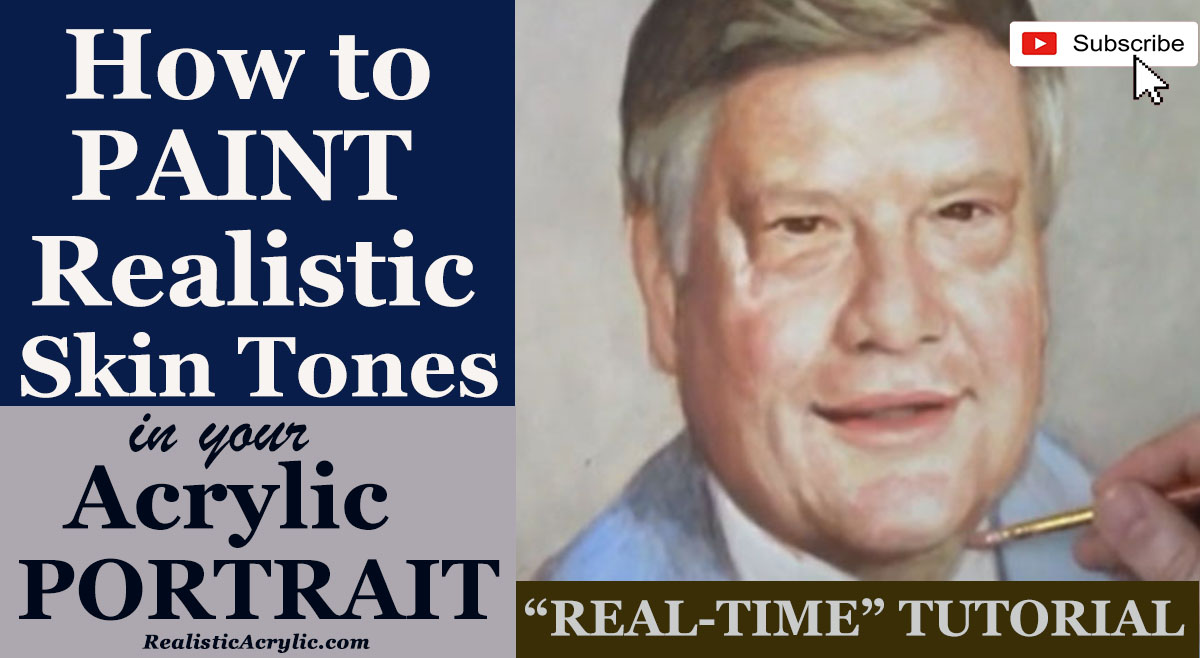
How to Paint Realistic Skin Tones in Acrylic Portrait
Achieve lifelike skin tones in acrylic portraits with glazing techniques, semi-opaque layers, and a careful mix of hues.
Creating lifelike skin tones in acrylic portrait painting can be a challenge for many artists due to the fast-drying nature of acrylics. However, by using a strategic approach—layering semi-opaque glazes, dabbing, and mixing the right colors—you can achieve stunning, realistic results. In this tutorial, you’ll learn how to paint realistic skin tone in your acrylic portrait and tested techniques.
Outline:
- Introduction to Glazing and Skin Tone Layering
- Choosing the Right Colors for Skin Tones
- Techniques for Gradients and Blending
- Correcting Facial Proportions and Dimensions
- Adding Details to Lips and Shadows
- Layering for Depth and Realism
- Final Touches and Adjustments
- Tips and Techniques for Success
1. Introduction to Glazing and Skin Tone Layering
One of the secrets to achieve realistic skin tones in acrylic painting is layering using a glazing technique. Then I begin by applying semi-opaque layers of color, which helps build up the skin’s depth gradually. This technique works particularly well in the mid and final stages of painting. Acrylic paint dries quickly, but by using thin layers, you can manipulate the colors and create smooth transitions between lighter and darker areas.
Tip: Avoid blending in large, wet sections to prevent frustration. Instead, work in small sections, allowing the paint to dry before adding the next layer. Then make sure a better control and smoother gradients.
2. Choosing the Right Colors for Skin Tones
The palette you choose will of course plays a crucial role in achieving realistic skin tones. In this demonstration, I use a mixture of red-orange, Indian yellow, white, raw sienna, and burnt sienna. Then focus on building up pink tones on the cheeks and darker shades on the sides of the face.
By experimenting with different color combinations, you can capture subtle variations in skin tone. For example:
- For Pink Tones: Mix red-orange, Indian yellow, and white.
- For Shadows: Use raw sienna, burnt sienna, or raw umber dark for cooler shadow effects.
3. Techniques for Gradients and Blending
Shading with acrylics can be challenging because they dry quickly, making it hard to blend. To overcome this, accordingly I will emphasize a “dab and soften” technique. So you can apply a darker or different hue, dab it into place and gently soften the edges to build up a smooth gradient.
For example, when working on the cheek area, he applies a redder mixture and softly transitions the color into the surrounding skin. This method will of course helps you achieve smooth blending without fighting against the fast-drying properties of acrylics.
Tip: Use round brushes for more detailed shading, particularly when you’re working on areas that require precision, such as under the eyes or around the mouth.
4. Correcting Facial Proportions and Dimensions
Sometimes, even after getting the shapes of the features correct, the overall proportions of the face may need adjustment. So I demonstrate this by subtly expanding the temple and forehead areas. Then this process involves mixing white, Indian yellow, and raw sienna to create a warm tone that matches the surrounding skin and applying it in opaque layers to correct proportions.
By carefully observing and adjusting proportions, the overall structure of the portrait will appear more realistic.
5. Adding Details to Lips and Shadows
I transition by adding more details to the lips and other shadowed areas. Instead of using a cream mixture with red-orange, he lightens the upper lip while adding depth to the shadowed side of the face with a darker mix of raw sienna and raw umber dark.
By darkening the skin tone gradually on one side of the face, you can create a realistic effect of light and shadow. I also advise that using cooler tones (such as bluish browns) under the chin and around the jawline, which helps differentiate the cooler shadows from the warmer mid-tones of the face.
6. Layering for Depth and Realism
As my portrait progress, I always emphasize the importance of building up layers slowly. By layering semi-transparent glazes, the luminosity of the skin increases, enhancing the overall realism. Each new layer should dry before the next is added, allowing the artist to avoid smearing or blending unwanted areas.
This process, although time-consuming, is essential for creating rich skin tones. Acrylic paint’s quick drying time works to your advantage in this step, allowing you to paint multiple layers quickly without worrying about disturbing the previous ones.
Tip: Use crisscross strokes when applying paint to create an even smoother gradient between light and shadow.
7. Final Touches and Adjustments
As you still approach into the final stages of the painting, it’s important to evaluate and make small adjustments. Then you will focus on refining shadows under the chin, smoothing the transitions between different parts of the face, and adding a final yellow tint to warmer areas.
Dry brushing is another useful technique at this stage. By wiping excess paint off your brush and then gently fanning it over lighter areas, you can create a seamless transition that adds to the portrait’s realism.
8. Tips and Techniques for Success
1. Start with Thin Layers: Avoid thick applications of paint early on. When building up your skin tones with transparent or semi-opaque glazes to ensure luminosity.
2. Mix the Right Colors: Focus on balancing red, yellow, and neutral hues in your palette to capture the nuances of skin tones.
3. Blend Gradually: Use dabbing motions and round brushes to soften the edges between light and shadow.
4. Work in Small Sections: Acrylic dries fast, so work on small areas at a time, letting layers dry completely before adding new ones.
5. Refine Proportions as You Go: Pay attention to the overall proportions of the face. Make adjustments as needed, using opaque layers to reshape areas like the forehead or chin.
6. Dry Brushing for Final Layers: Use dry brushing to smooth gradients in the final stages, enhancing the portrait’s realism.
Painting realistic skin tones in acrylic portrait requires patience, practice, and mastery of layering techniques. Then by carefully using glazes, selecting the right color mixtures, and refining your portrait’s proportions, you can achieve vibrant, lifelike results. Obviously with these techniques, you’ll find that acrylics can be just as versatile and effective for portrait painting as oils.
Read more about my additional resources, tutorials, to learn more and check out my free courses here. . Whether you’re a beginner or an experienced artist, there’s always something new to learn and apply to your paintings. Happy painting!
Get Your Free Gift From Me!
- How to Paint Foliage Using the Acrylic Glazing Technique
- How to Trace for an Accurate Portrait Sketch
- How to Paint Realistic Eyes in Your Acrylic Portrait
- How to Add Raw Umber Dark & Ultramarine Blue to Your Portrait
- How to Make Your Own Raw Umber Dark
- How to Paint Realistic Trees & Grass in Your Acrylic
- How to Block In Skin Tone Values Using Glazing Technique
- How to Paint Vibrant Reds in Your Acrylic Portrait
- How to Glaze Background Colors & More Acrylic Portrait
- How to Paint White Clothing in Your Acrylic Portrait
- How to Easily Transition from a Sketch to a Painting
- How to Block In Shading & Skin Tones in Your Acrylic
- How to Build Up Color on Acrylic Pet Portrait
- How to Build Up Form on Clothing with Acrylic
- How to Paint Dark Clothing Using Acrylic Glazing Technique
- How to Paint a 24 x 30 Acrylic With 30 People
- How to Do Smooth Shading with Acrylic
- How to Sketch an Acrylic Portrait with a Grid
Read more about how to paint a portrait that you can surely be proud of!
I’d love to hear your thoughts on this video. Please share it with your friends and family. Let me know if you have any further questions. I’ll greatly help you.
If you’d like to learn more, sign up for my free email tips and video class today.
Learn How to Paint Acrylic Portraits With My Free Mini-Video Course!
Thank you so much for taking the time to read this tutorial and watch the video. That means a lot to me. I hope you find it very helpful in your portrait painting.
Yours for Better Portraits,
P.S. Did you find this post helpful or encouraging? If so, send it on ahead! Let others know with the share buttons below. I’d love to hear your comments. Thank you so much! Also, do you have a question on acrylic portrait painting you’d like answered? Let me know, and I’d be happy to help!
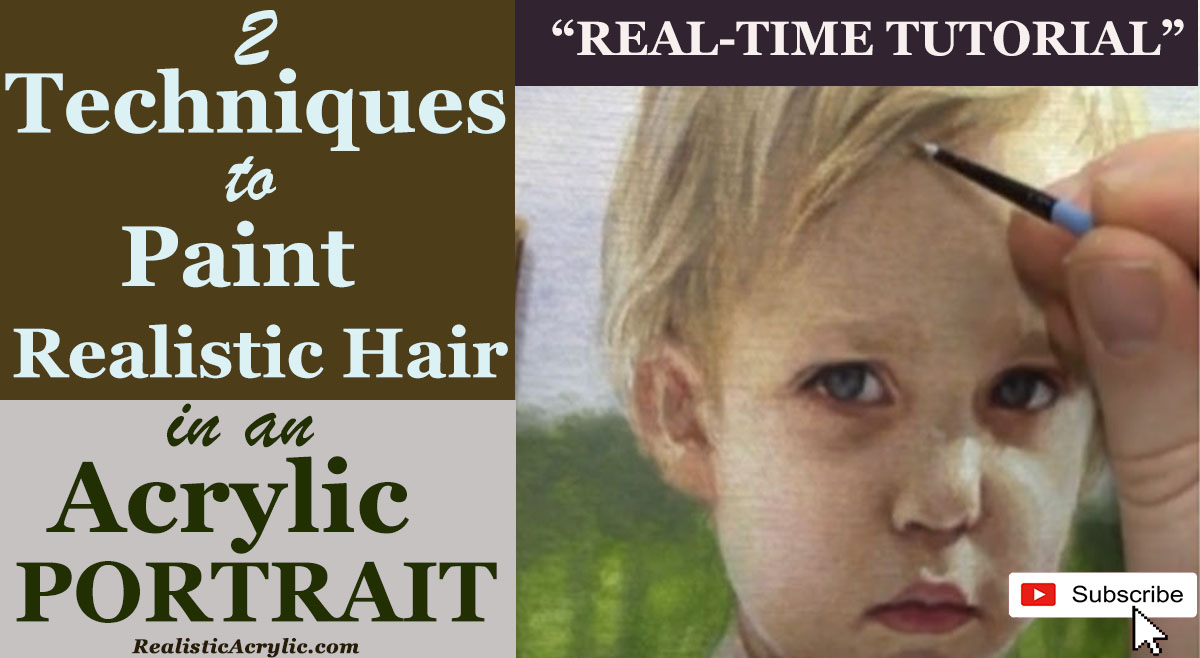
2 Techniques on How to Paint Realistic Hair
What techniques do you use to paint hair that looks realistic?
When creating a portrait, capturing the details of hair can be a challenging yet crucial task. While realistic hair adds depth and character, enhancing the overall beauty of your portrait. So In this blog post, we will explore two essential techniques for painting realistic hair using acrylics. These methods will help you achieve stunning results, regardless of the hair type or color.
Technique 1: Layering for Depth
The first technique focuses on layering colors to build depth in hair because this method involves applying multiple layers of paint to create a rich, dimensional effect.
Step-by-Step Guide on Layering Colors
- Preparation: Start by preparing your canvas and then gather your materials, which should include acrylic paints, brushes of various sizes, and a palette.
- Base Layer: Apply a base layer of paint that matches the general color of the hair. For instance, if you are painting blonde hair, a light yellow or sandy hue could work as the base.
- Adding Depth: Once the base layer is dry, add a darker color to define shadows and create depth. For example, a raw umber or burnt sienna can be mixed with a touch of titanium white to achieve a suitable shade.
- Building Up Contrast: As you work, continuously assess the values in your reference photo because It is essential to capture the contrast between light and dark areas to enhance realism.
- Final Touches: To complete the layering process, then add lighter highlights to the areas where light naturally falls, using a fine brush for precision.
Importance of Values and Contrasts
In portrait painting, you need to understanding the values and contrasts is also crucial. Whereas the realistic hair is not merely a flat color; it consists of various shades that interact with light. Because observing the nuances in your reference photo will guide your application of light and shadow, creating a more lifelike appearance.
Tools and Materials Needed
- Acrylic paints (various shades)
- A variety of brushes (flat, round, and fine detail brushes)
- Palette and mixing tools
- Reference photo for accuracy
Technique 2: Detailing with Fine Brushes
The secondly technique emphasizes the importance of details. Utilizing fine brushes allows for the representation of individual hair strands, enhancing the overall realism of your painting.
Using Fine Brushes for Hair Strands
- Select the Right Brush: When Choosing a fine detail brush, ideally with a small tip, to create the illusion of hair strands. A brush size around 0 or 1 works well for this purpose.
- Define Individual Strands: With your brush loaded with a suitable paint mix, lightly drag the brush across the canvas to form individual hair strands. This technique is especially effective when painting wet or stringy hair, as it adds realism.
- Creating Highlights and Shadows: When detailing, consider where the light hits the hair and apply lighter colors to those areas to simulate shine. Conversely, use darker shades in the shadowed regions to enhance depth.
Blending Techniques for Realism
While blending is an essential skill in hair painting. Because of the lightly mixing adjacent colors while wet, you can achieve a more natural look. For instance, if you have applied a dark shadow, gently blend it with a mid-tone to create a smooth transition.
Additional Tips and Techniques
- Understanding Hair Types and Textures: Recognizing different hair types—such as curly, straight, or wavy—will influence your painting approach. Adjust your techniques to suit the texture of the hair you are portraying.
- Reference Photos and Their Significance: Always work with a reference photo that closely resembles your subject. This practice ensures accuracy in color, shape, and overall portrayal.
- Common Mistakes to Avoid: A common pitfall is overworking the hair whereas you aim for a balance between detail and softness, as too much definition can lead to an unnatural appearance.
Mastering the art of painting realistic hair involves patience, practice, and a keen eye for detail. Because of utilizing this techniques of layering and fine detailing, you can elevate your portrait painting skills to new heights. So, remember to explore different styles and continuously refine your approach. Then with dedication, your portraits will begin to reflect the vibrancy and depth that realistic hair brings to the canvas.
Read more about my additional resources, tutorials, to learn more and check out my free courses here. . Whether you’re a beginner or an experienced artist, there’s always something new to learn and apply to your paintings. Happy painting!
- How to Paint Foliage Using the Acrylic Glazing Technique
- How to Trace for an Accurate Portrait Sketch
- How to Paint Realistic Eyes in Your Acrylic Portrait
- How to Add Raw Umber Dark & Ultramarine Blue to Your Portrait
- How to Make Your Own Raw Umber Dark
- How to Paint Realistic Trees & Grass in Your Acrylic
- How to Block In Skin Tone Values Using Glazing Technique
- How to Paint Vibrant Reds in Your Acrylic Portrait
- How to Glaze Background Colors & More Acrylic Portrait
- How to Paint White Clothing in Your Acrylic Portrait
- How to Easily Transition from a Sketch to a Painting
- How to Block In Shading & Skin Tones in Your Acrylic
- How to Build Up Color on Acrylic Pet Portrait
- How to Build Up Form on Clothing with Acrylic
- How to Paint Dark Clothing Using Acrylic Glazing Technique
- How to Paint a 24 x 30 Acrylic With 30 People
- How to Do Smooth Shading with Acrylic
- How to Sketch an Acrylic Portrait with a Grid
I’d love to hear your thoughts on this video. Please share it with your friends and family. Let me know if you have any further questions. I’ll greatly help you.
If you’d like to learn more, sign up for my free email tips and video class today.
Learn How to Paint Acrylic Portraits With My Free Mini-Video Course!
Thank you so much for taking the time to read this tutorial and watch the video. That means a lot to me. I hope you find it very helpful in your portrait painting.
Yours for Better Portraits,
P.S. Did you find this post helpful or encouraging? If so, send it on ahead! Let others know with the share buttons below. I’d love to hear your comments. Thank you so much! Also, do you have a question on acrylic portrait painting you’d like answered? Let me know, and I’d be happy to help!
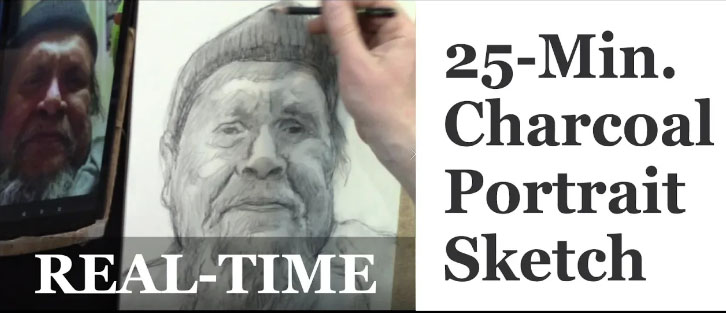
How To Sketch Charcoal Portrait in 25 Minutes
If you’re looking at improving your portrait paintings, drawing freehand can really help.
Creating a charcoal portrait sketch in under 30 minutes may sound challenging, but with the right techniques, you can achieve it! Charcoal is a fantastic medium to bring depth, expression, and contrast into your drawings. In this tutorial, we will break down the process of sketching a memorial portrait using charcoal, capturing fine details and key elements in a short time.
Gathering Materials for Your Portrait
Before diving into sketching, ensure you have the right materials. Charcoal pencils offer bold lines and strong contrast compared to graphite, which can be lighter and easier to erase. You’ll also need a kneaded eraser, which is perfect for highlighting and making corrections without leaving behind crumbs.
Materials Needed:
- Charcoal pencils
- Graphite pencils (optional)
- Kneaded eraser
- A quality sketchbook or paper suitable for charcoal
- Blending tools or fingers
Step-by-Step Guide to Sketching a Charcoal Portrait in 25 Minutes
Let’s start with a quick overview of the approach to create a meaningful portrait efficiently. This process involves blocking in the shapes, paying attention to proportions, shading, and capturing details like facial expressions and textures.
1. Begin with Basic Outlines
The first step is to outline the portrait’s structure, then focus on the subject’s head shape and major facial features like the eyes, nose, and mouth. In this demonstration, I sketched the hat, face, and eyes first, using quick and confident strokes to block out the placement of features. The key is to establish proportions early to avoid misalignment later on.
Tip: Use light strokes for your initial outlines. Because charcoal is difficult to erase, so it’s best to start with soft marks that can be adjusted as needed.
2. Focus on the Eyes and Facial Proportions
Once the basic outline is complete, move on to the eyes. The eyes are a crucial part of any portrait because they convey expression. Then begin by drawing the shapes of the eyes, paying close attention to the spacing and size relative to the face. I note that the subject’s prominent eyelids, which became an important characteristic of the portrait.
Tip: Use the charcoal pencil to lightly block in the eye shape, then add shadows around the eyelids to enhance depth.
3. Capture Facial Features and Details
Next, work on the nose, mouth, and other features. In this case, I emphasize the nose, drawing from an angle where the nostrils are visible due to the upward tilt of the face. Similarly, for the mouth, the artist captured the subject’s broad smile and nasolabial fold (the lines from the nose to the corners of the mouth). These folds, alongside wrinkles and other facial structures, define the character and age of the person.
Technique: Cross-hatching can be useful when shading the deeper parts of the face, such as the nasolabial folds and areas beneath the eyes.
4. Emphasize Textures and Hair
Once, the hair and textures bring life to a sketch. Charcoal also allows for expressive strokes that define these elements well. In this case, the subject wore a hat, and the artist carefully illustrated the texture and folds using directional strokes. For the hair flowing out from beneath the hat, then the artist used bolder strokes to give a sense of movement and form.
Tip: You can also create texture with both thick and fine strokes, adding depth to areas like beards, hats, and eyebrows.
The Power of Charcoal in Portrait Sketching
Charcoal is unique in its ability to create stark contrasts and bold shadows, but making it an ideal medium for expressive portraiture. As the artist demonstrated, it’s a bit less forgiving than graphite since it’s harder to erase, but its richness offers the ability to produce dramatic and realistic sketches quickly.
5. Shading and Light Source
Now that the structure and major features are established, it’s time to work on shading. A light source was established in the top-down direction in this portrait, particularly in casting shadows from the hat onto the subject’s face. Because shading plays a huge role in making the portrait appear three-dimensional.
The artist used a kneaded eraser to remove excess shading, which is particularly useful in areas like the nose, cheekbones, and forehead where the light hits the most.
Technique: Use a cross-hatching method to create shading quickly, and remember to darken key areas such as the nostrils, the shadows beneath the lips, and under the eyes.
6. Using Blending and Highlights
Blending charcoal gives a softer finish to the drawing, but making it appear more polished. Then, use blending tools or your fingers to soften transitions between light and shadow. Because in this sketch, subtle blends were applied to areas like the forehead, cheekbones, and under the eyes, enhancing the subject’s expressions.
At the same time, don’t forget highlights. Use your eraser to pull out lighter areas such as the tip of the nose, the glint in the eyes, and the shine on the lips.
Fine-Tuning and Final Touches
As you near completion, review your sketch to ensure the proportions, shading, and details are accurate. Adjust any areas that feel out of balance. The artist often used graphite on top of charcoal to refine finer areas like the hat and beard, creating smoother transitions and a more defined texture.
Tip: Graphite is an excellent complement to charcoal for adding subtle tones without overpowering the deep contrasts.
In just 25 minutes, you can create a meaningful charcoal portrait that captures both likeness and emotion. Of course, with charcoal’s bold strokes and strong contrasts, even a quick sketch can convey depth and detail. And then, by focusing on proportions, using expressive strokes for textures, and carefully blending shadows, you can achieve a dynamic and realistic result.
Also take time to experiment with your materials and embrace the unique qualities that charcoal offers. Then, with a lot of practice, you’ll be able to create compelling portraits in a limited time frame, perfect for warm-up sketches, studies, or even finished works!
Read more about my additional resources, tutorials, to learn more and check out my free courses here. . Whether you’re a beginner or an experienced artist, there’s always something new to learn and apply to your paintings. Happy painting!
- How to Paint Foliage Using the Acrylic Glazing Technique
- How to Trace for an Accurate Portrait Sketch
- How to Paint Realistic Eyes in Your Acrylic Portrait
- How to Add Raw Umber Dark & Ultramarine Blue to Your Portrait
- How to Make Your Own Raw Umber Dark
- How to Paint Realistic Trees & Grass in Your Acrylic
- How to Block In Skin Tone Values Using Glazing Technique
- How to Paint Vibrant Reds in Your Acrylic Portrait
- How to Glaze Background Colors & More Acrylic Portrait
- How to Paint White Clothing in Your Acrylic Portrait
- How to Easily Transition from a Sketch to a Painting
- How to Block In Shading & Skin Tones in Your Acrylic
- How to Build Up Color on Acrylic Pet Portrait
- How to Build Up Form on Clothing with Acrylic
- How to Paint Dark Clothing Using Acrylic Glazing Technique
- How to Paint a 24 x 30 Acrylic With 30 People
- How to Do Smooth Shading with Acrylic
- How to Sketch an Acrylic Portrait with a Grid
Read more about how to paint a portrait that you can surely be proud of!
I’d love to hear your thoughts on this video. Please share it with your friends and family. Let me know if you have any further questions. I’ll greatly help you.
If you’d like to learn more, sign up for my free email tips and video class today.
Learn How to Paint Acrylic Portraits With My Free Mini-Video Course!
Thank you so much for taking the time to read this tutorial and watch the video. That means a lot to me. I hope you find it very helpful in your portrait painting.
Yours for Better Portraits,
P.S. Did you find this post helpful or encouraging? If so, send it on ahead! Let others know with the share buttons below. I’d love to hear your comments. Thank you so much! Also, do you have a question on acrylic portrait painting you’d like answered? Let me know, and I’d be happy to help!
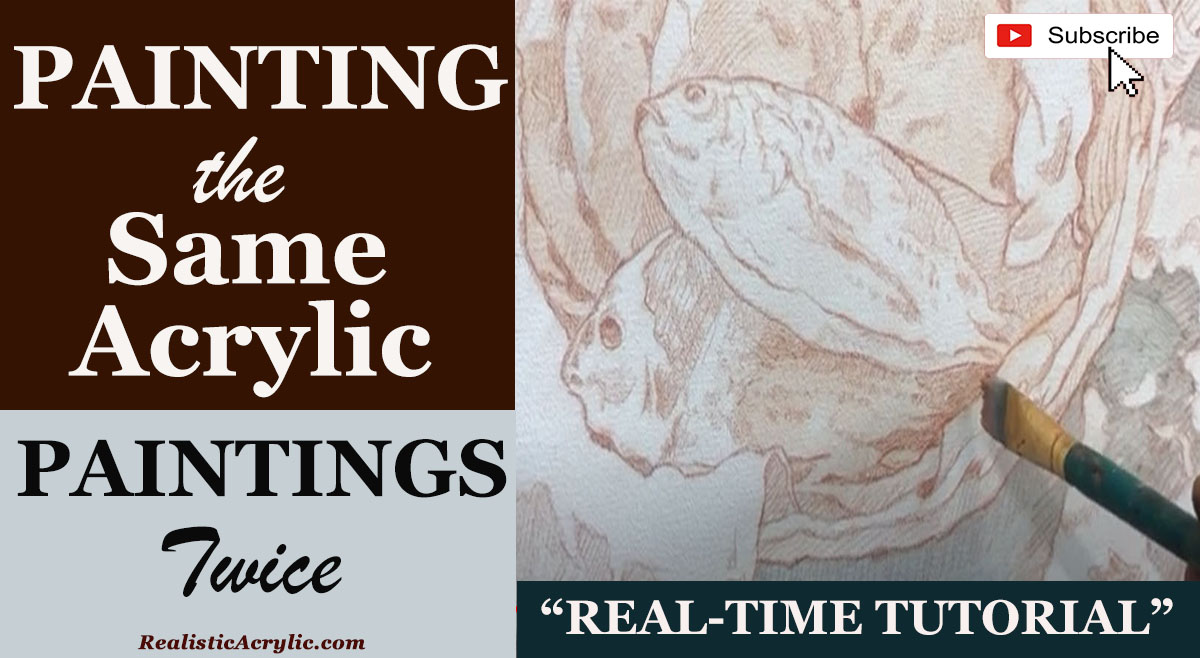
From Sketch to Glaze: How to Recreate Famous Biblical Art with Acrylics
Bring biblical stories to life: layering and glazing techniques explained
In this tutorial, I’ll be walking you through the process of creating two iconic biblical paintings: Elijah and Elisha and the Loaves & Fishes. These are pieces I have painted before, but due to a client request, I’ll be recreating them using fresh techniques and perspectives. Artists may hesitate to replicate the same image, but it is a joy to recreate a beloved scene for a client, ensuring each iteration remains unique. In this post, you’ll learn how to use acrylic glazing techniques to add depth, warmth, and realism to your artwork.
Let’s get started by laying out the steps for this process, the following materials you’ll need, and some key painting tips.
Materials Needed
- Acrylic paints: Burnt sienna, raw umber dark, ultramarine blue, phthalo blue, alizarine crimson, organic red orange, Indian yellow, and titanium white.
- Matte medium: Used to thin out the paint for glazing.
- Bristle brushes: Various sizes for large and small details.
- Prismacolor pencils: For sketching (e.g., Burnt Ochre or Terracotta).
- Reference photos: Use clear photo references to accurately capture details and lighting.
Step 1: Sketching the Scene with Prismacolor Pencils
When I start my paintings with a detailed sketch. In this case, I used prismacolor pencils (Terracotta or burnt ochre) to outline the main elements of both the Elijah and Elisha and Loaves & Fishes scenes. Sketching with colored pencils, instead of graphite, provides a better match for the painting, giving warmth and depth from the start.
Tip: Using colored pencils allows for easy erasure and smoother blending with your acrylic layers.
Step 2: Applying the First Glaze
The magic of acrylic glazing begins with applying thin layers of paint mixed with matte medium. Because in Loaves & Fishes painting, I started with a burnt sienna glaze. Then this color, a reddish-brown, is perfect for creating warm tones that reflect the natural lighting in the scene.
- Mix the glaze: So I use a small amount of burnt sienna and mix it thoroughly with matte medium. The ratio should be about 1:4 (paint to medium).
- Apply to canvas: Then gently apply this glaze in areas that need warm underpainting, like the background and parts of the basket.
Step 3: Blocking in Major Areas
Blocking is an essential step where you fill in large areas of your painting with color and value. In this case, I blocked in the background and began working on the fish and bread in the loaves & fishes painting. These areas need to be lighter, as the fish are illuminated by sunlight.
- Use a larger brush: A broad bristle brush will help you cover large areas quickly.
- Add shadows: Start building shadows using darker tones such as raw umber and burnt sienna.
Tip: Make sure to let each glaze dry before applying the next layer. Because this will give you more control over the depth and intensity of the colors.
Step 4: Enhancing Detail with Subsequent Glazes
Once the base layers are dry, you can begin refining the painting with more targeted glazing. For example, the basket in the Loaves & Fishes scene needs more dimension, so I applied several thin glazes of burnt sienna mixed with ultramarine blue to create the shadowed areas.
- Use finer brushes: Switch to smaller brushes to work on detailed areas like the fish scales, the texture of the bread, or the folds in Elijah’s and Elisha’s garments.
- Blending: Smooth out the transitions between highlights and shadows using a soft, dry brush to blend the edges of the glazes.
Step 5: Refining Textures
Textures bring realism to your painting. The basket in the Loaves & Fishes scene has a woven texture, and the Prophets’ robes have intricate fabric folds that need to be highlighted.
How to Add Texture:
- Fish scales: Mix titanium white with a small amount of alizarine crimson to highlight the scales of the fish. Use a fine detail brush to gently stipple the highlights.
- Basket weave: Use a dry brushing technique to create the appearance of woven strands in the basket.
- Fabric folds: Apply a mix of burnt sienna and raw umber for shadowed areas, and then a lighter mix of titanium white and indian yellow for the highlights on the garments.
Step 6: Bringing the Painting to Life
The final step in the painting process is adding those last, crucial details that bring the painting to life. These details include refining the lighting, adding highlights to key areas, and making sure the overall composition is balanced.
- Highlight the fish: The fish in the Loaves & Fishes painting catch sunlight, so I applied light touches of titanium white on the scales.
- Subtle highlights: Use a very fine brush to add small touches of light to the faces of Elijah and Elisha. Because this brings focus to their expressions and adds to the spiritual depth of the painting.
Tips for Success
- Use matte medium: Glazing with matte medium instead of water helps keep the colors vibrant and prevents the layers from becoming too translucent.
- Work simultaneously on two paintings: While one painting is drying, you can move on to another. This helps keep your workflow efficient.
- Don’t be afraid to go bold: Use strong colors like alizarine crimson or ultramarine blue in your glazes to add depth and vibrancy to your work.
Recreating Elijah and Elisha and The Loaves & Fishes scenes using the acrylic glazing technique has allowed me to explore new ways of adding depth and realism to my paintings. Each layer builds on the last, creating a complex yet harmonious image. Through patience and careful attention to detail, you can achieve striking results that capture both the essence of the biblical story and the vibrancy of the medium.
With the right techniques and tools, anyone can bring their own interpretations of timeless stories to life on canvas.
Read more about my additional resources, tutorials, to learn more and check out my free courses here. . Whether you’re a beginner or an experienced artist, there’s always something new to learn and apply to your paintings. Happy painting!
LEARN MORE
- How to Paint Foliage Using the Acrylic Glazing Technique
- How to Trace for an Accurate Portrait Sketch
- How to Paint Realistic Eyes in Your Acrylic Portrait
- How to Add Raw Umber Dark & Ultramarine Blue to Your Portrait
- How to Make Your Own Raw Umber Dark
- How to Paint Realistic Trees & Grass in Your Acrylic
- How to Block In Skin Tone Values Using Glazing Technique
- How to Paint Vibrant Reds in Your Acrylic Portrait
- How to Glaze Background Colors & More Acrylic Portrait
- How to Paint White Clothing in Your Acrylic Portrait
- How to Easily Transition from a Sketch to a Painting
- How to Block In Shading & Skin Tones in Your Acrylic
- How to Build Up Color on Acrylic Pet Portrait
- How to Build Up Form on Clothing with Acrylic
- How to Paint Dark Clothing Using Acrylic Glazing Technique
- How to Paint a 24 x 30 Acrylic With 30 People
- How to Do Smooth Shading with Acrylic
- How to Sketch an Acrylic Portrait with a Grid