
Tag Archives for " learn to paint portraits "
3 Reasons to take the Acrylic Portrait Painting Challenge!
As I type this, we’re in the middle of the COVID-19 crisis. You know that.
Every challenge presents opportunities. This is one of those occasions. Many of us have more time on our hands, so I decided to open up a portrait painting challenge!
Why not use this extra time to create something beautiful—an acrylic portrait we can be proud of. I want to give you three reasons why you should take the challenge…
- You’ll have the opportunity to walk away with a fantastic acrylic painting you can be proud to show others.
- You will sharpen your skills as a portrait painting artist that you can use for future portraits.
- You will be able to encourage other artists in a sense of community, and that will help you feel connected in a time of isolation.
This challenge is FREE to join and I also plan on teaching you step-by-step, with video instruction, precisely how to paint the portrait.
Would you like to join me and many other artists on this challenge?
Great! Watch this video…
Then, sign up for the challenge below.
I’m interested in the challenge!Look forward to seeing you in the challenge!

Matt
If you found this post helpful or encouraging, would you send it on ahead? Let others know with the share buttons below. I’d love to hear your comments. Thank you so much!
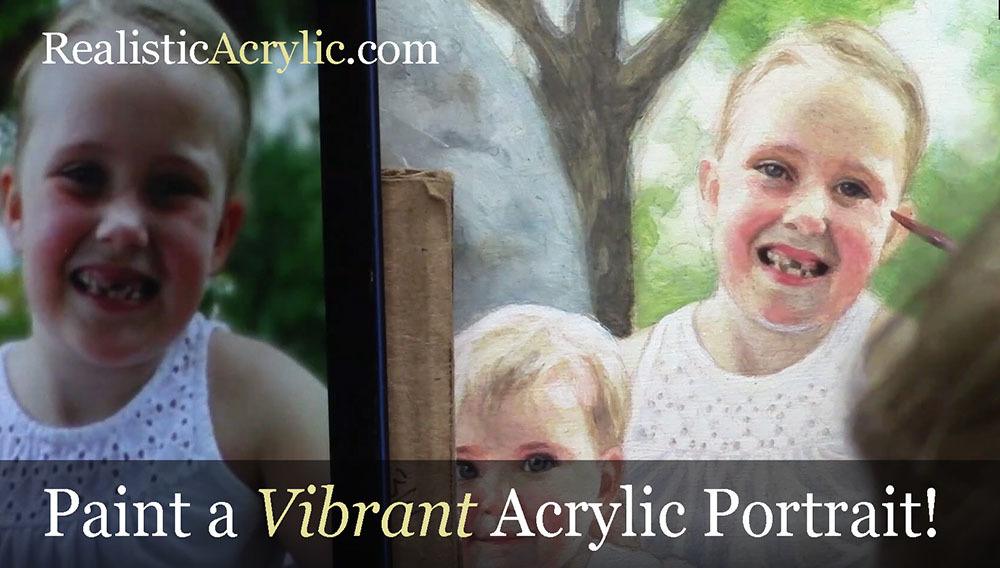
5 Steps on How to Paint a Vibrant Acrylic Portrait
Learn the classical glazing technique for depth and luminosity
Acrylic painting is an exciting medium known for its versatility, but achieving the depth and vibrancy often associated with oil paintings can seem challenging. However, by employing the classical glazing technique, a method favored by old masters like Rembrandt, Titian, and Vermeer then you can produce rich, luminous results with acrylics. This blog post will guide you through 5 essential steps to create a vibrant acrylic portrait using this time-tested method.
This tutorial shows the entire process of painting a portrait. Here are the steps I show in this tutorial:
- Start with a Detailed Sketch.
- Apply the Initial Glaze Layers
- Layer and Build Gradation
- Introduce Vibrant Colors
- Focus on Nuances and Details
1. Start with a Detailed Sketch
Every masterpiece begins with a solid foundation, and in portrait painting, that foundation is the sketch. Before you start adding color to your canvas, take time to create a detailed and accurate sketch of your subject. For this project, an 11×14 portrait of three girls in a park serves as an example.
By using a sepia-tone prismacolor colored pencil, you can establish proportions and likeness. Accuracy in this stage helps set the stage for a calm and confident painting process. Once your sketch is ready, seal it with a clear matte medium. This acts as a protective layer, ensuring that the pencil lines remain intact as you begin adding paint.
- Tip: Use a flat brush (¾ inch to 1 inch wide) to apply the matte medium. Make sure the application is smooth and even, allowing it to dry thoroughly before proceeding to the next step.
2. Apply the Initial Glaze Layers
The heart of this painting method lies in glazing, where thin, transparent layers of paint are applied over one another to build depth and richness. Unlike traditional opaque acrylic painting, the classical glazing technique requires a mixture of 95% matte medium to 5% paint. This creates a very light wash that enables you to gradually build colors without overwhelming the canvas.
Begin by mixing raw umber dark with ultramarine blue to create lifelike skin tones and shadow areas. These first layers will be almost imperceptible, but they provide a strong base for the layers that follow.
- Tip: The first layers of glaze should be incredibly light. This allows for adjustments in color or value without the need to paint over mistakes. The glazing method helps avoid the common frustration of muddy colors often encountered in acrylic painting.
3. Layer and Build Gradation
Once the initial glaze is applied, it’s time to focus on layering. As you build up more layers, you’ll notice how the painting starts to take on a more vibrant and realistic appearance. The goal here is to create a seamless transition between light and dark values, blending tones smoothly to replicate the natural shading found in your reference photo.
In this step, more raw umber dark and ultramarine blue are used to deepen the shadows on the forehead and hair. This layering process helps achieve the subtle gradation required for realistic portraits.
- Technique: As you layer, ensure that each glaze is thin and transparent. Too much paint in a single layer can cause the painting to look heavy and lose the delicate transparency that glazing provides.
4. Introduce Vibrant Colors
To make your portrait truly vibrant, it’s essential to introduce bold colors into the glazing process. In this example, a dash of Liquitex hot pink was added to the dress to intensify the color and give it a glowing effect. The key is to use these bright colors sparingly, applying them in thin layers so that they blend harmoniously with the existing hues.
When applying glazes to areas like the clothing, make sure to leave the white areas exposed. This technique, known as “preserving the luminosity,” ensures that highlights remain bright and eye-catching, adding to the overall vibrancy of the portrait.
- Tip: When adding vibrant glazes, thin the paint with medium and apply it cautiously. This helps prevent overpowering the existing layers while enhancing the color saturation.
5. Focus on Nuances and Details
The final step in this process involves refining the smaller details and nuances that bring a portrait to life. For example, the highlights in the hair, shadows in the creases of clothing, and the subtle changes in skin tone around the eyes require careful attention.
In the final layers, you can also experiment with a semi-opaque mixture, using titanium white, raw umber dark, and organic red-orange to add warmth and depth to the skin tones. With each new layer, the portrait takes on more life, depth, and realism. At this stage, it’s important to use more opaque layers sparingly, as glazing is best suited for large areas, while more detailed parts, such as fingernails or eyes, may benefit from a slightly thicker application of paint.
- Technique: If you notice that certain areas appear too flat or lack depth, consider adding a dark glaze to emphasize the shadows. Because mixing ultramarine blue with raw umber dark creates a rich, deep tone perfect for refining these darker areas without relying on black paint.
Conclusion: Patience Is Key
As you add each layer of glaze, then always remember that patience is vital. Because acrylic glazing requires multiple layers, sometimes ten or more to achieve the desired depth and luminosity. Each layer builds upon the last, contributing to the portrait’s final vibrancy. While it may take time, the results are well worth the effort.
By following these five steps, you can create a stunning acrylic portrait with vibrant colors and lifelike depth, all while employing the classical glazing technique favored by the old masters.
For further resources and guides, visit realisticacrylic.com and check out my free courses to enhance your acrylic painting journey.
- How to Paint Foliage Using the Acrylic Glazing Technique
- How to Trace for an Accurate Portrait Sketch
- How to Paint Realistic Eyes in Your Acrylic Portrait
- How to Add Raw Umber Dark & Ultramarine Blue to Your Portrait
- How to Make Your Own Raw Umber Dark
- How to Paint Realistic Trees & Grass in Your Acrylic
- How to Block In Skin Tone Values Using Glazing Technique
- How to Paint Vibrant Reds in Your Acrylic Portrait
- How to Glaze Background Colors & More Acrylic Portrait
- How to Paint White Clothing in Your Acrylic Portrait
- How to Easily Transition from a Sketch to a Painting
- How to Block In Shading & Skin Tones in Your Acrylic
- How to Build Up Color on Acrylic Pet Portrait
- How to Build Up Form on Clothing with Acrylic
- How to Paint Dark Clothing Using Acrylic Glazing Technique
- How to Paint a 24 x 30 Acrylic With 30 People
- How to Do Smooth Shading with Acrylic
- How to Sketch an Acrylic Portrait with a Grid
Read more about how to paint a portrait that you can surely be proud of!
I’d love to hear your thoughts about this video. Please share it with your friends and family. Let me know if you have any further questions. I’ll greatly help you.
If you’d like to learn more, sign up for my free email tips and video class today.
Learn How to Paint Acrylic Portraits With My Free Mini-Video Course!
Thank you so much for taking the time to read this tutorial and watch the video. That means a lot to me. I hope you find it very helpful in your portrait painting.
Yours for Better Portraits,

P.S. Did you find this post helpful or encouraging? If so, send it on ahead! Let others know with the share buttons below. I’d love to hear your comments. Thank you so much! Also, do you have a question on acrylic portrait painting you’d like answered? Let me know, and I’d be happy to help!
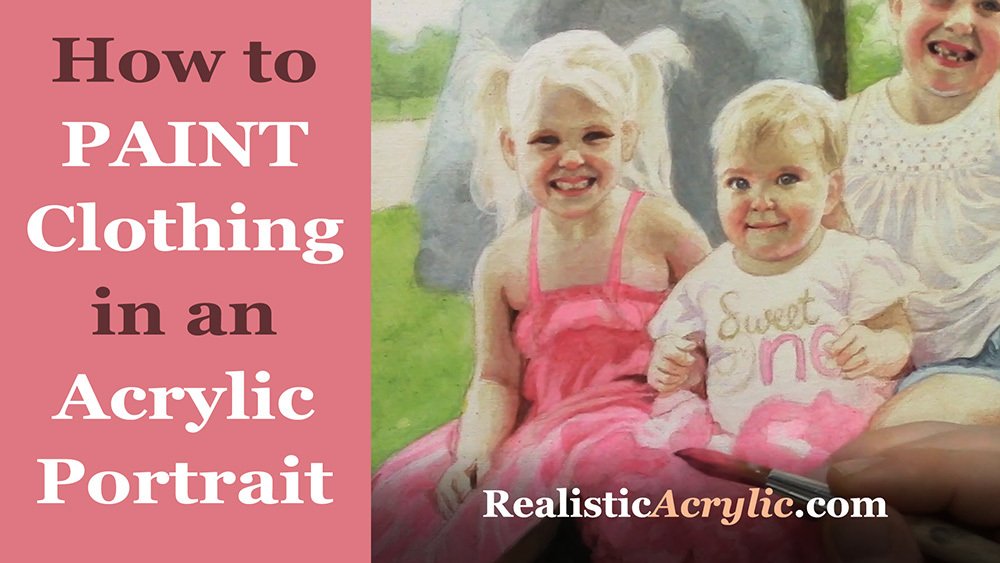
How to Paint Realistic Clothing in Acrylic Portrait
Learn the art of painting realistic folds and fabrics with acrylic in portraiture
Painting realistic clothing in an acrylic portrait can be both a challenge and an opportunity to showcase your skills. Fabric, with its intricate folds, highlights, and then textures, adds depth and movement to the subject. In this tutorial, we’ll walk you through step-by-step instructions on how to paint clothing using acrylics, focusing on shadows, mid-tones, highlights, and fabric types such as lace and tulle. Whether you’re painting a simple dress or more complex ruffles, this guide will equip you with the techniques to bring realism into your acrylic portrait.
Step 1: Preparing Your Palette for Clothing Colors
Before you begin painting the fabric in your portrait, it’s essential to select the right colors. In the video, Matt Philleo uses a combination of alizarin crimson, naphthol red, and a touch of hot pink to capture the vibrant tones of the fabric. To get started:
- Choose your base colors: Mix naphthol red and alizarin crimson for a rich fabric color. For lighter areas, use titanium white to brighten the colors.
- Adjust for highlights and shadows: Use more titanium white to lighten the tones for highlights, and for shadows, add more dark tones such as burnt umber or a touch of black to deepen the values.
Remember, painting clothing isn’t just about matching the color exactly but also capturing the texture and form of the fabric.
Step 2: Blocking in Shadows and Mid-Tones
In this case, one of the key techniques in painting fabric is establishing strong contrasts between shadows and highlights. I start by darkening certain areas to bring depth to the folds in the clothing. Here’s how you can do it:
- Identify the shadows: Begin by applying darker colors to areas where the fabric folds. Because this will create the illusion of depth.
- Blend into mid-tones: Gradually soften the dark shadows into mid-tones using a mix of your base colors with of course a touch of matte medium. The medium will thin the paint, making the transitions smoother and less stark.
Use a round brush for this process, as it helps you cover larger areas and also create sharp, precise lines when needed. I also recommend using a versatile brush that can handle both wide strokes and fine details, especially for painting small portraits.
Step 3: Adding Highlights for Realism
Painting highlights on fabric helps to capture the sheen and texture of the material. In the video, I will highlight the edges of the fabric folds, then create contrast against the shadows. Here’s how to add highlight effectively:
- Use opaque layers: When you reach this stage, start adding opaque layers with titanium white mixed with your base color (e.g., hot pink or naphthol red).
- Focus on the light source: Pay attention to the direction of your light source. For outdoor scenes, as Matt points out, cooler light often creates cooler highlights, so adjust the warmth of your lighter tones accordingly.
Using these lighter tones, gently brush over the highest points of the fabric folds where the light hits. This will give the illusion of three-dimensional texture, making the fabric appear realistic.
Step 4: Handling Different Textures—Lace and Ruffles
When painting more complex textures like lace or tulle, attention to detail becomes crucial. I’ll demonstrates painting lace-like fabric (also known as tulle) in the video by focusing on its intricate, airy texture. To capture such details:
- Paint in negative space: Instead of painting every single lace pattern, leave certain areas untouched to mimic the holes and transparency of the fabric. This “negative space” technique saves time while maintaining the fabric’s appearance.
- Create patterns with light strokes: For ruffles or lace, use very light, almost feathery strokes. This gives the fabric its delicate, flowing look.
For the ruffled parts, focus on the edges where the fabric folds over itself, using slightly darker shadows to accentuate the depth and highlights to make the texture stand out.
Step 5: Building Up Layers for More Depth
Acrylic glazing is an excellent technique to add depth to fabric. As your painting progresses, I gradually builds up layers using matte medium to retain some transparency in each layer. Because this technique allows underlying colors to show through, adding a sense of richness to the fabric.
- Layer gradually: Don’t rush the process. Build up thin layers of paint over time, adding opacity and detail as needed.
- Keep adjusting tones: Constantly adjust your color mixes with matte medium, darkening some areas and lightening others to create a balance of highlights, mid-tones, and shadows.
This layering process not only adds depth but also gives the painting a more polished, professional look, making the clothing appear realistic and multi-dimensional.
Step 6: Detailing the Final Touches
Once the fabric’s main areas are established, it’s time to focus on the finer details. In the video, I’ll show you how to fine-tune small creases and folds in the clothing. To do this:
- Use a smaller brush: A smaller brush will give you more control to add fine details, such as thin lines for wrinkles or subtle highlights along fabric edges.
- Final highlights and shadows: At this stage, you should focus on reinforcing the most prominent highlights and deepening the darkest shadows. This contrast will give the fabric a more realistic appearance.
Pro Tips for Painting Clothing in Acrylic Portraits
- Use transition colors: Blend colors smoothly between highlights and shadows to avoid a harsh look.
- Work in thin layers: Acrylics dry quickly, so work with thin, transparent layers to build up color and depth without creating a heavy texture.
- Experiment with brushes: A versatile round brush like the one I use that allows for both wide coverage and detailed work.
Conclusion
Painting clothing in an acrylic portrait requires attention to detail, patience, and a good understanding of how light interacts with fabric. By following these steps preparing your palette, blocking in shadows and mid-tones, adding highlights, handling textures, and building up layers you’ll be able to paint realistic clothing with ease. Remember to take your time and adjust colors as you go to create depth and realism in the fabric.
With practice, you’ll master the art of painting clothing in acrylic portraits, bringing your work to life with vibrant colors and textures that draw the viewer’s eye.
For further resources and guides, visit realisticacrylic.com and check out my free courses to enhance your acrylic painting journey.
- How to Paint Foliage Using the Acrylic Glazing Technique
- How to Trace for an Accurate Portrait Sketch
- How to Paint Realistic Eyes in Your Acrylic Portrait
- How to Add Raw Umber Dark & Ultramarine Blue to Your Portrait
- How to Make Your Own Raw Umber Dark
- How to Paint Realistic Trees & Grass in Your Acrylic
- How to Block In Skin Tone Values Using Glazing Technique
- How to Paint Vibrant Reds in Your Acrylic Portrait
- How to Glaze Background Colors & More Acrylic Portrait
- How to Paint White Clothing in Your Acrylic Portrait
- How to Easily Transition from a Sketch to a Painting
- How to Block In Shading & Skin Tones in Your Acrylic
- How to Build Up Color on Acrylic Pet Portrait
- How to Build Up Form on Clothing with Acrylic
- How to Paint Dark Clothing Using Acrylic Glazing Technique
- How to Paint a 24 x 30 Acrylic With 30 People
- How to Do Smooth Shading with Acrylic
- How to Sketch an Acrylic Portrait with a Grid
Read more about how to paint a portrait that you can surely be proud of!
I’d love to hear your thoughts about this video. Please share it with your friends and family. Let me know if you have any further questions. I’ll greatly help you.
If you’d like to learn more, sign up for my free email tips and video class today.
Learn How to Paint Acrylic Portraits With My Free Mini-Video Course!
Thank you so much for taking the time to read this tutorial and watch the video. That means a lot to me. I hope you find it very helpful in your portrait painting.
Yours for Better Portraits,
P.S. Did you find this post helpful or encouraging? If so, send it on ahead! Let others know with the share buttons below. I’d love to hear your comments. Thank you so much! Also, do you have a question on acrylic portrait painting you’d like answered? Let me know, and I’d be happy to help!
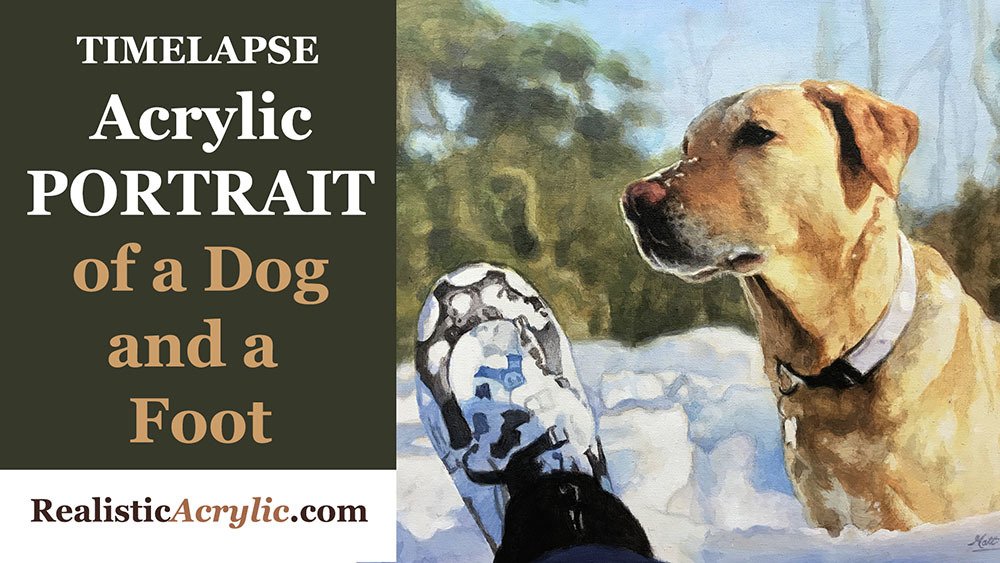
How to Paint Dog and the Foot: Time-Lapse Acrylic Portrait
Learn the acrylic glazing technique to capture realistic pet portraits
I’ll do that by sharing with you a recent acrylic portrait I did, capturing an experience of a woman who was hiking with her dog, and ended up laying down in the snow!
She wanted me to capture that moment of her dog and her foot shown as she snapped the photo from the ground.
This was an 11 x 14, acrylic on canvas, shown in a 5 minute- timelapse format. I painted it using the acrylic glazing technique, where we mix small amounts of paint into large amounts of clear acrylic medium to make the layers translucent, building up amazing depth and luminosity.
Creating a beautiful pet portrait is a fulfilling and meaningful way to immortalize a cherished companion. In this time-lapse tutorial, we explore the process of painting a dog alongside a boot in a snowy environment. This painting captures a special moment where the subject hiked with her dog and playfully fell into the snow. Using the acrylic glazing technique, this tutorial demonstrates how to gradually build up layers, create texture, and capture fine details with accuracy.
In this guide, you will learn about the specific techniques used, from glazing to color mixing, that help achieve a realistic result in acrylic painting. Let’s break down this tutorial, showing you how to paint your dog and foot with depth and detail.
Understanding the Acrylic Glazing Technique
Acrylic glazing is a key technique in this portrait. Because it involves mixing layers of pure acrylic pigment with a medium like matte medium to create translucent layers. So these layers allow you to build up depth and gradually develop the painting without overwhelming the canvas with opaque paint.
When painting a complex scene like this one, it’s essential to apply very light, translucent layers. This enables you to bring every part of the canvas together gradually rather than focusing on one section at a time. The layers should be so thin that the initial strokes remain visible, contributing to the painting’s overall texture.
The glazing technique is ideal for pet portraits and snowy scenes because it lets you replicate the soft transitions of light and shadow that define both fur and reflective snow.
Step-by-Step Painting Process
Start with a Light Base Layer The painting begins with a light wash across the entire canvas. The goal here is not to paint the dog and boot in detail right away but to cover the white canvas and establish the overall value and color structure. By applying a diluted base layer, you avoid stark, distracting areas of blank space. The focus during this step is to work simultaneously on the background and foreground, ensuring that the elements come together harmoniously. Using matte medium thins the paint, allowing the first layer to be transparent and soft.
Layering for Depth Once the light base layer is in place, you can begin layering darker tones. In this tutorial, I use various earth tones such as burnt sienna, raw umber, and raw sienna to add depth to the dog’s fur and the boot. Ultramarine blue is also introduced to darken the areas that need shadow and contrast. When mixing black for the darker areas, the artist combines brown and blue instead of using black directly from the tube. This creates a more nuanced black that maintains richness, avoiding the flatness that comes with premixed black paint.
Building Fur Texture As the layers progress, more details are added to the dog’s muzzle and fur. Instead of trying to paint each strand of fur, I look at the light and dark patterns within his reference image. By carefully observing these patterns, he replicates them with thin brushstrokes, building up the texture without overwhelming the painting with too many details at once. As with many realistic pet portraits, fur should look natural and soft. Glazing helps create that smoothness by allowing you to gradually adjust light and shadow.
Painting the Boot The foot in the painting is treated with the same method as the dog. By beginning with large, simple shapes and then layering on details, the boot emerges naturally within the scene. When painting objects like a boot, it’s important to consider how light interacts with them. Here, the boot is partially illuminated by sunlight and partially in shadow, giving it dimension and form. I carefully adjust these areas with each new glaze, slowly refining the foot’s shape.
Capturing the Snow
The background in this painting consists of trees and a snow-covered ground. To portray the soft, reflective quality of snow, the artist uses lighter tones of white and light blue, creating the texture with round and flat brushes. The glazing technique is particularly useful in this context because it allows for delicate adjustments of shading, replicating the subtle shifts in color that occur in snowy environments.
Adding the final touches, small flecks of snow are painted onto the dog’s muzzle using a round brush. This detail brings the painting to life and helps ground the dog within the environment.
The Importance of a Cohesive Process
Throughout the painting process, it’s important to remember that the goal is to work evenly across the entire canvas. By developing the background and foreground together, you ensure that the painting looks cohesive. Just like a Polaroid photo slowly developing, you want the painting to evolve at a steady pace without leaving any glaring unfinished areas.
As you paint, constantly compare different areas to ensure they are progressing at the same rate. This will also help you catch any issues early, allowing for easy adjustments without needing to rework large sections of the painting.
Adding the Finishing Touches
Once the foundational work is done, the final steps are where the painting truly comes to life. This is the “icing on the cake” phase, where you add the smallest details, such as light reflections in the dog’s eyes or highlights on the snow. These finishing touches bring the painting to its full potential.
I use a round brush at this stage to achieve precision in the small details. This ensures that each part of the painting is crisp and well-defined.
Tips and Techniques for Your Acrylic Portrait
- Start Light, Build Gradually: Use thin layers of translucent paint to build depth without losing the underlying structure of your painting.
- Observe Light and Shadow: When painting fur or clothing, focus on the patterns of light and shadow rather than individual details.
- Mix Your Own Black: Create a richer, more dynamic black by mixing ultramarine blue with burnt umber rather than using black straight from the tube.
- Work the Whole Canvas Simultaneously: Develop your background and foreground together to ensure a cohesive, balanced painting.
- Use Reference Photos: Always have a reference photo on hand to guide your colors, light, and shadow accuracy.
- Stay Patient: Building a painting with layers takes time. Don’t rush the process, and enjoy watching the image slowly develop.
By following these techniques and maintaining a steady pace, you can create a realistic pet portrait like the one in this tutorial. Whether you’re painting a dog, a foot, or another subject, remember to start light, build gradually, and enjoy the process of bringing your canvas to life.
Conclusion: Painting a dog and foot in an acrylic portrait requires patience, attention to detail, and a mastery of techniques like glazing. By layering translucent colors and focusing on the overall structure, you can create a realistic and beautiful portrait. If you’d like to see more painting tutorials, be sure to visit Realistic Acrylic for tips, lessons, and guidance on your painting journey.
I hope that this will inspire you in your own painting.
You can take it slow and easy, working the entire canvas in stages. You don’t have to get it right in the first layer. Rather, you can slowly “steer the ship” to the right destination. You adjust for any mistakes and build on your successes in each additional layer.
Enjoy!
- How to Paint Foliage Using the Acrylic Glazing Technique
- How to Trace for an Accurate Portrait Sketch
- How to Paint Realistic Eyes in Your Acrylic Portrait
- How to Add Raw Umber Dark & Ultramarine Blue to Your Portrait
- How to Make Your Own Raw Umber Dark
- How to Paint Realistic Trees & Grass in Your Acrylic
- How to Block In Skin Tone Values Using Glazing Technique
- How to Paint Vibrant Reds in Your Acrylic Portrait
- How to Glaze Background Colors & More Acrylic Portrait
- How to Paint White Clothing in Your Acrylic Portrait
- How to Easily Transition from a Sketch to a Painting
- How to Block In Shading & Skin Tones in Your Acrylic
- How to Build Up Color on Acrylic Pet Portrait
- How to Build Up Form on Clothing with Acrylic
- How to Paint Dark Clothing Using Acrylic Glazing Technique
- How to Paint a 24 x 30 Acrylic With 30 People
- How to Do Smooth Shading with Acrylic
- How to Sketch an Acrylic Portrait with a Grid
Read more about how to paint a portrait that you can surely be proud of!
I’d love to hear your thoughts about this video. Please share it with your friends and family. Let me know if you have any further questions. I’ll greatly help you.
If you’d like to learn more, sign up for my free email tips and video class today.
Learn How to Paint Acrylic Portraits With My Free Mini-Video Course!
Thank you so much for taking the time to read this tutorial and watch the video. That means a lot to me. I hope you find it very helpful in your portrait painting.
Yours for Better Portraits,
P.S. Did you find this post helpful or encouraging? If so, send it on ahead! Let others know with the share buttons below. I’d love to hear your comments. Thank you so much! Also, do you have a question on acrylic portrait painting you’d like answered? Let me know, and I’d be happy to help!
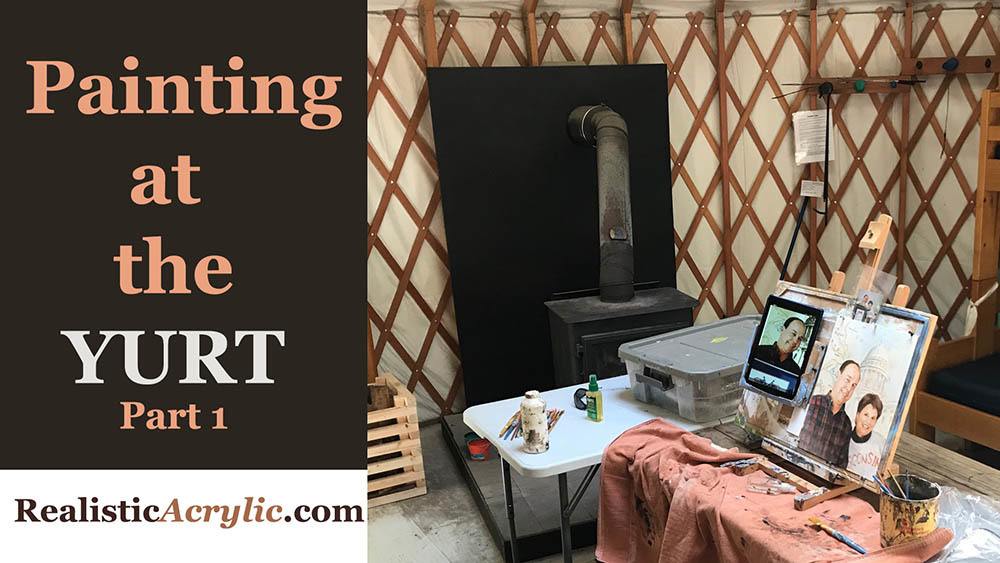
Portrait Painting of a Veteran at the Yurt
Is it possible to do portrait painting while you’re away from your home, your usual studio area?
This was something I’ve always wanted to do: create art while camping. And for all the years I’ve gone camping, I’ve never been able to successfully do it.
But finally, at the end of June, my brother and I decided to go camping at a rustic yurt up in Cable, WI. Where is that? Let’s just say, it’s “way up north.” 🙂 And what is a yurt? It’s a round tent-like house, a permanent structure made of lattice wood, bound together with steel cable, and covered with fabric. We rented it through Airbnb for two days.
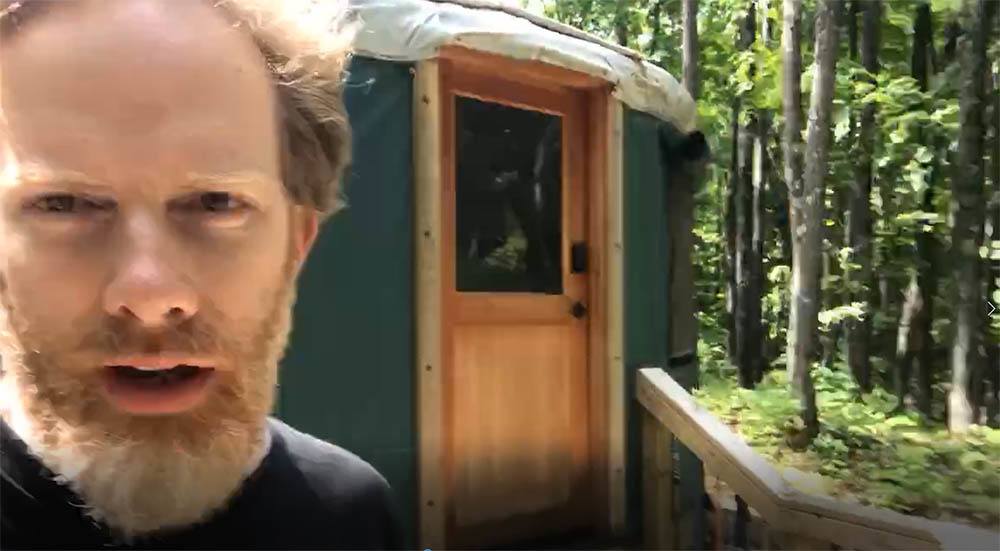
Acrylic portrait artist Matt Philleo ready to paint at a yurt in Cable, Wisconsin
We parked at the bottom of the hill and carried our gear up about a mile. We realized how out of shape we were! I also had my painting supplies: easel, palette, and brushes with me. In the middle of hiking and cooking, we decided to both do a little work: my brother wrote (he’s an author) and I painted.
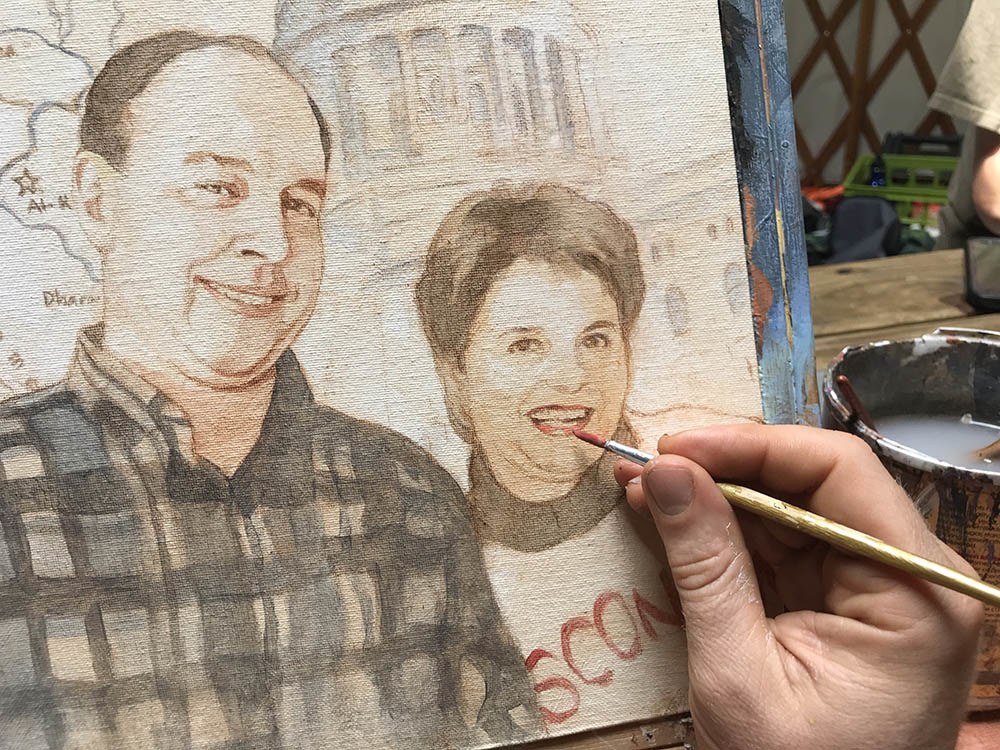
Painting an acrylic portrait from photo inside a yurt while camping, 11 x 14 acrylic on canvas ©2019 by Eau Claire area portrait artist Matt Philleo
I know. You’re probably thinking I should have painted the scenery up there, and yes, it was beautiful. But I had a commissioned portrait from a photo to get done: a painting of a veteran that served in the gulf war. And I love painting people, so it hardly seemed like work.
After bacon, eggs, and oatmeal for breakfast, it was time for painting.
Here is a video showing the beginning part of the process. In this video, I am basically blocking in the values with just raw umber dark and ultramarine blue. Of course, it’s all thinned out and made translucent with matte medium.
And then, here’s the next video in the process. Here I’m adding some color with burnt sienna, alizarine crimson and a few other colors. We’re starting to build up some skin tones. Also working on the flannel shirt. It takes a lot of layers to get it dark enough to look realistic!
After lunch, we hiked, and then came back and did more work: refining the shadows and making sure the likeness is accurate.
Sometimes your sketch just won’t cut it. It will get you about 80% of the way there, and you do the remaining 20% with paint. As you apply the paint, you can change the shape of the nose, the distance between the eyelids, lengthen the smile, etc., to adjust whatever might have been off during your sketch.
Of course, there is more to go on the painting. I’ll share the rest with you soon. I wasn’t able to finish it at the yurt, but I put in several hours. So, not only did I get to spend some great quality time with my brother, but I got to do some enjoyable work as well. After the big move, I finally feel like I’m getting into a regular groove of painting and posting tutorials. Thanks so much for your patience.
UPDATE: Here is the final video of this portrait, painted at my regular studio…
And a photo of it…
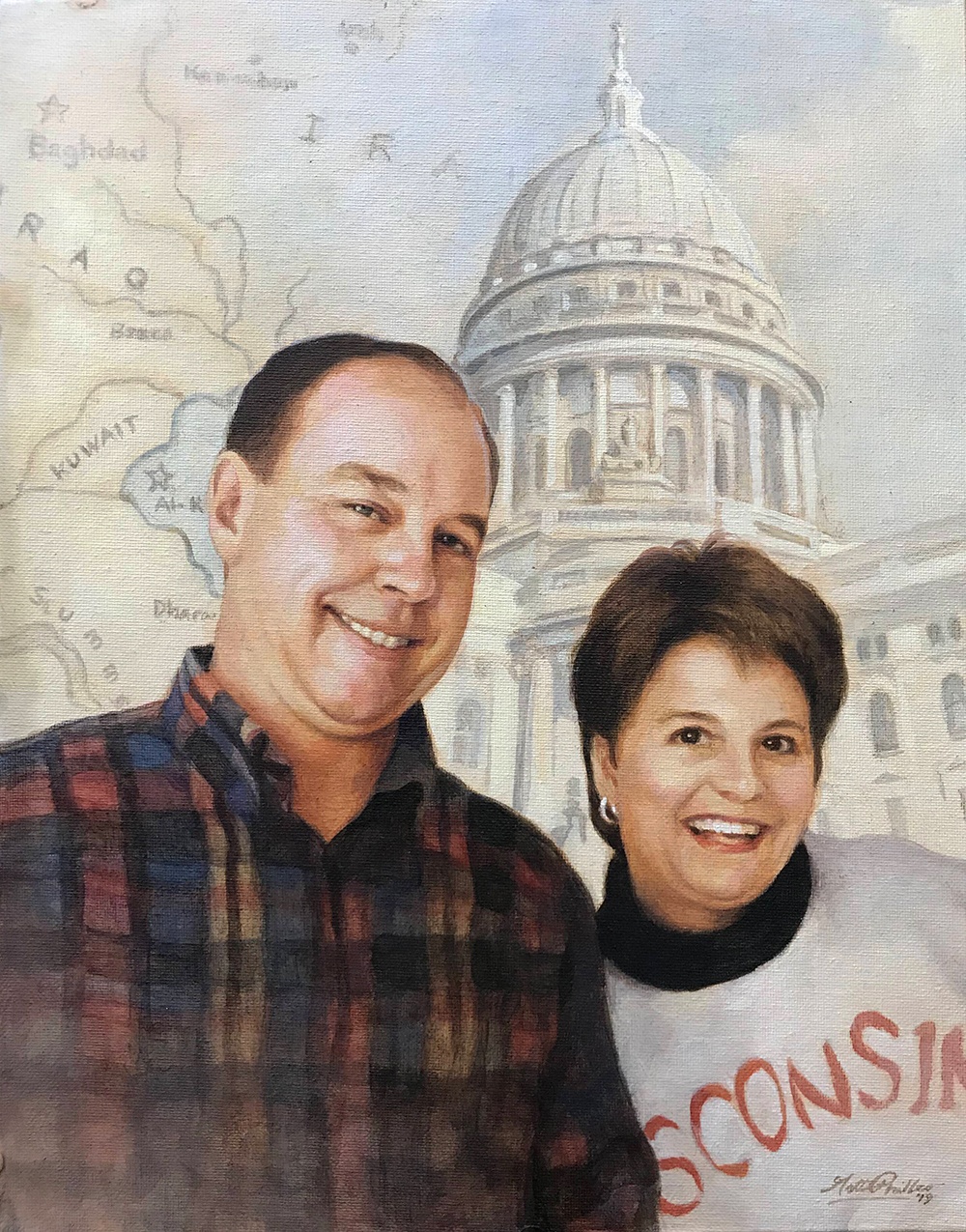
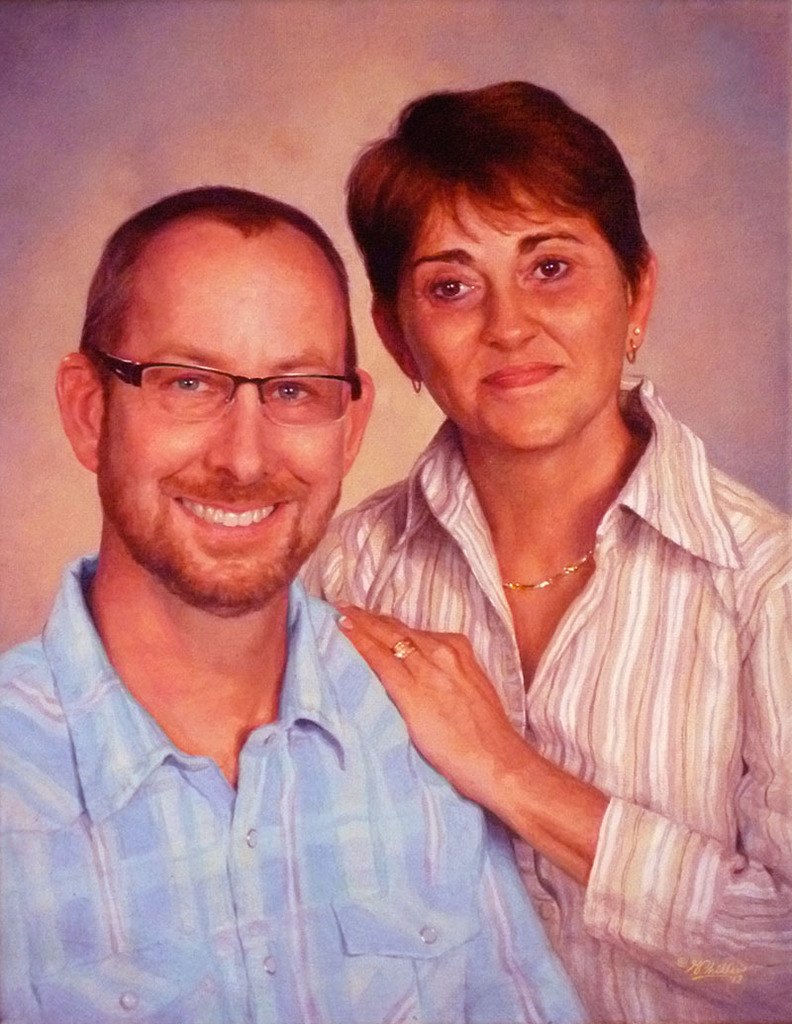
Custom realistic acrylic portrait of a veteran and his wife painted by Eau Claire area portrait artist Matt Philleo, 11 x 14, acrylic on canvas, ©2019 by Matt Philleo
I really enjoyed painting this for the client, putting all the elements–the map of Iraq, the capitol building, and the people together into one cohesive portrait that I hope will be a cherished keepsake for the family for years to come.
I hope this painting has encouraged you and given you some ideas to use in your own portrait painting. I would love to help you learn to paint portraits your very best. Let me know if I can be of more help to you in any way.
Yours for better portraits,
P.S. Did you find this post helpful or encouraging? If so, send it on ahead! Let others know with the share buttons below. I’d love to hear your comments. Thank you so much! Also, do you have a question on acrylic portrait painting you’d like answered? Let me know, and I’d be happy to help!
Value vs. Color in an Acrylic Painting
One of the trickiest things about acrylic portrait painting, especially when using the glazing technique, is knowing how to achieve color. How many layers do you use?
I’ve said it before, and I’ll say it again. There is something more important than color, even skin tones in a portrait.
Here is a recent question from a subscriber:
Currently, I am working on a portrait of my friend’s grandfather. My reference photo is of him as a young man in his dress greens from his younger days in the Army. I really want to capture his likeness and be proud to present this to her as it is a gift for her mother but I’m finding myself “stuck” in a sense. From watching your videos and using the matte medium as a glazing technique, I am having trouble building up the layers of his uniform to the correct tone and shade of green. I find the medium lightens the acrylic paint. I’ve only applied one layer so I still have time to correct it before making a mess of it. Should I have painted in the dark value of his uniform before going in with a glaze to help it along or just keep applying layer after layer until the desired color is achieved?
Regarding your question–yes, you can keep building up the green glazes for his uniform. However, it’s best to think of values before color. What I mean is, you are right to think that you should have done the dark value of the uniform first. That’s exactly right.
The reason is, value is more important than color. Value (light and dark and the difference between them) describes all the contours and three dimensions of a face or body. If it weren’t for the strategic placement of those values, we wouldn’t know whether it was a person, animal, rock or tree that we painted.
Theoretically, you could have a person whose skin tone or clothing was a bit too red, or greenish–whatever–but it the values were accurate, it would still look human, and would look like a pretty good portrait. You can see in this painting I did, the colors are a bit too red. (I also intensified them on Photoshop, exaggerating them a bit to make a point.)
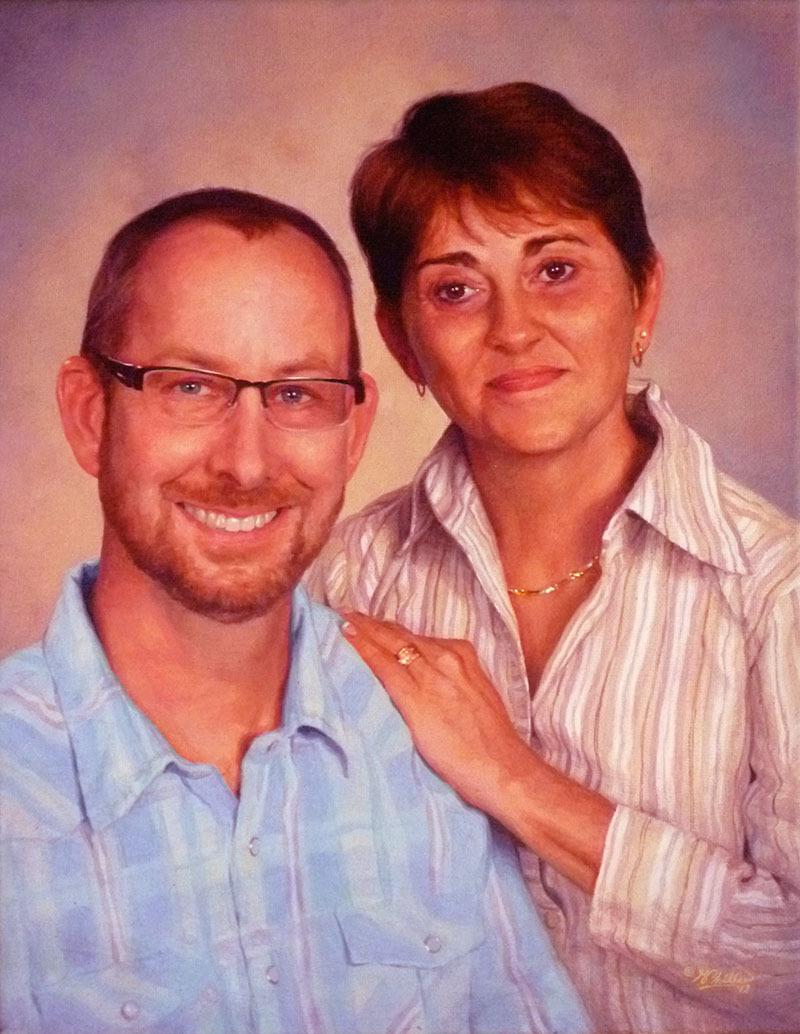
Acrylic portrait from photo by Matt Philleo, Eau Claire area portrait artist and instructor
But flip that around: make the skin tone or coloring right on, and the values completely off, and you will have a terrible portrait.
So, when I instruct my students in painting, I teach them to see the value structure first. We start off simple, using one or two colors, and then add as we go along. Much more important is seeing the overall lighting in the portrait–where the light source is, the darkest values (whether clothing, hair or just deep shadows, it makes no difference) and the mid-tones and capturing them faithfully. Of course, this assumes that you have the form correct. That is, that the proportions of the face and anatomy are accurate.
So, is your painting ruined? No, not at all. Just keep building up layers. But it helps to build up the darkest values first. Don’t neglect them. Think of your painting as an old polaroid photo. The print shoots out of the camera and fades in slowly, all together. You don’t get eyes, then hair, then a mouth, then the body. No. You get everything at once, but it’s all light. Then, in about 30 seconds, you have a print.
(Wow! Imagine that. I’m old enough to remember how cool it was to have an instant photo before digital cameras.) 🙂
So, you want to paint your painting like a polaroid. All at once, just fade everything in. As much as possible. That means that you hit those dark values first, and then work your way into the lighter ones.
As an example, let me show you this. Here is an image of how I did “Smoldering Wick,” an acrylic portrait illustrating a time when I struggled, and found encouragement in the scriptures.
All of these many layers is how you make an acrylic look like an oil. I learned this glazing technique several years ago from Norbert Kox, a university art professor. It made all the difference for me in my portrait painting with acrylic. Learning this technique and applying it will make the difference for you too.
If you’d like to learn more, sign up for my free email tips and videos today.
Learn How to Paint Acrylic Portraits With My Free Mini-Video Course!
And of course, let me know if you have any questions or comments. I’ll be happy to help!
Yours for Better Portraits,
P.S. Did you find this post helpful or encouraging? If so, send it on ahead! Let others know with the share buttons below. I’d love to hear your comments. Thank you so much! Also, do you have a question on acrylic portrait painting you’d like answered? Let me know, and I’d be happy to help!
How to Paint Realistic Reflections on Eyeglasses in Acrylic Portrait
It’s tricky to paint reflections on eyeglasses.
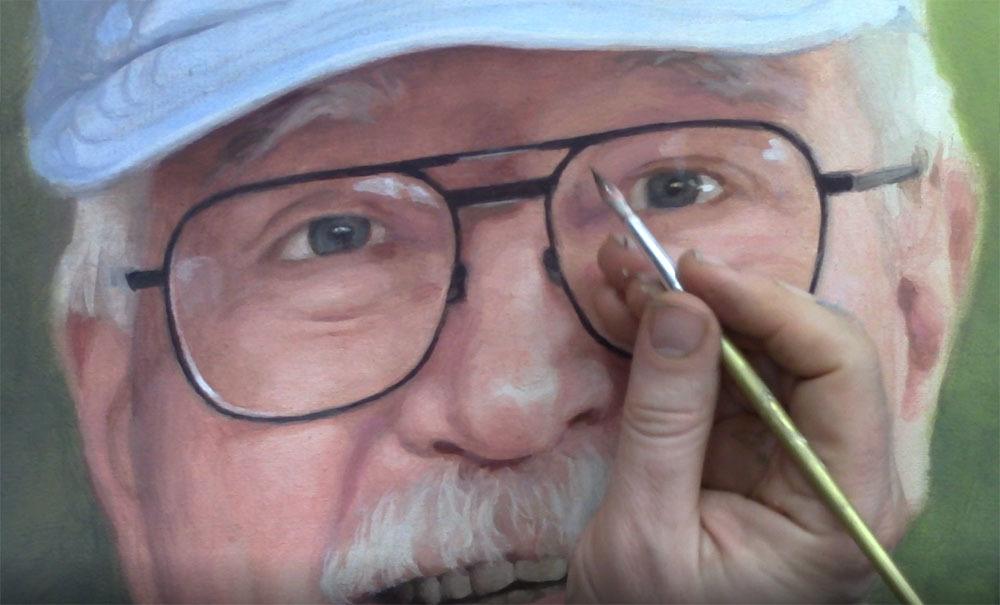
Creating realistic reflections on eyeglasses can significantly enhance the depth and authenticity of an acrylic portrait. In this blog post, you will learn how to paint realistic reflections on eyeglasses in acrylic portrait and then along with tips for mixing colors, layering, and applying highlights. Because these methods will help elevate your acrylic painting skills and bring your portraits to life.
Understanding Reflections in Eyeglasses
Reflections in eyeglasses are not just simple overlays; yet they play a crucial role in conveying the personality and emotion of your subject. Of course, observing how light interacts with surfaces is essential. Hence, it is vital to capture the subtle nuances of reflections to create a convincing portrayal.
Preparing Your Workspace
Before beginning, ensure your workspace is organized. Then have your reference photo at hand, and gather all necessary materials:
- Acrylic paints: Titanium white, raw umber dark, ivory black, burnt sienna, and alizarin crimson
- Brushes: A round size 8 brush for detail work
- Matte medium for thinning paint
- Palette for mixing colors
- A clean rag for touch-ups
Step-by-Step Techniques
Setting Up the Reference Photo
Zoom in on your reference photo to clearly see the reflections in the glasses. Then identify key areas where reflections appear and note their shape and color.
Mixing the Initial Color
Begin with a mixture of titanium white and raw umber dark to create a toned-down white. Because this will avoid stark brightness that can look unnatural, thin this mixture with matte medium to achieve fluidity.
Painting the Reflections
In this case, use the round brush to carefully apply the mixed color to the upper corners of the glasses. This is where the most pronounced reflections typically occur.
Just observe the shape of the reflections in your reference photo and replicate that shape on your canvas and then using different angles of strokes will help smooth out the paint.
Adding Depth with Multiple Layers
Allow the initial layer to dry before adding more highlights. While layering is essential for creating depth.
Mix a slightly lighter shade then by adding more titanium white to your previous mixture. Apply this lighter color to the same areas, focusing on the edges where the light hits most.
Incorporating Background Elements
To make the reflections believable, you need to incorporate faint outlines of elements visible in the background. This adds realism without overwhelming the portrait.
So use a diluted version of your mixture to achieve this effect, ensuring that the reflections do not detract from the subject’s features.
Enhancing the Frame of the Glasses
The frame should also reflect light. And then apply highlights using the same mixture to the inner edges of the frame.
Gradually build up the highlight by layering, allowing each layer to dry before adding the next.
Adding Shadows for Realism
Shadows are critical for grounding the glasses. When mixing burnt sienna and alizarine crimson, you can create a warm shadow color.
Apply this color underneath the glasses and around the frames to suggest depth and interaction with the face.
Refining the Details
After allowing the previous layers to dry, return with titanium white mixed with raw umber dark for the final highlights.
Focus on adding subtle highlights on the corners of the reflections. Use a very light touch to maintain the transparency of the glass.
Final Touches
Once all elements have dried, step back to evaluate your painting. Then adjust any areas that may need further highlights or shadows to ensure balance and realism. Because this reflective interplay between light and dark is what ultimately gives your portrait a lifelike quality.
Conclusion
Painting realistic reflections on eyeglasses requires patience and practice. So by following these techniques, artists can enhance their acrylic portraits with depth and clarity. Remember also that observation is key; study how light interacts with different surfaces to improve your skill. With dedication, anyone can learn how to paint realistic reflections that bring their acrylic portraits to life.
Tips for Painting Reflections:
- Layering is Key: Always allow layers to dry before adding more to achieve depth.
- Use a Light Touch: When applying highlights, a gentle hand creates a more realistic effect.
- Study Real Life: Observe real eyeglasses in different lighting conditions to understand how reflections work.
For further resources and guides, visit realisticacrylic.com and check out my free courses to enhance your acrylic painting journey.
This is a 16 x 20 acrylic on canvas commissioned portrait, and I just delivered it to the client today. She loved it. It was a memoriam portrait, so I pray it will bring comfort to all who see it.
Have a blessed day, and may God use your artistic gifts to bless people far and wide.
- How to Paint Foliage Using the Acrylic Glazing Technique
- How to Trace for an Accurate Portrait Sketch
- How to Paint Realistic Eyes in Your Acrylic Portrait
- How to Add Raw Umber Dark & Ultramarine Blue to Your Portrait
- How to Make Your Own Raw Umber Dark
- How to Paint Realistic Trees & Grass in Your Acrylic
- How to Block In Skin Tone Values Using Glazing Technique
- How to Paint Vibrant Reds in Your Acrylic Portrait
- How to Glaze Background Colors & More Acrylic Portrait
- How to Paint White Clothing in Your Acrylic Portrait
- How to Easily Transition from a Sketch to a Painting
- How to Block In Shading & Skin Tones in Your Acrylic
- How to Build Up Color on Acrylic Pet Portrait
- How to Build Up Form on Clothing with Acrylic
- How to Paint Dark Clothing Using Acrylic Glazing Technique
- How to Paint a 24 x 30 Acrylic With 30 People
- How to Do Smooth Shading with Acrylic
- How to Sketch an Acrylic Portrait with a Grid
Read more about how to paint a portrait that you can surely be proud of!
I’d love to hear your thoughts about this video. Please share it with your friends and family. Let me know if you have any further questions. I’ll greatly help you.
If you’d like to learn more, sign up for my free email tips and video class today.
Learn How to Paint Acrylic Portraits With My Free Mini-Video Course!
Thank you so much for taking the time to read this tutorial and watch the video. That means a lot to me. I hope you find it very helpful in your portrait painting.
Yours for Better Portraits,
P.S. Did you find this post helpful or encouraging? If so, send it on ahead! Let others know with the share buttons below. I’d love to hear your comments. Thank you so much! Also, do you have a question on acrylic portrait painting you’d like answered? Let me know, and I’d be happy to help!
How to Paint Smiling Girl in Yellow: 30-Minute Acrylic Portrait
Create a stunning 30-minute acrylic portrait of a smiling girl in yellow with easy-to-follow techniques
Creating a captivating 30-Minute Acrylic Portrait of a smiling girl in yellow can be a fulfilling and enjoyable artistic endeavor. In just half an hour, you can capture the essence of joy and vibrancy, making this project perfect for artists of all skill levels. Whether you’re a seasoned painter looking for a quick challenge or a beginner eager to experiment with color and expression, this guide will provide you with step-by-step instructions to bring your vision to life on canvas. Let’s dive into the techniques and tips that will help you create a stunning portrait that radiates happiness!
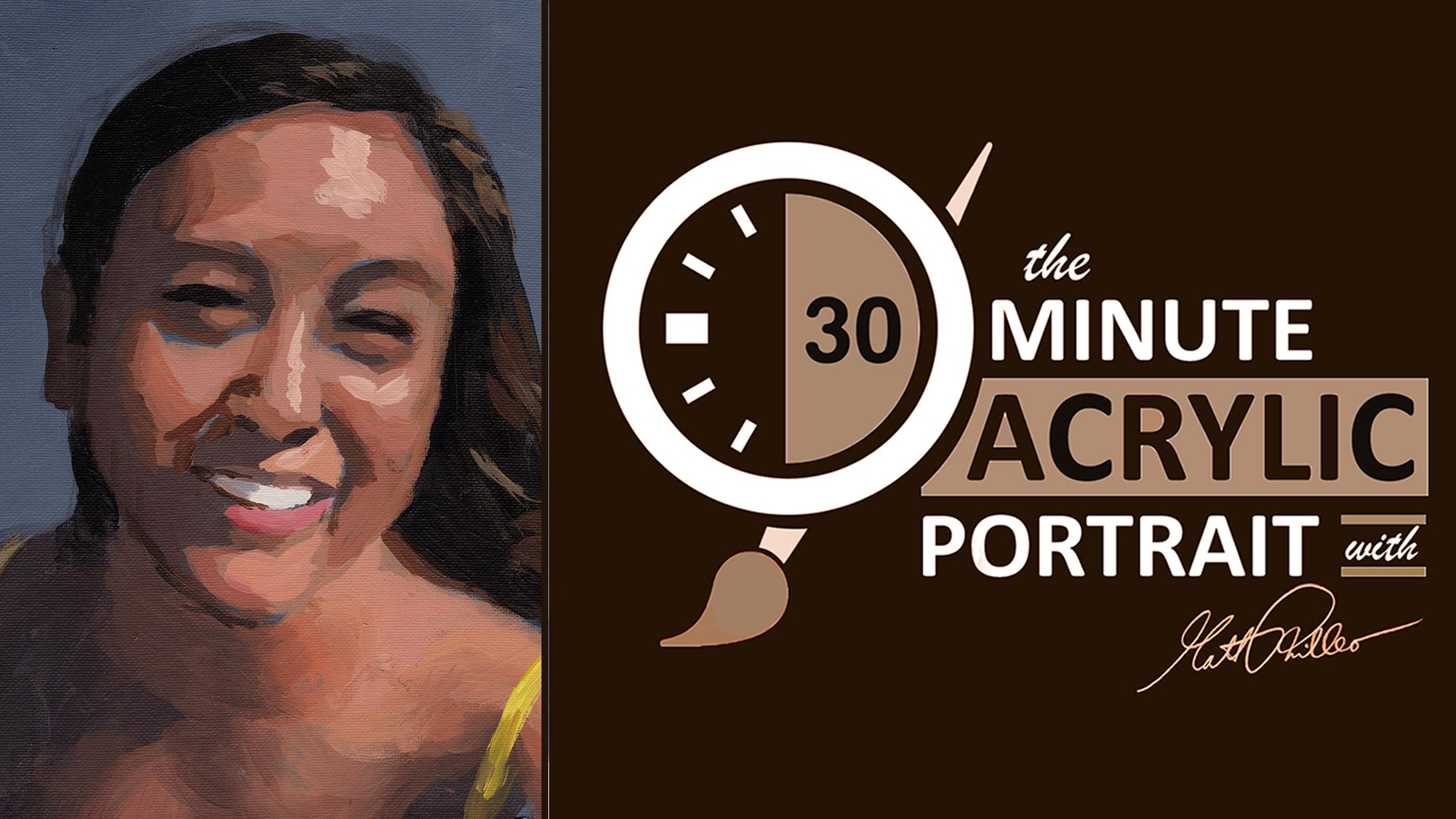
For today’s portrait, I’ll be painting a picture of a young woman ( a still shot image from Ray Comfort’s video interviews ) with a beautiful dark complexion and attractive smile. I like the dark shadows and forms within her face and hair, and I thought it would make for a fantastic little portrait.
This will be an 8 x 10, acrylic on canvas board.
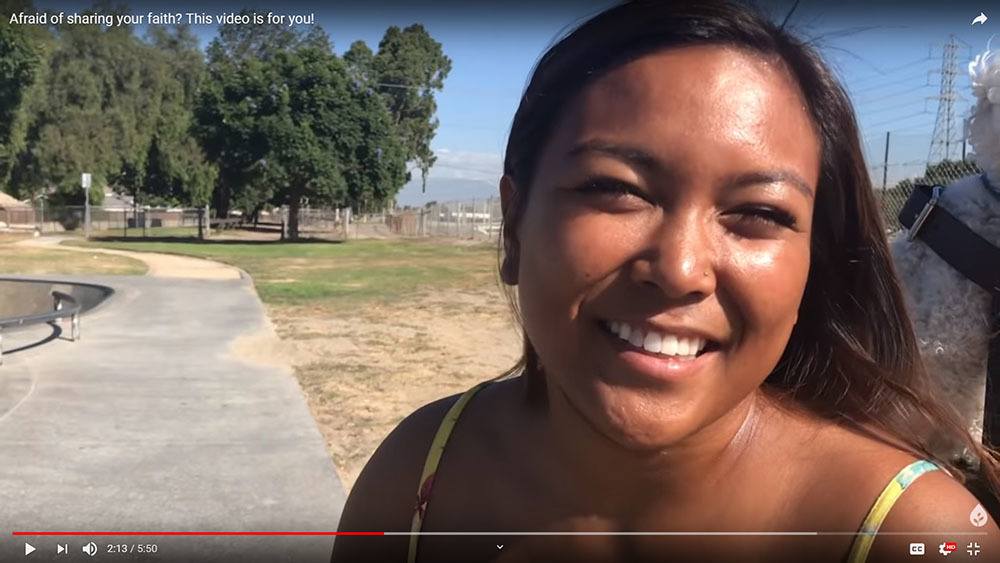
I’ll demonstrate how you can paint a quick portrait study with an aggressive opaque, alla prima technique. The idea is to see what you can accomplish within 30 minutes. It will force you to think quickly, and find out what the most important aspects are that will convey the subject’s likeness and just paint them without fuss.
At the same time, I encourage you to enjoy the process and don’t fret over whether the painting looks good or not. Of course it won’t look as good as a painting you’ve spent hours on! But it’s OK. Just enjoy the process.
Later on, you can always add more layers to the painting and give it a finished look.
Ready to dive in?
Season 1, Episode 3 of the 30-Minute Acrylic Portrait…
After watching it, leave me a comment here below. I really look forward to reading and answering your thoughts and questions. Let me know how I can help and have a blessed and productive day!
Yours for better portraits,
P.S. Did you find this post helpful or encouraging? If so, send it on ahead! Let others know with the share buttons below. I’d love to hear your comments. Thank you so much! Also, do you have a question on acrylic portrait painting you’d like answered? Let me know, and I’d be happy to help!
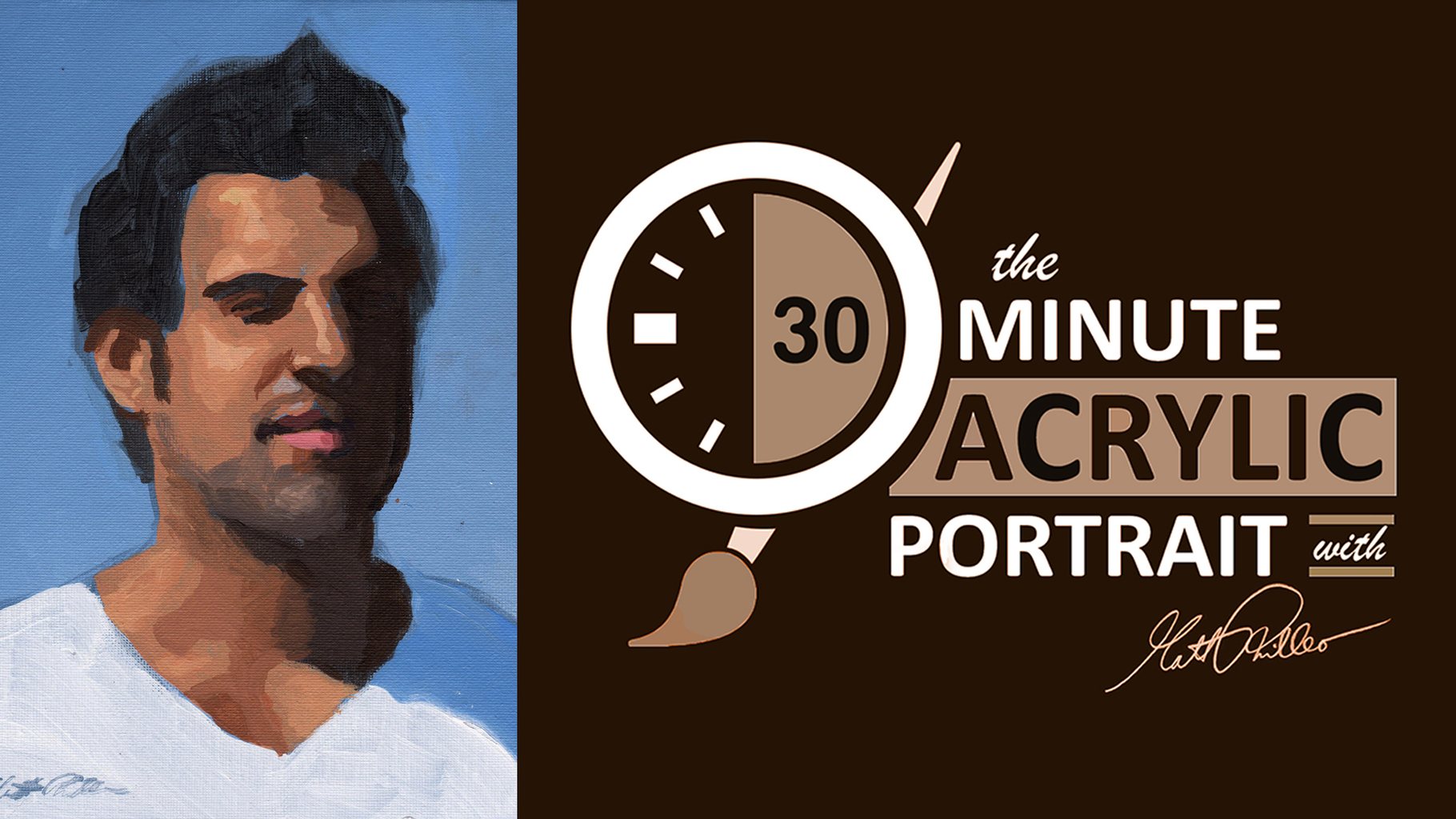
“How to Paint a Young Man in White” in 30 Minutes
Thank you to everyone who left encouraging comments and kind words on my first episode of the “30-Minute Acrylic Portrait.” Now, it’s on to Episode #2.
For today’s portrait, I’ll be painting a picture of a young man dressed in white, named Mohammed.
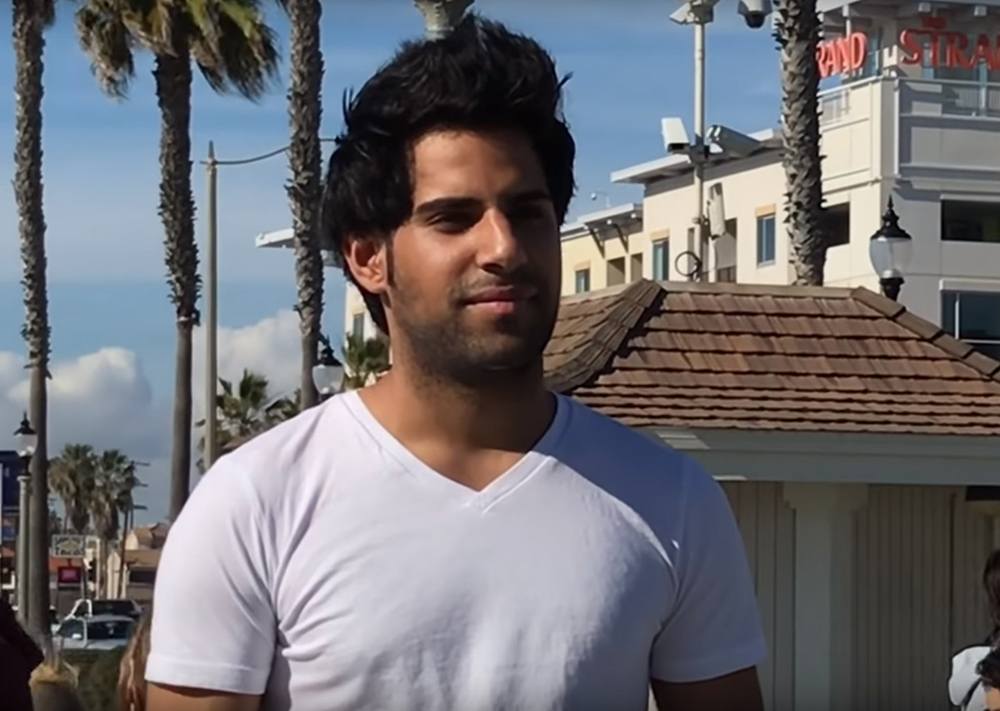
How did I come across this photo?
Well, I was looking for interesting reference images to paint from, scouring the internet and couldn’t find much. Even stock photo sites like Pexels and Pixabay came up short.
Then I recalled a YouTube channel that I frequently watch (or have playing in the background as I paint): Living Waters.
On this channel, there are literally hundreds of videos of people being interviewed by Ray Comfort, a Christian author, evangelist and short movie producer. Every person is different and unique. I noticed the lighting on several of these interesting characters was fantastic, and the video quality high enough that I could grab some screenshots of the footage and then paint from them.

Of course, I needed to get permission first.
So I contacted the ministry’s general email address, and got an expected automated response.
The next day, however, I got an unexpected call from Ray Comfort, granting me permission to paint portraits based on his videos. I was blown away by his generosity and thought this was also another confirmation from God to continue doing the series. I should have enough images to keep me busy for months, maybe even years. 🙂
So here we go.
Season 1, Episode 2 of the 30-Minute Acrylic Portrait…
As always, let me know what you think of this video. I encourage you to try this exercise for yourself. You don’t have to feel pressured to come up with a masterpiece. Just enjoy the process and see what you can do within half an hour.
Or you might just want to keep watching these videos for fun, sipping some coffee or tea. 🙂 Either way, thank you for watching, and I look forward to sharing more with you.
Yours for better portraits,
P.S. Did you find this post helpful or encouraging? If so, send it on ahead! Let others know with the share buttons below. I’d love to hear your comments. Thank you so much! Also, do you have a question on acrylic portrait painting you’d like answered? Let me know, and I’d be happy to help!
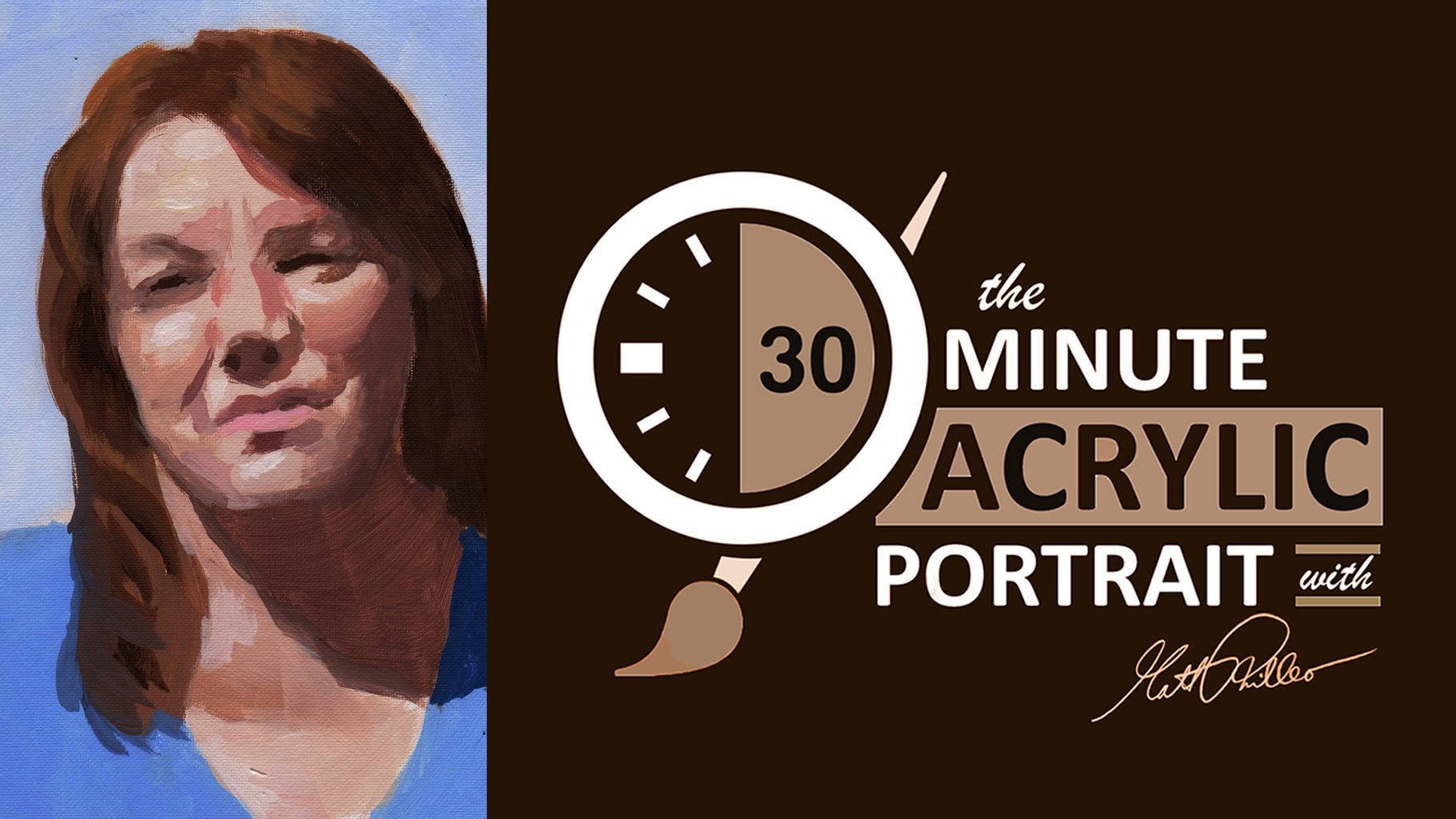
How to Paint an Acrylic Portrait in 30 Minutes
Discover the quick and simple method to capture portraits with speed and precision
As a child, I was amazed as I watched “The Joy of Painting” host Bob Ross paint a beautiful landscape in less than 30 minutes. I was captivated by his gentle touch, his fast wet-on-wet technique, and the way he could totally put you at ease.
I can’t say I wanted to be just like Bob when I grew up, but he did help inspire me to paint.
Later on, I learned the more methodical glazing technique from Norbert Kox, where you apply layer after layer of translucent paint. It’s very time consuming, but it creates fantastic realistic effects. This is the style I have become known for.
But sometimes I just want to knock out a quick painting, have fun with it, and yet push myself.
Can I paint a somewhat respectable looking painting in half an hour?
If I do it often, will I get faster?
Could it help me paint faster, and more confidently in my “typical” more detailed portraits?
Could an exercise like this help YOU to do the same?
There’s only one way to find out.
So, with that, I’m launching a new series of videos, or something like a show called, “The 30-Minute Acrylic Portrait” Season One, Episode 1…
Tips for Success in Fast-Paced Portrait Painting
- Set a Timer: Keep yourself on track by setting a timer. This helps maintain focus and prevents overworking areas.
- Keep Your Palette Organized: Lay out your colors clearly, so you can mix shades quickly without delay.
- Use a Limited Palette: Working with fewer colors will simplify the process and give the portrait a harmonious look.
- Practice Blocking and Simplifying: Learn to capture shapes and shadows quickly by focusing on big-picture composition.
Common Mistakes to Avoid
- Focusing Too Much on Detail: With only 30 minutes, try to avoid getting caught up in minute details.
- Using Too Many Colors: Stick with a few main colors for consistency and ease.
- Overthinking the Process: Embrace a relaxed approach, letting the process unfold naturally.
Conclusion
Creating a 30-minute acrylic portrait requires simplifying techniques, focusing on essential shapes, and mastering the art of blocking in shadows and highlights. This method allows for creative expression while enhancing your confidence and ability to capture a portrait quickly. Practice makes perfect, so keep experimenting with colors, tones, and brush techniques.
Read more about my additional resources, tutorials, to learn more and check out my free courses here. . Whether you’re a beginner or an experienced artist, there’s always something new to learn and apply to your paintings. Happy painting!
Let me know what you think of this video. Is it helpful? Interesting? Would you like to see more?
I’d love to hear back from you with your honest thoughts.
LEARN MORE
- How to Paint Foliage Using the Acrylic Glazing Technique
- How to Trace for an Accurate Portrait Sketch
- How to Paint Realistic Eyes in Your Acrylic Portrait
- How to Add Raw Umber Dark & Ultramarine Blue to Your Portrait
- How to Make Your Own Raw Umber Dark
- How to Paint Realistic Trees & Grass in Your Acrylic
- How to Block In Skin Tone Values Using Glazing Technique
- How to Paint Vibrant Reds in Your Acrylic Portrait
- How to Glaze Background Colors & More Acrylic Portrait
- How to Paint White Clothing in Your Acrylic Portrait
- How to Easily Transition from a Sketch to a Painting
- How to Block In Shading & Skin Tones in Your Acrylic
- How to Build Up Color on Acrylic Pet Portrait
- How to Build Up Form on Clothing with Acrylic
- How to Paint Dark Clothing Using Acrylic Glazing Technique
- How to Paint a 24 x 30 Acrylic With 30 People
- How to Do Smooth Shading with Acrylic
- How to Sketch an Acrylic Portrait with a Grid
Read more about how to paint a portrait that you can surely be proud of!
Yours for better portraits,
P.S. Did you find this post helpful or encouraging? If so, send it on ahead! Let others know with the share buttons below. I’d love to hear your comments. Thank you so much! Also, do you have a question on acrylic portrait painting you’d like answered? Let me know, and I’d be happy to help!