
Archive Monthly Archives: February 2026
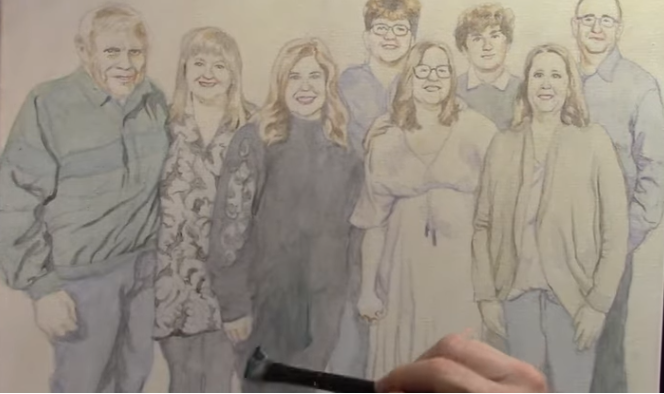
How to Add Shading and Detail in Many People Portrait
Mastering acrylic glazing to bring realism and cohesion to group portraits
Painting a portrait of several people can feel overwhelming, especially when trying to maintain cohesive shading, tonal values, and color harmony. Using the glazing technique in acrylics allows artists to gradually build up depth and detail while preserving the underlying structure.
This approach is particularly effective when working on group portraits, as it enables consistent tonal relationships and a unified visual style.
Preparing Your Portrait
Before beginning your shading and detail work, ensure your portrait has a solid base layer. For a group portrait, it’s essential to block in the structure of all figures first. This means establishing the shapes, positions, and basic color zones. Once the initial layers are in place, you can start building depth and enhancing details using translucent glazes.
Tip: Work on all figures simultaneously rather than finishing one person at a time. This approach helps maintain cohesive contrast and color harmony across the entire portrait.
Understanding the Glazing Technique
Glazing is a process that involves mixing paint with a large proportion of matte medium to create a translucent layer. The typical ratio is about 90% matte medium to 10% paint, though this can be adjusted depending on the opacity needed. By applying multiple thin layers, the artist can gradually intensify shading, deepen colors, and adjust tonal values without obscuring the layers beneath.
Technique:
- Prepare your glaze on a separate mixing area of your palette.
- Control the ratio carefully to ensure subtle, translucent applications.
- Apply with smooth, short strokes, blending as needed to avoid harsh transitions.
Building Background and Depth
Even subtle glazes on the background can enhance the overall depth of a group portrait. Mixing neutral tones, such as raw umber with ultramarine blue, creates a gray that doesn’t compete with the figures while adding warmth and dimension. Apply using short diagonal strokes to keep the texture organic. Avoid overdoing it, and occasionally use a dry brush to create soft, natural transitions.
Pro Tip: Dry brushing is useful but can wear down brushes. Consider using less expensive brushes for this technique, or repurpose old brushes for crafts after use.
Adding Color and Shading to Clothing
Once the background is in place, focus on the clothing and secondary elements. Mix colors to match your reference photo while keeping them slightly desaturated for realism. For example, blending raw sienna with phthalo blue and a touch of ultramarine creates muted green tones suitable for clothing.
Key Points:
- Use a smaller brush for better control and precision.
- If a color isn’t perfect on the first pass, rely on the glazing technique to adjust gradually.
- Introduce small touches of complementary hues across different figures to enhance color harmony.
Example: A greenish hue on one person’s jacket can be repeated subtly in another person’s clothing, promoting cohesion without looking forced.
Working with Tonal Values
Glazes allow you to enhance shadows, contrast, and depth. For areas meant to be black or very dark, apply a few translucent layers first. Each layer adds richness and intensity without flattening the texture of the underlying paint. Smooth, even strokes should be used to push the paint into the weave of the canvas initially, then blend lightly with shorter strokes for a seamless finish.
Tip: Step back frequently to assess tonal relationships across all figures. Adjust glazes to ensure no single area appears disconnected from the rest of the composition.
Maintaining Color Harmony
When painting multiple figures, consider how colors interact across the portrait. You don’t need to strictly replicate the reference photo if a small color adjustment improves overall harmony. For instance, a subtle greenish glaze on one figure’s clothing might also enhance another figure’s pants or accessories, creating a visual connection that strengthens the composition.
Technique: Think of glazes like layers of stained glass: overlapping translucent colors can shift the perception of underlying hues, enhancing depth and cohesion.
Final Adjustments and Tips
- Apply glazes incrementally, building layers rather than rushing for opacity.
- Blend carefully to avoid harsh lines or unintentional textures.
- Use reference photos as a guide but allow artistic judgment for adjustments that improve harmony.
- Focus on working simultaneously on all figures to maintain consistent tonal values.
- Evaluate the portrait under natural light to check for subtle discrepancies in color or contrast.
FAQs
What is the glazing technique?
Glazing uses thin, translucent layers of paint mixed with matte medium to build depth, shading, and detail without covering previous layers.
Should I paint one figure at a time or all at once?
Work on all figures simultaneously for consistent tonal values, contrast, and color harmony across the portrait.
Can I tweak colors from my reference photo?
Yes. Subtle adjustments can improve cohesion and make your portrait more visually appealing.
How do I avoid damaging brushes when glazing?
Use affordable brushes or repurpose old ones. Clean thoroughly after each session to extend their life
How can I darken clothing or backgrounds naturally?
Apply multiple translucent layers, starting with smooth strokes and blending lightly for realistic shadows.
How do I maintain color harmony in a group portrait?
Repeat small touches of a color from one figure subtly on others to create unity and visual balance.
How do I create realistic black or dark areas?
Build darkness gradually with glazes instead of painting opaque black immediately to preserve depth and texture.
How do I know when the portrait is finished?
When shading, tonal balance, and color harmony are consistent, details are preserved, and the overall composition feels cohesive.
Conclusion
Adding shading and detail to a portrait of multiple people requires patience and thoughtful layering. The glazing technique provides a methodical way to enhance depth, tonal value, and color harmony while preserving the details of the initial layers. By working on all figures simultaneously, artists achieve a cohesive, realistic group portrait that reflects careful observation and skillful application.
For more tutorials, tips, and classes on realistic acrylic portrait painting, visit Realistic Acrylic Portrait School.
- How to Paint Foliage Using the Acrylic Glazing Technique
- How to Trace for an Accurate Portrait Sketch
- How to Paint Realistic Eyes in Your Acrylic Portrait
- How to Add Raw Umber Dark & Ultramarine Blue to Your Portrait
- How to Make Your Own Raw Umber Dark
- How to Paint Realistic Trees & Grass in Your Acrylic
- How to Block In Skin Tone Values Using Glazing Technique
- How to Paint Vibrant Reds in Your Acrylic Portrait
- How to Glaze Background Colors & More Acrylic Portrait
- How to Paint White Clothing in Your Acrylic Portrait
- How to Easily Transition from a Sketch to a Painting
- How to Block In Shading & Skin Tones in Your Acrylic
- How to Build Up Color on Acrylic Pet Portrait
- How to Build Up Form on Clothing with Acrylic
- How to Paint Dark Clothing Using Acrylic Glazing Technique
- How to Paint a 24 x 30 Acrylic With 30 People
- How to Do Smooth Shading with Acrylic
- How to Sketch an Acrylic Portrait with a Grid
Read more about how to paint a portrait that you can surely be proud of!
I’d love to hear your thoughts on this video. Please share it with your friends and family. Let me know if you have any further questions. I’ll greatly help you.
If you’d like to learn more, sign up for my free email tips and video class today.
Learn How to Paint Acrylic Portraits With My Free Mini-Video Course!Thank you so much for taking the time to read this tutorial and watch the video. That means a lot to me. I hope you find it very helpful in your portrait painting.
Yours for Better Portraits,

P.S. Did you find this post helpful or encouraging? If so, send it in ahead! Let others know with the share buttons below. I’d love to hear your comments. Thank you so much! Also, do you have a question on acrylic portrait painting you’d like answered? Let me know, and I’d be happy to help!
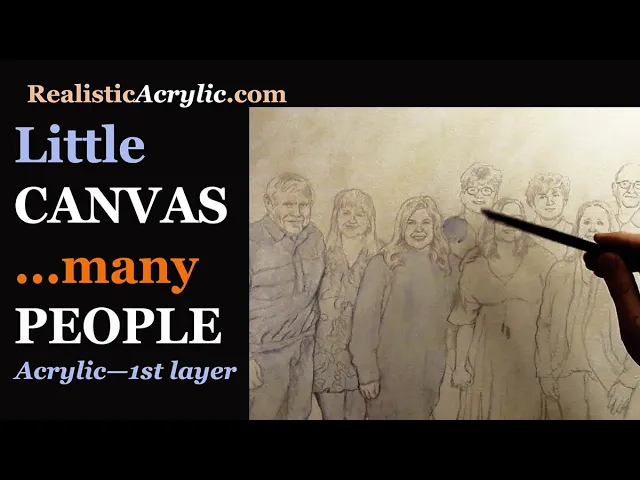
How to Paint Many People on a Small Canvas—First Glaze!
Learn the art of glazing to paint multiple people on one canvas
Painting multiple people on a small canvas can seem intimidating. Balancing facial details, body proportions, and overall composition requires careful planning and technique.
Using the acrylic glazing technique, you can gradually build color, depth, and contrast while preserving the precision of your initial sketch. In this guide, you’ll learn how to start a multi-figure portrait on a 16×20 canvas, from canvas preparation to your first glaze application.
Prepare Your Canvas with a Toning Layer
A properly toned canvas makes the glazing process easier. Apply a mixture of titanium white, raw sienna, and burnt sienna with matte medium as your base layer. This toning layer:
- Reduces the brightness of your initial sketch
- Provides a neutral surface for glazes
- Preserves fine sketch details
Using matte medium makes the paint more fluid and allows it to dry crystal clear. Think of your canvas as a Polaroid developing slowly. Because each glaze adds depth, just like the image emerging on film.
Understanding the Acrylic Glazing Technique
Glazing is a method where semi-transparent layers gradually build color and contrast. This technique ensures that:
- Sketch details remain intact
- Colors develop gradually without overwhelming the painting
- Tonal transitions appear smooth and realistic
Begin with light layers and increase intensity gradually. This approach allows flexibility for adjustments and prevents over painting small details.
Select a Simple Yet Effective Color Palette
A versatile palette reduces complexity and keeps your painting harmonious. Essential colors include:
- Raw Sienna and Burnt Sienna
- Raw Umber Dark
- Ultramarine Blue and Phthalo Blue
- Alizarine Crimson, Napal Red, Organic Orange, Indian Yellow
- Titanium White
- Matte Medium
Aluminum foil also works well as a palette, as it’s inexpensive and easy to clean. Because it keep paints moist by lightly spraying water to maintain a smooth consistency.
Blocking in Colors and Tonal Values
Blocking in tonal values is a key step in painting multiple figures. Start by:
- Identifying the darkest tonal areas in your reference photo
- Mixing a glaze with matte medium and pigments
- Applying paint with small to medium brushes (½–5/8 inch flats)
- Using long, smooth strokes to lift the brush lightly for even coverage
Focus on sections, not individual features, to better see abstract shapes. This approach helps achieve realistic proportions and tonal relationships across multiple figures.
Painting Faces and Clothing with Glazes
When working on multiple figures:
- Apply perpendicular or crisscross strokes for smoother blending
- Maintain light first layers to adjust tones and colors later
- Use cooler colors like blue in shadow areas to maintain color harmony
- Reload brushes frequently to prevent streaks or blotches
Even if some areas appear uneven, additional glaze layers will smooth them out and enhance vibrancy.
Managing Small Details on a Compact Canvas
Small faces and intricate clothing require patience in the following:
- Use lightly loaded brushes for precision
- Work systematically from edges or top to bottom
- Focus on abstracted shapes, not isolated features
- Allow first layers to dry slightly before adding more intensity
This method helps you paint realistically, focusing on what you see instead of what you think you see.
Tips for Smooth and Cohesive Glaze Application
- Apply light pressure: Lift the brush at the end of strokes to avoid harsh lines
- Layer gradually: Build depth and contrast over several thin glazes
- Maintain color consistency: Reuse base colors throughout the painting
- Observe constantly: Compare your work to the reference photo to adjust tonal values
- Work in sections: Treat the painting in blocks rather than individual objects
Following these steps ensures that the first glaze sets a strong foundation for additional layers, leading to a vibrant and lifelike portrait.
Conclusion
Painting many people on a small canvas becomes manageable using the acrylic glazing technique. Because by starting with a toned canvas, blocking in tonal values, and applying multiple thin, controlled layers, you preserve details and gradually develop color, depth, and contrast.
Of course, with patience and careful observation, your multi-figure portrait will emerge cohesive, smooth, and realistic.
For more detailed tutorials and step-by-step guides, you can also visit Realistic Acrylic Portrait School for classes, online tutorials, and videos.
Frequently Asked Questions (FAQs)
What is the first glaze in acrylic painting?
The first glaze is a thin, semi-transparent layer of paint applied over a toned canvas.But it helps establish tonal values, preserves sketch details, and sets the foundation for building depth and contrast gradually.
Why is glazing important when painting multiple people?
Glazing also allows you to gradually develop colors and maintain likenesses for small faces. Then it prevents over painting, ensures color harmony, and keeps all figures visually cohesive on a compact canvas.
How should I prepare my canvas for a multi-person portrait?
Firstly, start with a toned layer using colors like titanium white, raw sienna, and burnt sienna mixed with matte medium. Because, this provides a neutral base that makes initial glazes easier to apply smoothly.
Which colors are best for initial blocking?
Use a limited palette including neutral darks and mid-tones, like ultramarine blue, raw umber, burnt sienna, and complementary colors. But start with darker tonal values and adjust lighter areas gradually.
How do I prevent blotchy paint application?
Use light, lifting brush strokes and avoid overloading your brush. Then, focus on smooth, perpendicular strokes for even coverage. Because any blotchiness can be corrected in subsequent glaze layers.
What brushes work best for small faces and full-length figures?
Small to medium flat brushes (1/4 to 5/8 inch) are ideal for blocking in colors, while small round brushes are perfect for shadows, hair, and fine details. Brush angle adjustment helps achieve a smooth finish.
Can I achieve realistic results on a small canvas?
Yes. By painting in abstracted shapes and using the glazing technique, you can maintain proportions, preserve facial details, and produce a realistic multi-person portrait even on a small canvas.
How many layers of glaze should I apply?
Start with light layers to maintain flexibility. Gradually add more layers, increasing opacity and contrast while refining colors. Multiple layers help create vibrancy and depth without losing detail.
How do I maintain color harmony in multi-subject paintings?
Use consistent colors for shadows and mid-tones across clothing, hair, and background. Cooler tones like blues can unify shadows, while subtle variations add depth and realism.
- How to Paint Foliage Using the Acrylic Glazing Technique
- How to Trace for an Accurate Portrait Sketch
- How to Paint Realistic Eyes in Your Acrylic Portrait
- How to Add Raw Umber Dark & Ultramarine Blue to Your Portrait
- How to Make Your Own Raw Umber Dark
- How to Paint Realistic Trees & Grass in Your Acrylic
- How to Block In Skin Tone Values Using Glazing Technique
- How to Paint Vibrant Reds in Your Acrylic Portrait
- How to Glaze Background Colors & More Acrylic Portrait
- How to Paint White Clothing in Your Acrylic Portrait
- How to Easily Transition from a Sketch to a Painting
- How to Block In Shading & Skin Tones in Your Acrylic
- How to Build Up Color on Acrylic Pet Portrait
- How to Build Up Form on Clothing with Acrylic
- How to Paint Dark Clothing Using Acrylic Glazing Technique
- How to Paint a 24 x 30 Acrylic With 30 People
- How to Do Smooth Shading with Acrylic
- How to Sketch an Acrylic Portrait with a Grid
Read more about how to paint a portrait that you can surely be proud of!
I’d love to hear your thoughts on this video. Please share it with your friends and family. Let me know if you have any further questions. I’ll greatly help you.
If you’d like to learn more, sign up for my free email tips and video class today.
Learn How to Paint Acrylic Portraits With My Free Mini-Video Course!Thank you so much for taking the time to read this tutorial and watch the video. That means a lot to me. I hope you find it very helpful in your portrait painting.
Yours for Better Portraits,
P.S. Did you find this post helpful or encouraging? If so, send it in ahead! Let others know with the share buttons below. I’d love to hear your comments. Thank you so much! Also, do you have a question on acrylic portrait painting you’d like answered? Let me know, and I’d be happy to help!
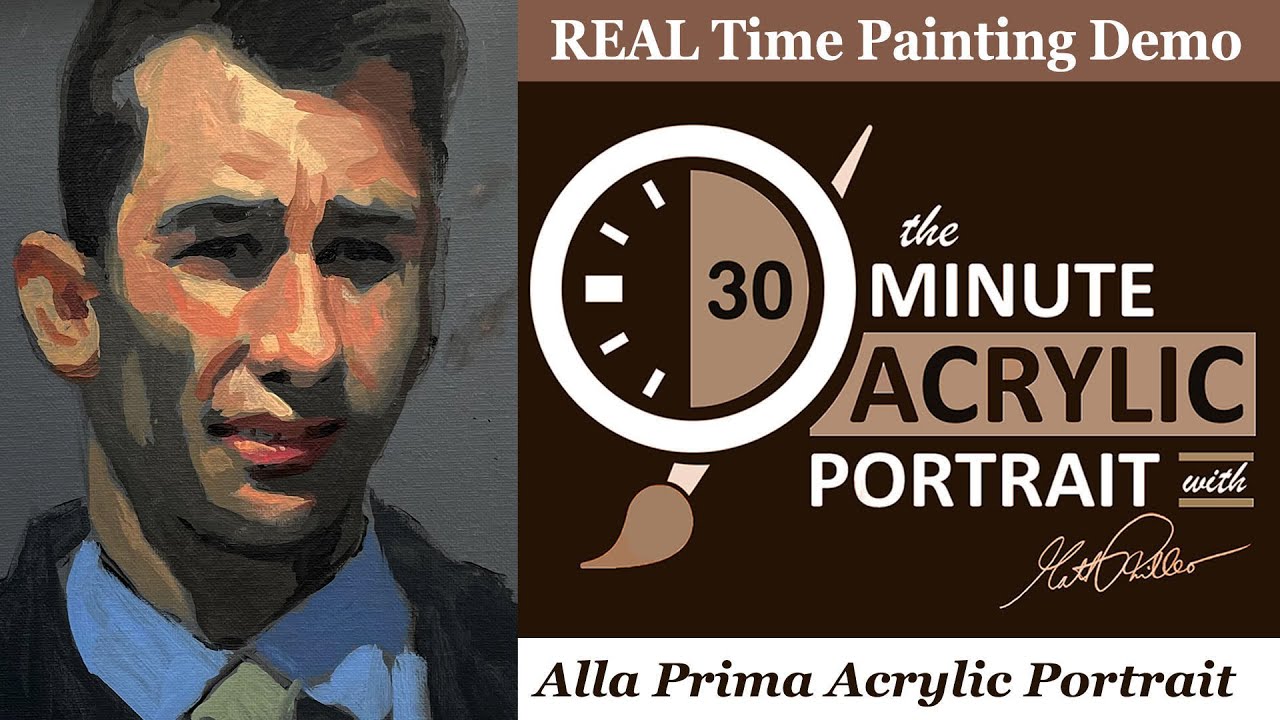
How to Paint a Young Man with Tie in 30-Minute Acrylic Portrait!
A step-by-step acrylic portrait study using an alla prima approach to build strong values, confident brushwork, and realism in a limited time
Painting an acrylic portrait in just 30 minutes may sound intimidating at first. However, when the process is approached as a focused study rather than a finished masterpiece, speed becomes a powerful teacher.
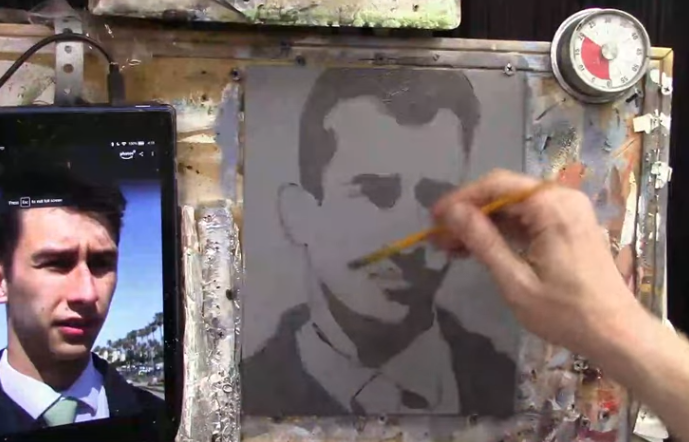
In this portrait exercise, a young man wearing a shirt and tie is painted using strong overhead lighting, bold cast shadows, and an alla prima approach.
This type of time-limited painting is designed to improve efficiency, decision-making, and confidence. Instead of chasing perfection, attention is placed on what truly matters first: composition, values, and clear forms. Over time, these short studies help improve longer, more detailed portraits as well.
Throughout this lesson, the portrait is built from a pre-toned gray surface, using fluid acrylic paint and deliberate brushwork. Each stage builds logically on the previous one, allowing realism to emerge even within a tight time frame.
Why a 30-Minute Acrylic Portrait Study Works
A short portrait session forces simplification. Because time is limited, unnecessary details are avoided and visual priorities are clarified. As a result, the painter is encouraged to see the subject in terms of large shapes and value relationships rather than isolated features.
In addition, painting quickly helps reduce hesitation. Brushstrokes are placed with more confidence, and overworking is naturally minimized. Although the portrait could be developed further with additional layers, the study itself remains valuable as an exercise in observation and control.
Materials and Palette Setup
Before the timer is started, preparation is essential. An 8×10 canvas panel is pre-painted gray to establish a neutral mid-tone. This allows both lights and darks to be judged more accurately.
The acrylic palette includes:
- Ivory Black
- Raw Umber Dark
- Raw Sienna
- Burnt Sienna
- Phthalo Blue
- Ultramarine Blue
- Alizarine Crimson
- Napthol Red
- Organic Orange
- Indian Yellow
- Titanium White
Matte medium is also used to thin the paint without breaking down its binding strength. Because fluid paint moves more easily across the surface, transitions can be created faster and with less effort.
Blocking in the Composition
The first stage of the painting is focused on placement and proportion. Using raw umber dark mixed with matte medium, the head, shoulders, collar, and tie are loosely sketched in. The paint is kept translucent so adjustments can be made easily.
Rather than outlining every feature, the major angles of the face are indicated with short, choppy strokes. The top of the head is intentionally cropped to create a stronger, more modern composition. Throughout this stage, accuracy is approached with flexibility. Precision is not the goal yet. Clarity is.
Special attention is given to eye placement. Because eyes are often placed too high by beginners, they are positioned near the center of the head. This simple correction helps maintain believable proportions from the start.
Establishing the Darkest Values
Once the composition is set, the darkest shadow shapes are blocked in. A mixture of raw umber dark, ivory black, and titanium white is used to create a deep shadow tone. This value is darker than the background, allowing the face to stand out clearly.
These shadows are applied under the brow ridge, along the nose, beneath the eyes, and across the neck. The same color is also used to block in the hair and jacket, keeping the palette unified and efficient.
At this stage, detail is intentionally avoided. The focus remains on grouping shadows into simple, readable shapes. By doing so, the structure of the face begins to emerge naturally.
Adding Variation to the Shadows
To prevent the dark areas from appearing flat, a small amount of ultramarine blue is introduced into the shadow mixture. This subtle shift adds depth and visual interest, especially in the clothing.
Shadows beneath the collar and along the jacket are reinforced, while edges are softened where light gradually transitions into form. Because the paint remains fluid, these blends are achieved quickly without excessive brushing.
Developing the Midtones of the Skin
With the shadows established, attention is turned to the midtones. A flesh tone is mixed using titanium white, raw sienna, burnt sienna, and a small amount of organic orange. This mixture becomes the primary skin color used across the face.
The mid-tone is applied broadly, carefully painted around the shadow shapes rather than over them. Although the background is dark, sufficient opacity is achieved by adjusting the paint mixture and brush pressure.
To indicate form, a slightly darker mid-tone is mixed by adding raw umber dark. This variation is used along the right side of the face and lower planes, where light naturally falls off. These subtle shifts help create a sense of volume without slowing down the process.
Blending Shadows into Midtones
Where shadows meet mid-tones, a transition color is created by mixing the two together. This blended tone is applied along the jawline, cheeks, and lower face, softening edges and increasing realism.
Because acrylics dry quickly, this blending is done efficiently. Rather than chasing perfect gradients, edges are adjusted just enough to suggest form. As a result, the portrait remains fresh and expressive.
Painting the Ear and Facial Accents
The ear is treated with warmer color notes to add life to the portrait. Organic orange and burnt sienna are introduced into the mid-tone mixture, creating a subtle reddish hue. This warmth contrasts nicely with the cooler shadows nearby.
A lighter value is added to the top of the ear to suggest reflected light. Similar warm tones are then used for the lips, tying the facial accents together chromatically.
Although these details are minor, they play an important role in making the portrait feel believable.
Finishing Touches Within the Time Limit
As the timer approaches its end, only essential adjustments are made. Values are checked, edges are clarified, and any overly sharp lines are softened. No attempt is made to refine every feature.
This restraint is intentional. The purpose of a 30-minute portrait is not completeness, but growth. Each study builds skills that carry over into longer, more polished work.
Tips and Techniques for Faster Portrait Painting
- Paint from dark to light to establish structure quickly
- Keep paint fluid using water and matte medium
- Focus on large shapes before small details
- Limit your palette to maintain harmony
- Use short studies to improve efficiency
- Avoid overworking transitions
- Accept imperfection as part of the exercise
Frequently Asked Questions
What is a 30-minute acrylic portrait study?
A 30-minute acrylic portrait study is a timed painting exercise focused on capturing strong values, proportions, and lighting rather than finishing fine details. It is used to improve speed, confidence, and decision-making.
Is alla prima painting suitable for acrylic portraits?
Alla prima painting works well with acrylics when paint is kept fluid and decisions are made quickly. Because layers are applied wet-on-wet, forms are established efficiently.
Why is a gray background used for this portrait?
A gray-toned surface helps both light and dark values stand out more clearly. It allows mid-tones to be judged accurately and speeds up the painting process.
How do you keep acrylic paint workable during fast studies?
Acrylic paint is kept workable by using water, matte medium, and frequent misting of the palette. This prevents the paint from drying too quickly and allows smoother transitions.
What is the most important focus in a 30-minute portrait?
The most important focus is value accuracy. When lights and shadows are placed correctly, likeness and realism are naturally improved, even with minimal detail.
Can this portrait be developed further after 30 minutes?
Yes, the study can be built upon with additional layers, glazing, and refinement. However, it is often best left as-is to preserve freshness and evaluate learning progress.
Are short portrait studies helpful for beginners?
Short portrait studies are very helpful for beginners because they reduce pressure and encourage consistent practice. Over time, efficiency and confidence are strengthened.
Conclusion
Painting a young man with a tie in 30 minutes is a valuable exercise in observation, control, and confidence. By simplifying shapes, prioritizing values, and working with intention, a convincing likeness can be achieved even in a short time.
Although the portrait can be developed further with additional layers, the study itself stands as a powerful learning tool. When practiced consistently, these quick acrylic portraits lead to stronger, more decisive painting in every future project.
- How to Paint Foliage Using the Acrylic Glazing Technique
- How to Trace for an Accurate Portrait Sketch
- How to Paint Realistic Eyes in Your Acrylic Portrait
- How to Add Raw Umber Dark & Ultramarine Blue to Your Portrait
- How to Make Your Own Raw Umber Dark
- How to Paint Realistic Trees & Grass in Your Acrylic
- How to Block In Skin Tone Values Using Glazing Technique
- How to Paint Vibrant Reds in Your Acrylic Portrait
- How to Glaze Background Colors & More Acrylic Portrait
- How to Paint White Clothing in Your Acrylic Portrait
- How to Easily Transition from a Sketch to a Painting
- How to Block In Shading & Skin Tones in Your Acrylic
- How to Build Up Color on Acrylic Pet Portrait
- How to Build Up Form on Clothing with Acrylic
- How to Paint Dark Clothing Using Acrylic Glazing Technique
- How to Paint a 24 x 30 Acrylic With 30 People
- How to Do Smooth Shading with Acrylic
- How to Sketch an Acrylic Portrait with a Grid
Read more about how to paint a portrait that you can surely be proud of!
I’d love to hear your thoughts on this video. Please share it with your friends and family. Let me know if you have any further questions. I’ll greatly help you.
If you’d like to learn more, sign up for my free email tips and video class today.
Learn How to Paint Acrylic Portraits With My Free Mini-Video Course!Thank you so much for taking the time to read this tutorial and watch the video. That means a lot to me. I hope you find it very helpful in your portrait painting.
Yours for Better Portraits,
P.S. Did you find this post helpful or encouraging? If so, send it in ahead! Let others know with the share buttons below. I’d love to hear your comments. Thank you so much! Also, do you have a question on acrylic portrait painting you’d like answered? Let me know, and I’d be happy to help!